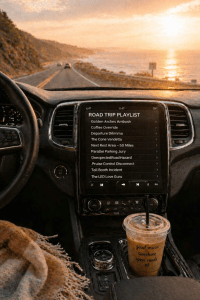
If My Life Were a Radio Playlist


There’s something about getting in the car
that creates a false sense of control.
Destination set.
Coffee secured.
Confidence high.

And yet—

somewhere along the way,
the plan dissolves,
decisions are made without my full consent,
and I find myself navigating situations
I was not prepared for.

If my life were a road trip,
this would be the playlist—
the moments, the miscalculations,
and the quiet acceptance
that we are just going to see how this goes.


Departure Dilemma

I finally leave the house.
Momentum achieved.
A deceptively smooth beginning — always suspicious.

Three blocks later, my brain casually informs me
that the overnight bag
is still sitting in the driveway.
Just… out there.

Watching me leave.
Like we had a plan
and it chose
not to participate.


Unexpected Road Hazard

Everything was fine.
Clear roadway ahead.

And then—

a rocking chair decides to exit a moving pickup
and openly defy physics.

It is now hurling straight at my windshield
at a speed I would classify as unwelcome.

It’s shredding mid air like homemade shrapnel.

And suddenly, I’m a target.

The chair abandons its mission
and targets someone else.
I can breathe again.


Parallel Parking Jury

No one was around.
Until I tried to park
in the only space available
a space so small
it feels like a setup.

And now—

there’s a small gathering
of strangers

watching me perform
what can only be described as

a slow, public unraveling—

with occasional pointing
for emphasis.


Coffee Override

No hesitation.
No debate.

Whatever direction I was going in
is no longer relevant.

Caffeine has spoken—
and I respect the authority.


Next Rest Area – 50 Miles

Hydration has consequences.

At the time,
it felt responsible.
Healthy, even.

Now it feels…
like a personal betrayal.

And a situation.


The Cone Vendetta

It was clearly visible.
Bright orange.
Highly avoidable.

And yet— somehow

it has attached itself to my vehicle
like an invited guest

scraping the road,
in full plastic despair.

I have emotionally divorced myself
from its journey.


Cruise Control Disconnect

Everything is fine.
The car is basically driving itself.

I am, at best,
middle management.

All is smooth—
until it misses a turn.

And I am suddenly yelling
at the car like
this is a collaboration.

Which is when I realize
it has inherited
my sense of direction.

And is now
a curse on wheels.


Golden Arches Ambush

It seemed harmless.
Just me and a small order of fries.

And then—
one seagull.
Followed by… friends.

Now I am surrounded by birds
on the hood of my car,
peering through the windshield

with the confidence of diners
who believe this is a shared meal
and I simply didn’t get the memo.


Toll Booth Incident

Everything was normal
approaching the toll.

And then—
the car next to me.
Children.
A bucket.

Suddenly— frogs.
Everywhere.

The toll collector is in the street
dancing

like a man
who has been personally
betrayed by amphibians.


The LED Love Guru

The sign flashes:

“No Valentine?
Your seatbelt will hold you.”

Absolutely not.

I refuse to take dating advice
from a road sign
that has seen things

and is one overhead sighting away
from witness protection.


In the end,
it isn’t about the road trip
or survival.

It’s about accepting
that somedays, I am
the universe’s
test subject.


If your life had a soundtrack,
what song absolutely
belongs on the playlist?


Notes from the Edge

Close enough to belong. Far enough to breathe.

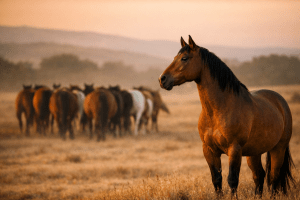
Even in a herd, there’s always one that drifts to the edge.

Not lost.
Not pushed out.
Just… not standing in the center.


It’s easy to assume that one is different.

Less connected.
Less involved.
Somehow outside of it all.

But that’s not what’s happening.


The one at the edge sees more.

The movement of the group.
The shift in energy.
The subtle changes before they become obvious.

They’re not separate from the herd—
just positioned differently within it.


I’ve realized, over time…
that I tend to live there.

Not completely alone.
Not fully in the middle, either.

Somewhere just outside the center—
close enough to belong,
far enough to breathe.


I’m outgoing.
I enjoy people.
I love meaningful conversation.

But I’ve never had a wide circle.
Never felt the need to be constantly surrounded.

There’s a quiet hesitation in me—
a little bit of shyness that never fully leaves.


And sometimes…
I do step into the center.

I lean in.
I engage more.
I try to stay there.

But it rarely lasts.


Not because something dramatic happens—
but because I start to feel it.

The noise.
The expectations.
The subtle misalignments.

And without thinking too much about it,
I begin to pull back.


I don’t make an announcement.
I don’t force distance.

I just… drift.

Back to the edge
where things feel clearer again.


It’s not about people being wrong.

It’s about knowing where I’m most myself.


Horses understand this instinctively.

They don’t cling to the center for comfort.
They move when they need space.
They return when it matters.

No explanation.
No second-guessing.

Just awareness.


There’s a quiet strength in that.

Not leaving—
just repositioning.

Creating enough space
to stay grounded
without losing connection.


Maybe that’s why the edge has always felt right to me.

Not because I don’t belong in the center—
but because I don’t need to stay there
to feel connected.


Because from the edge,
you can see the whole picture.

And when you step back in—
you do it as yourself.


I don’t leave the herd—
I just know where I stand within it.

From the Lessons from the Herd series

Chronically Directionally Challenged

I am, without exaggeration,
one of the most navigationally challenged people
you will ever meet.

Not “a little bad with directions.”
Not “sometimes I get lost.”

I mean: if there are two options —
left or right —
I will choose the one that makes
no geographical sense whatsoever.


And it’s not random. It feels intentional.

Like my brain hears “correct direction”
and rebels… “Absolutely not.”


I’ve gotten lost driving home from work.
Same route. Every day.

I have entered a parking lot…
and exited confusion.

I once drove home from the Jersey Shore—
a trip I’ve done a hundred times—
and somehow ended up approaching New York City.

Which, by the way, is not
on the way home to Delaware.

That’s not a detour.
That’s a lifestyle change.


At some point, my husband would finally ask, very calmly:
“Do you know where you’re going”

And I’d say, with equal calm:
“No.”

Then, for clarity:
“Evidently, I’m going where my inner goddess directs me.”


My personal philosophy is simple:
I don’t panic. I just commit.

“Let me make the mistake,” I would say,
“and I’ll correct it later.”

Which sounds reasonable…
until you realize we are now in a different state
and I am still confident I am correct.


I once went on a business trip with my boss.
He was driving.
Traffic was bad.
He handed me the map.

In my defense, this was before GPS.
But also… he had met me.
So that’s on him.


I took the task seriously.

“Go this way.”
“Take that exit.”
“I think it’s up here.”

After a while, he went quiet.
Then— “I think we’re going in circles.”

We had passed the same monument three times.
At that point it was basically greeting us.

He pulled over, took the map away, and said:
“Yeah… I’m going to handle this.”

Fair.


Eventually, I accepted this is not fixable.
This is not a skill issue.
This is a personality trait.


But here’s the strange part:
I don’t actually hate it.

Because when you’re constantly lost,
you see things you weren’t trying to see.

Wrong exits.
Unexpected places.
Accidental discoveries.

And sometimes…
that’s better than the plan.


So yes. I will take the wrong turn.
Miss the exit.
Confidently drive in the wrong direction
with the conviction of someone
who absolutely should not be in charge of navigation.


Because for me,
driving isn’t just transportation.
It’s an experience.


But it’s fine.

My inner goddess is navigating,
and she’s clearly on her own journey.

Painted Ponies


Like a herd of painted ponies, friends are the color in life’s kaleidoscope.

They don’t arrive all at once, and they don’t stay in formation.


Some move through quietly. Others burst in, bright and unforgettable. A few linger long enough to feel like part of the landscape.

The people we meet along the way come in all personalities. Some are lasting. Some are transient. All of them leave a mark—one of remembrance or a lesson.


Some friendships are easy. They settle in naturally, without effort or expectation. You pick up where you left off, no matter how much time has passed.

Others arrive with intensity—fast, vibrant, consuming—only to fade just as quickly. At the time, they feel significant. Later, you realize they were never meant to stay.


And then there are the ones who challenge you.

The ones who reveal something you didn’t want to see. The ones who test your boundaries, your patience, your sense of self. They don’t always leave gently, but they leave something behind—clarity, strength, or the quiet understanding that not every connection is meant to last.


It’s easy to measure friendship by duration. The ones who stayed. The ones who didn’t.

But time isn’t always the measure.


Some of the most fleeting connections leave the deepest impressions. A conversation. A moment. A shared experience that shifts something in you, even if the person is gone just as quickly as they arrived.


Like a kaleidoscope, the pattern is always changing.

Pieces move. Colors shift. What once felt central fades to the edges, while something new comes into focus. You don’t always see the full design while you’re in it.


Only later do you recognize the pattern—the way each person added something, even if it was brief.


Some brought warmth.
Some brought laughter.
Some brought lessons you wouldn’t have chosen, but needed all the same.


And all of them, in their own way, added color.


Part of “Lessons from the Herd” series

Attack of the Bidet

Three coworkers by day, questionable decision-makers by night—we had a long-standing tradition built on clubs, dance floors, and the sacred lie of “this is the last stop,” a promise that never survived reality.

So, when Vivian announced she wanted to take a trip to Reno for a job search, there was… a pause.

Not because anyone doubted her.

But because everyone understood exactly what “job search” means in Vivian’s universe.

“To be clear,” I asked Viv, “Are we actually job searching… or are we just bringing résumés near casinos?”

Vivian just smiled—that raven-haired, chaos-coded smile that historically preceded free upgrades and mild property damage.

And that’s how the three of us ended up on a quick getaway that returned us with poorly vetted decisions and a story that should come with a warning label.

Not just a story—a series of regrettable brilliance.  The kind that changes a person.


Somewhere between check‑in and getting the room keys, Vivian turned on the charm with the reservation clerk — that effortless flirtaholic energy she refused to turn off — and next thing you know?

Suite upgrade.

No one asked questions. No one intervened. The universe simply… allowed it.

Which is how we ended up with a much‑nicer‑than‑necessary hotel bathroom.

Clean tile. Soft lighting.

And sitting innocently beside the toilet… a bidet.

Paula stared at it like it had personally wronged her.

I backed away immediately, already sensing danger.

Vivian? She just tilted her head, assessing it like a puzzle she fully intended to solve.

Paula, with confidence but no relevant experience, gave it a once-over.

“I mean… how hard could it be?”

Vivian curiously leaned in.

I stayed near the door. Observing. Judging. Preparing to testify later.

Paula announced calmy: “There’s a button labeled Mountain Stream.”

Me: “That sounds aggressive.”

Vivian: “That sounds like a challenge.”                                                                                                  

Paula:  “I’m pressing it.”

She should not have pressed it.

What happened next defies physics, plumbing, and several personal boundaries.

A jet of icy, high-pressure water blasted upward with the enthusiasm of a Yellowstone geyser. Paula shrieked—loud enough to concern nearby guests and possibly alert the front desk to a situation they were not trained for.

The force launched her forward.

I watched this unfold in real time and can confirm… she left the ground… like fully airborne.  It was like witnessing a NASA rocket launch. 

Paula hit the wall, slid down dramatically, drenched, stunned, and—by her own account—spiritually rearranged.

Dignity?  Gone.
Composure?  Gone.
Grip on reality?  Slippery at best.

Naturally, Vivian stepped forward.

“You didn’t do it right.”

I tried to induce sanity: “No. No one needs to do it right.”

But Vivian had already committed.

She approached the bidet with the enthusiasm of someone who has never been defeated by plumbing—or common sense.

The bidet responded with the confidence of a machine that absolutely intended to win.

Within seconds, Vivian was hydroplaning across the tile like a confused penguin in a disaster film. Towels were sacrificed. Dignity was lost. The bidet remained… committed.

At one point, she caught her reflection.

Hair soaked. Eyes feral. Shirt clinging like she’d just fought the ocean and lost.

She didn’t look human anymore.

She looked like Soakazilla— a damp, furious creature born from dubious life choices and excessive water pressure.

“This is how I die,” she announced, slipping—again—while reaching for the knob.

Paula, still recovering on the floor, offered zero assistance.

I was pressed against the wall, now laughing in the specific tone of someone witnessing history.

Somewhere between the slipping, the shrieking, and the aggressive aquatic betrayal, Vivian managed to hit peak velocity—hydroplaning into the towel rack, careening sideways, and sliding down the wall like a damp tactical mural.

Silence fell.

Only the sound of dripping water remained.

And three women reconsidering choices that led them to that bathroom.


But here’s where it gets worse.

Because after witnessing Paula’s launch and Vivian’s transformation into a water-based cryptid, there should have been a lesson.

There was not.

There was… a second attempt.

Paula, fueled by wounded pride and extremely poor judgment, whispered, “Okay but I think I understand it now.”

“You don’t”, I pleaded “You absolutely don’t.”

Of course she tried again.

The bidet, unwavering in its mission, responded with the same unholy enthusiasm.

Another blast. Another shriek. Another loss for humanity. 

At this point, the bathroom floor was no longer a surface—it was a hazard. I would soon require a flotation device.

Both Paula (Geyser) and Vivian (Soakazilla) had now been personally victimized by hotel plumbing.

I remained the sole survivor. Dry. Untouched. But emotionally changed.


No amount of personal development will undo what happened in that bathroom.

Some experiences stay with you.
Some follow you.
Some… require towels and silence.

And for everyone’s safety, Soakazilla and Geyser were permanently banned from unsupervised encounters with hotel plumbing.

Because apparently being launched across a bathroom wasn’t humiliation enough, the hotel bill politely informed us:

‘No Charge for the Power Wash.’  

Honestly, that hurt more than the water pressure.

RIP Vivian, thanks for the memories.

Feisty Old Broads

Just when I was about ready to give up on humanity, the feisty old broads showed up.

I was in the ladies’ locker room at the swim club, minding my own business, when I overheard three retired women—the kind who’ve stopped caring about social niceties and started telling the truth.

Lady #1 asked Lady #2,

“Hey… what day is this? Is it Friday?”

Lady #2 didn’t even look up.

“Who the hell cares what day it is? We’re retired. It’s not like we’re waiting for the weekend. Every day is Friday… or Sunday… or whatever day you want it to be.”

Lady #1 considered that.

“True. But if your doctor asks what day it is and you can’t answer correctly, they’ll diagnose you with Alzheimer’s.”

Lady #2 shrugged.

“Who the hell gives a shit.”

At that moment, Lady #3—still dripping from water aerobics—jumped in with the energy of someone who has absolutely nothing left to prove.

“I don’t care what day it is,” she announced. “It’s margarita time.”

She paused, stretched her back, and added:

“Ain’t retirement a bitch?”

I sat there trying not to laugh out loud.

Three women. Three philosophies. One universal truth:

Aging may take your schedule, your patience, and your cartilage—

but it sure doesn’t take your attitude.

—————————————————-

Storm Warning

Horses don’t wait for the storm to arrive.

They feel it long before the sky changes—before the first drop, before the first sound of thunder.

The air shifts.
The energy changes.
The herd knows.

And they move.

We’re not built that way.

We get the warning… and stay anyway.


There’s always a moment.

It’s usually quiet. Subtle. Easy to dismiss if you’re not paying attention.

Something feels off.

Not wrong in a way you can explain. Not enough to walk away. Just enough to make you pause—if you let yourself.

Most of us don’t.

We explain it away.
We soften it.
We give it the benefit of the doubt.
We tell ourselves we’re being too sensitive. Too cautious. Too quick to judge.

So we stay.


The first signal is rarely loud.

It doesn’t arrive with certainty or clarity. It shows up as discomfort. A hesitation. A shift in energy you can’t quite name.

Like the air changing before a storm.

And almost instinctively, we override it—
because walking away early feels unreasonable,
because we don’t have proof,
because we want to believe the best.


But the truth is simple, even if we don’t like it:

We knew.

Not everything. Not how it would unfold. Not how far it would go.

But we knew enough.


There’s a cost to ignoring that moment.

It’s not always immediate. Sometimes it takes time to surface.

It shows up in small ways at first—unease, tension, the sense that you’re adjusting yourself to fit something that doesn’t quite align.

Then it grows.

You find yourself explaining behavior you wouldn’t normally tolerate.
Making space for things that feel uncomfortable.
Silencing your own reaction just to keep the peace.

And little by little, you lose your footing.


We don’t just ignore red flags.

We negotiate with them.
We rewrite them.
We minimize them.
We convince ourselves they mean something else.

But the signal doesn’t change—
only our willingness to listen.


Looking back, the clarity is always there.

The moment you hesitated.
The thing that didn’t sit right.
The feeling you pushed aside.

It was never unclear.

It was just inconvenient.


We sabotage our equilibrium every time we step into a situation that feels off from the start.


Learning to trust that first signal isn’t about becoming guarded or closed off.

It’s about staying aligned with yourself—
about recognizing that discomfort isn’t something to override… it’s something to understand.


Because in the end, the lesson isn’t about what someone else did.

It’s about the moment you felt it…

…and chose not to listen.

Part of the “Lessons from the Herd” series

Where The World Still Feels Untouched

There are places in the world where animals watch you.
And then there’s the Galápagos—
where they don’t.

There’s no fear in their eyes. No instinct to run. No sense that you don’t belong.
You’re not observing wildlife.
You’re stepping into their world.


Quito felt like an introduction… but not the destination.

The Marriott was familiar, predictable — a place to land before stepping into something I couldn’t quite picture yet. The next day brought the expected stops — the equator line, the views, the market, a lunch that felt more staged than real. It was interesting, even enjoyable, but still within the rhythm of travel. Structured. Explained. Designed for you.

It all made sense.

Until it didn’t.


Somewhere between Quito and the islands, the world shifted.

Smaller plane. Fewer people. More distance between things.
Less noise. Less urgency.

By the time we boarded the Celebrity Xpedition, it was clear this wasn’t going to be a typical trip. The ship didn’t feel like a destination — it felt like access. A way in.


In the Galápagos, the rules are simple — and enforced.

You don’t wander.
You don’t touch.
You don’t interfere.

Every visitor is accompanied by a licensed naturalist. The ecosystem is protected with an almost reverent discipline, and because of that, the animals remain exactly as they were meant to be — wild, undisturbed, and completely indifferent to human presence.

And that indifference is what makes the experience so extraordinary.


We explored the islands twice a day for a week — one excursion in the morning, one in the afternoon.

Each outing felt like stepping into a different world.

One moment you’re walking along a rocky path beside marine iguanas, the next you’re standing quietly while a sea lion pup studies you with curious, unguarded eyes. Birds nest at your feet. Crabs scatter across volcanic rock. Life unfolds all around you, uninterrupted.

There is no performance.
No reaction.
No need for you at all.


I wasn’t prepared for how close everything would be.

Not just physically — although that alone was surreal — but something deeper.

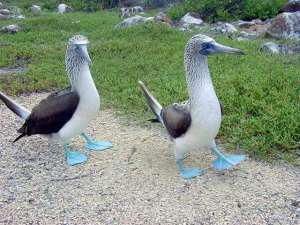
The blue-footed boobies walked past like we didn’t exist.
A sea lion blinked slowly, unimpressed by my camera hovering inches away.
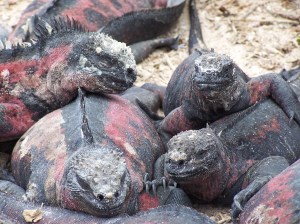
Marine iguanas gathered in clusters, ancient and unmoved.

It wasn’t that they trusted us.
It was that they had never learned not to.


There was one moment that stayed with me — simple, unexpected, and oddly meaningful.

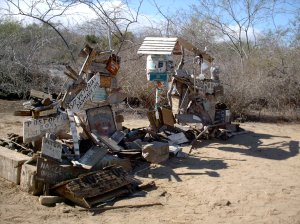
We stopped at what they call the “post office” on Floreana Island.

Not a building.
Not a mailbox.

Just a weathered barrel surrounded by driftwood signs from travelers who had passed through before us.

We were each given a postcard and asked to write a message to ourselves — name and home address included.

Then came the part that made it unforgettable.

We were told to sort through the stack of postcards left behind… find one addressed to someone who lived near us… and take it home to deliver.

No stamps.
No system.
Just trust.

My husband’s postcard arrived first — hand-delivered by someone we now refer to only as “Blood Bank Bob.”

Mine showed up later, quietly, like it had always belonged there.

And somehow, it meant more than anything sent the traditional way ever could.


At the time, I didn’t understand what I was seeing.

The marine iguanas looked almost prehistoric — dark and unmoving against the volcanic rock — until you noticed the color. Not subtle… but vivid. Reds and greens woven through their scales like something alive beneath the surface.

Later, I learned we had arrived just as the breeding season was beginning.

Even here, in a place that feels untouched by time, there are rhythms quietly unfolding — whether you recognize them or not.


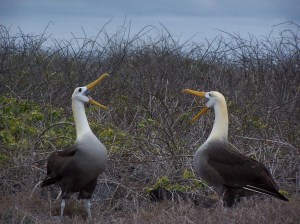
And then there were the albatross.

Before the cliffs… before the flight… there was something quieter.

Pairs stood facing each other, calling, moving in sync — a kind of ritual that felt both ancient and deliberate. There was no audience. No urgency. Just connection.

They bond for life.

We watched as they moved through these small, repeated gestures, as if reinforcing something already understood.

And then, later, at the edge of the cliffs, they gathered again — this time facing the wind.

One by one, they stepped forward.

A pause.
A shift.

And then — without hesitation — they launched into the air.


Even in the harbor, nothing really changed.

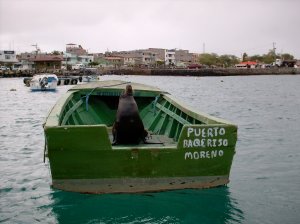
The sea lions claimed boats like they owned them, lounging without concern, completely indifferent to the activity around them.

There was no boundary between wild and human life — just a quiet understanding of who truly belonged.


Not everything in the Galápagos lives in the light.

Deep inside the lava tubes, where the air cools and the world goes quiet, we found an owl — perfectly still, perfectly aware.

It didn’t move.
It didn’t flinch.

It simply watched us… as if we were the ones out of place.


The Moment That Stayed

It was an instinctive click.
I didn’t plan it. I didn’t frame it. I didn’t ask.
I just reacted.

The moment that stayed with me wasn’t a landscape or a sea lion or a postcard view.

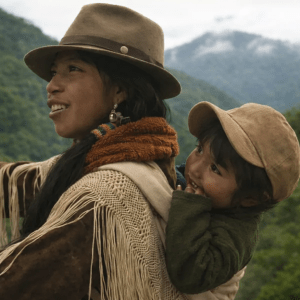
It was a woman at a hillside market, working with her child tied to her back.

She moved with a rhythm that belonged entirely to her life — unhurried, unposed, untouched by the presence of a stranger with a camera.

No one looked at me.
No one performed.

I was invisible.

And somehow, that’s what made it matter.

It wasn’t a moment created for me.
It was a glimpse of something real — offered without intention — and it stayed with me in a way I didn’t expect.

Live Your Life Sweet Thing

John riding Joe – exactly where he belonged.

There are people who pass through your life, and then there are the ones who leave a voice behind.

The ones who teach you, steady you, challenge you… and sometimes cause just enough chaos to make you pay attention.

John was one of those.

He didn’t lecture. He didn’t sit you down and explain how life worked. He just lived it — fully, unapologetically — and if you were paying attention, you learned.

We rode every morning at seven. No matter the weather, no matter the mood, John showed up. Horses saddled, stories ready. There was always a story. Usually inappropriate. Always unforgettable.

As we rode past the barn and headed down the street toward the trailhead, he’d call out, “Vaya con Dios!” like we were setting off on something far more important than a morning ride.

One morning, Sunshine went down hard in the desert — flat on her belly, sand flying, tack slipping sideways. My 23-year-old former endurance horse didn’t hesitate. She hit the ground, sprang back to her feet, and kept cantering toward the lead horse like nothing had happened.

I never came out of the saddle. Not a stirrup lost, not a beat missed — just instinct and motion carrying us forward together.

When we caught up, I asked John to stop so we could check her and tighten the girth, which had loosened and pulled the saddle off center.

He glanced over with that wry, understated smile of his and said,
“You have good balance, kid.”

It was the closest he ever came to a compliment — and coming from John, it meant everything.

That was it.

No panic. No overreaction. Just quiet acknowledgment — and then we fixed the saddle and kept riding.

That was John.

He didn’t dwell. He didn’t dramatize. He moved forward.

At the barn, he held court like a man who had seen it all — because he had. He could spot trouble before it unfolded, and he had little patience for what he called “repeat offenders.” People who made the same bad decisions over and over, expecting a different outcome.

He didn’t try to fix them. He just observed, shook his head, and let life do the teaching.

There was a kind of freedom in that.

John understood something I didn’t at the time — that you can’t control other people, and you can’t live their lessons for them. You can only ride your own horse.

Years later, when I went to see him, the stories were quieter. The man who had filled every space with laughter now measured his words. Breathing was harder. Time was closer.

He motioned me in, the way he always did, and said something I’ve never forgotten:

“Every time the sun sets, it takes a part of your life with it. Live your life, sweet thing.”

There was no story after that. No punchline. Just truth.

I didn’t understand it fully then. Maybe I still don’t. But I hear it now in different ways — in the quiet moments, in the choices I make, and in the times I catch myself hesitating.

John didn’t teach through instruction.
He taught through presence.
Through observation.
Through living.

John lived his life with no regrets.

And at some point, we all look back and realize one of two things:

we’re either like John — grateful we went for it with full gusto —
or we’re left wondering about the things we never tried.

A Few Boundaries Between Friends

Boundaries Don’t Need Words

I was about to be slid into a narrow cylinder with no exit and asked to lie still for forty-five minutes.

The attendant explained the process in a calm, practiced tone, then offered music to help me relax.

I declined.

Ten minutes later, I regretted every life choice that brought me to that moment.

Somewhere in the next room, a burly man was yelling, “Get me out of this thing!” His panic did nothing to soothe mine. Inside the tube, the air felt thinner, the walls closer, and my heartbeat louder. Claustrophobia crept up my spine like a slow electrical current.

And then I heard my horse trainer’s voice in my head: Listen to the birds sing.

There were no birds there, but I reached for the image anyway. I pictured myself walking along a quiet beach, waves rolling in and out, the sun warm on my shoulders.

It must have worked, because the next thing I knew, the attendant was nudging me awake. Forty-five minutes had passed without me clawing my way out of the machine.


Horses have been teaching me things for years, often without my noticing.

They are honest in their interactions, intuitive in ways humans rarely allow themselves to be, and immediate in their responses. I’ve been told so many times to “think like a horse” that I now catch myself watching people for the same cues I look for in a pasture: dominance, insecurity, bluffing, avoidance.

If humans handled conflict the way horses do — directly, immediately, and without apology — we’d probably have fewer interpersonal disasters.


Take Sunrise, my Peruvian Paso.

Around people she is sweet, soft-eyed, and polite. But turn her out with other horses and she becomes the matriarchal mare who takes no prisoners.

The first time I saw her defend herself, I was stunned.

On Day 1, as the new horse in turnout, she was kicked and bitten.

On Day 2, she made her point.

She singled out the aggressor, chased her relentlessly, cornered her, and left no doubt about where she stood. That mare never looked at Sunrise sideways again.

Sunrise only had to say it once.


Rosie, my Arabian, is the opposite.

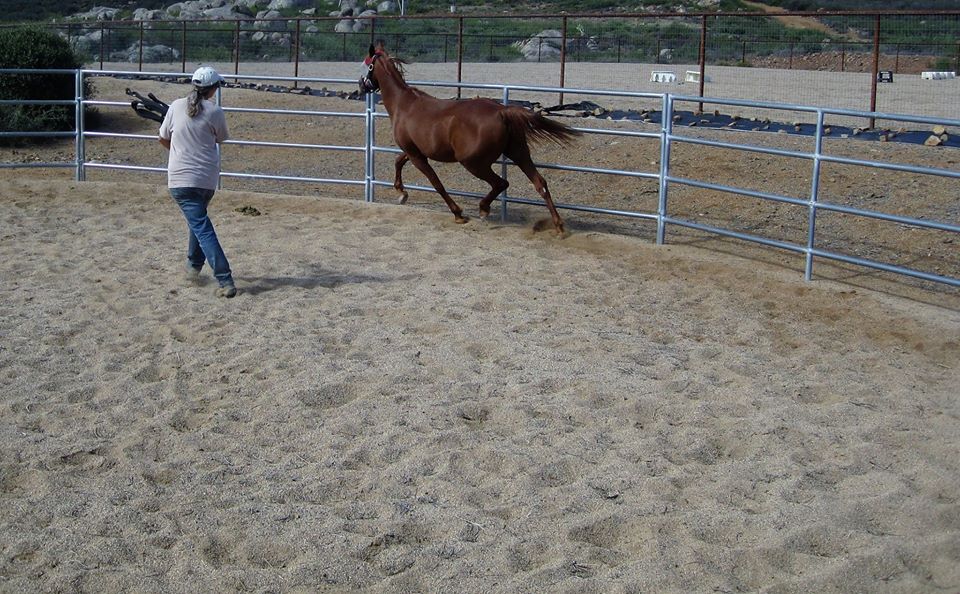
With humans, she’s expressive, fiery, and full of personality. You’d assume she’d dominate any herd.

She doesn’t.

In turnout, she’s the one who gets pushed off hay piles, chased from the fence line, and quietly yields space to horses half her size.

Something in her body language tells the herd she won’t fight back.

They read her correctly.


Watching them taught me something I should have learned years earlier:

What’s inside a horse — or a person — is rarely what you see on the surface.

Sunrise looks delicate but is steel.
Rosie looks bold but is vulnerable.

And humans? We’re even worse at showing who we really are.


Horses don’t tolerate mistreatment.

They don’t make excuses.
They don’t wait for things to “get better.”
They don’t hold meetings about it.

They respond — immediately, clearly, and without hesitation.

Their boundaries are visible, consistent, and respected.


Humans, on the other hand, let things fester.

We stay silent.
We rationalize.
We reward the very behavior we claim to hate.

And then we wonder why people “always” treat us a certain way.


A wise woman once told me that every time I interact with my horse, I’m training it — whether I mean to or not.

The same is true with people.

With every interaction, we teach others how to treat us — through our words, our behavior, and our silence.

When someone crosses a line and we say nothing, we’ve just taught them they can do it again.


Healthy boundaries aren’t walls.

They’re self-respect in action.

They keep us centered.
They protect our peace.
And they’re the first step toward becoming our own best friend.

Part of the “Lessons from the Herd” series