I was born on October 22, which puts me at the very end of Libra, close enough to Scorpio to keep things interesting.
Most of the time, I’m very much a Libra girl.
I’m friendly. Social. Charming when the occasion calls for it. I like people, conversation and laughter. I prefer harmony over conflict and will usually try diplomacy before drawing a sword.
But I was born on the cusp.
That means the sword is available.
Aesthetics Matter
Libra is ruled by Venus, which supposedly explains our alignment with attractive surroundings.
In my case, this is entirely accurate.
I appreciate a well-planned outfit. I notice color combinations and whether an accessory enhances the look or has staged a hostile takeover.
But I’m equally comfortable dressed for an elegant evening or making a grocery run in barn clothes. To me, style is about balance. It’s wearing what you love, what fits the moment, and doing it with confidence.
The same applies to my home. I like contemporary and beachy, but I also want something unexpected—an antique piece in one corner and a hanging basket chair in the other.
Paws, Hooves & Priorities
Every Libra girl I know is an animal lover. For many of us, our children have always had paws or hooves.
Each one arrived with quirks, opinions, and a lesson I didn’t know I needed. They made me laugh harder than most humans ever could—and broke my heart when it was time to say goodbye.
They left pawprints on my floors, hoofprints in my pastures, and lasting imprints on my heart.
If you don’t like animals, the Libra in me will try to understand.
The Scorpio in me may quietly reconsider your invitation.
The Scales Must Consider Everything
Libras are often described as being indecisive. I call it due diligence. A Libra’s scales were never meant to tip without evidence.
It may not always be the right decision, but it will have been thoroughly considered.
Peaceful—Up to a Point
I don’t enjoy confrontation. I’ll explain, compromise, reconsider, and give people more chances than they probably deserve.
I prefer to keep things pleasant.
But there is a boundary.
It may take me a while to reach it because I’ve examined the situation from both sides, turned it upside down, and given everyone the benefit of the doubt.
Once I finally set that boundary, however, it isn’t drawn in pencil.
That may be the Scorpio in me.
The charming Libra greets you at the door. The Scorpio quietly installs the lock.
Another Year, A Little More Edge
Another birthday. A little more perspective. Still occasionally thrown off balance.
When necessary, I’ll let that Scorpio edge make an appearance.
Preferably, I’ll be wearing a fabulous outfit while I restore the balance.
Cheers to the October Girl—still balancing the scales, but unafraid to tip them when necessary.
Before the gentlemen start backing cautiously toward the exit, let me acknowledge the obvious: this works both ways. I’ve known women who used men as a meal ticket. I can’t write their field guide because I haven’t been on the receiving end of it. The Cringe Catalog is always accepting new submissions! Comments open! 😂
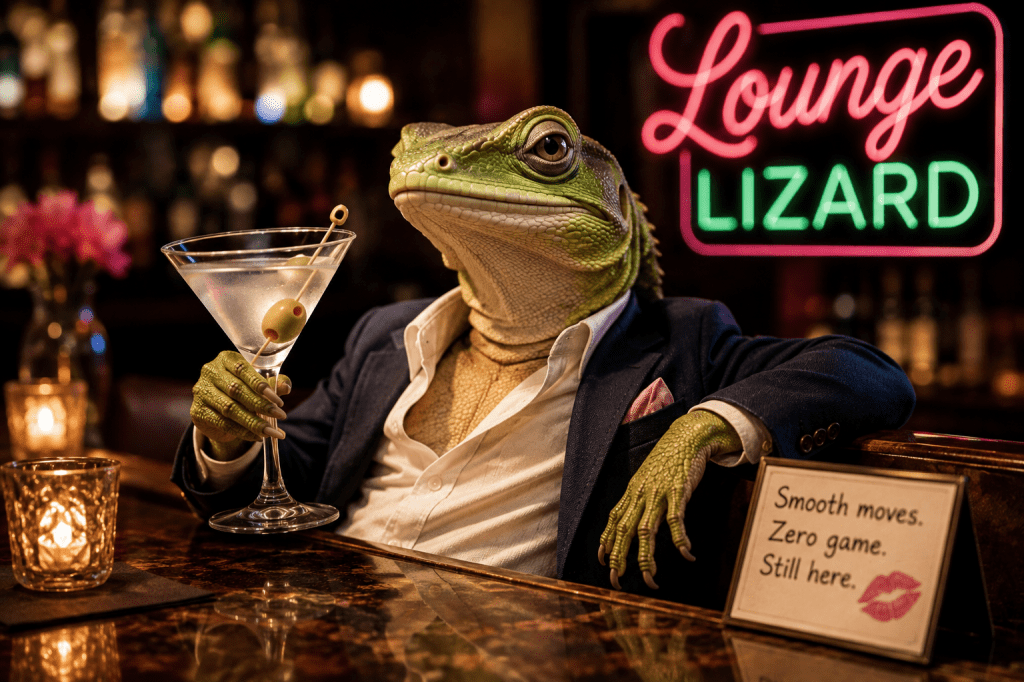
The Cringe Catalog: Lounge Lizards in the Wild
Most of us have been hit on more often than a piñata — but unlike a piñata, I don’t hand out prizes. In my twenties, I didn’t find it nearly as entertaining. The approaches were awkward and occasionally deserving of an intervention.
Decades later, the lounge lizards have aged. The delivery is slower. The material has changed. The mating ritual remains intact.
Field Research: The Cruise Ship Lizard
On a recent solo cruise, I encountered the floating lounge lizard.
I was sitting in the main lounge when a gentleman approached. No hello. No conversation. Just:
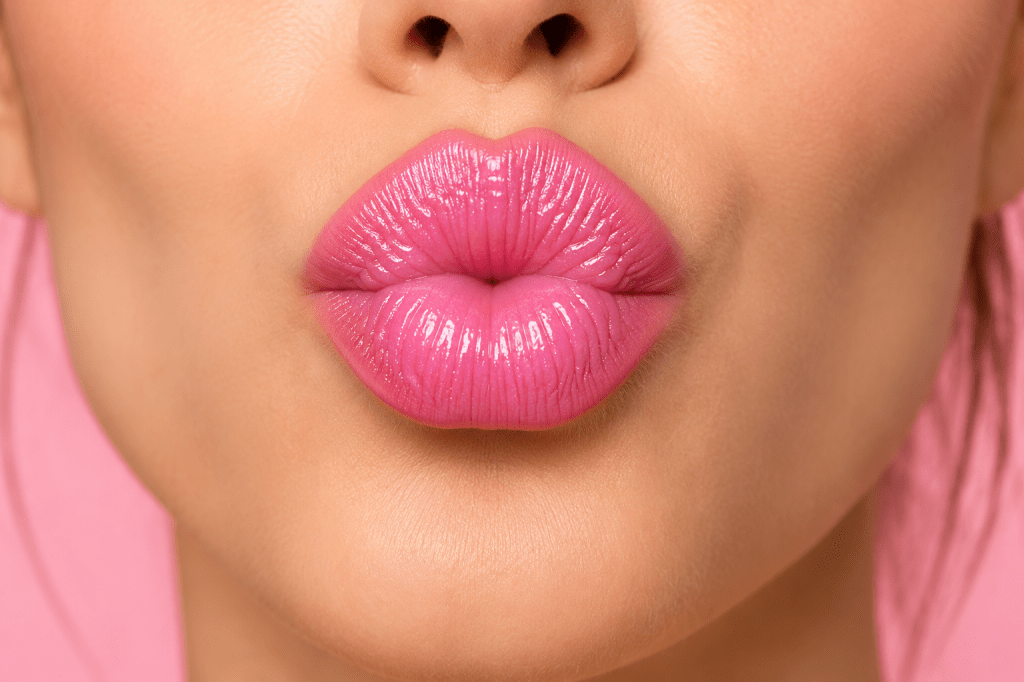
“Pucker up, Hot Lips.”
I replied:
“I’m sure my lip gloss has higher standards.”
And just like that… Hot Lips was denied landing clearance.
Field Notes:Stronger alcohol may be required to erase the visual. Survival Rating: 🦎🦎🦎🦎
Rule #1: Befriend the Bartender
Years ago, my friend Margaret and I went dancing at a nightclub in Delaware. Four engineers from work spotted us. Their leader, John, was an overconfident lothario.
Drinks began appearing behind us — Kamikazes, ordered eagerly.
Then the bartender tapped my shoulder.
“They’re trying to get you drunk.”
He’d seen this act before.
“I’m making your drinks virgin. I’ll tap you and hand you the virgin one.”
The engineers kept ordering. Margaret and I kept “drinking.” We remained perfectly sober.
When we left, we walked straight across the parking lot in three‑inch heels. The engineers staggered behind us. One lunged into my car window — apparently failing to notice it was still up.
Thunk. Forehead met glass. Engineer met pavement.
The next morning, John reported to my boss that I had “drunk them under the table.” I accepted the compliment. No need to correct the record.
Bartenders see everything. Make friends with them. Tip accordingly.
Rule #2: Never Reward a Bad Opening Line
The Computer Geek
Line: “Are you a keyboard? Because I think you’re my type.” Comeback: “Delete.” Field Notes:Terrible. Unfortunately, I laughed. Survival Rating: 🦎
The Romantic Optimist
Line: “Do you believe in love at first sight, or should I walk by again?” Comeback: “Keep walking. That line was dead on arrival.” Field Notes:Ancient material. Points for commitment. Survival Rating: 🦎🦎
The Technologically Challenged
Line: “My phone’s broken. It doesn’t have your number in it.” Comeback: “And it never will.” Field Notes:Technology has spoken. Survival Rating: 🦎🦎
The One Who Almost Pulled It Off
Line: “You seem like trouble. I’m in.” Comeback: “Okay. Sign the waiver. And buy me a drink.” Field Notes:Risk acknowledged. Application conditionally approved. Survival Rating: 🦎 Enough alcohol — that one might actually work.
Rule #3: When Necessary, Return Fire
One evening, the office cad wandered over to my barstool.
Line: “You get three wishes.”
I took a slow sip of wine.
Comeback: “How about I wish you were gone?” Field Notes:He gave me three wishes. I only needed one. Survival Rating: 🦎🦎🦎🦎
Rule #4: Never Underestimate Audacity
The Opportunist
Line: “I looked at you and lost my train of thought. I think you owe me a beer.” Comeback: “Your system failed, and I get a bar tab?” Field Notes:Cheap‑date warning. Payment denied. Survival Rating: 🦎🦎
The Optimist
Line: “Ooh la la… I think you need to date me.” Comeback: “Sorry. I don’t date for community service hours.” Field Notes:Confidence exceeded market value. Survival Rating: 🦎🦎
The Straight Shooter
Line: “How about we finish these drinks and start making bad decisions together?” Comeback: “Do you have references?” Field Notes:Refreshingly honest. References requested. Decision pending. Survival Rating: 🦎🦎🦎
Rule #5: Escape Routes & Strategic Seating
Years of traveling solo taught me that location matters. I prefer an end seat at a bar — easy access to the bartender, clear view of the room, and most importantly, an unobstructed escape route.
Know the exits. Carry a crossbody purse. And never underestimate the tactical value of landscaping. A strategically placed palm can provide valuable cover.
Rule #6: Master the Art of No
Not every Lounge Lizard requires tactical deployment.
Being friendly never obligates you to entertain anyone. A drink doesn’t buy your phone number.
Rule #7: Know When It Turns Toxic
You moved. He followed. This is important scientific data: the specimen has failed to comprehend the escape attempt.
Change tactics. Be direct. Move toward the staff. If he follows you outside, recruit backup.
Rule #8: When the Rating Scale Breaks
Corporate America unleashed a new species: The Professional Lounge Lizard.
One particular boss — married, self‑proclaimed ladies’ man — once blocked my exit, looked down at me suggestively, and said:
“You look delicious today.”
I blinked. Hard.
Then he added:
“I never eat anything strange unless she’s really worth it.”
My brain refused to process the incoming data.
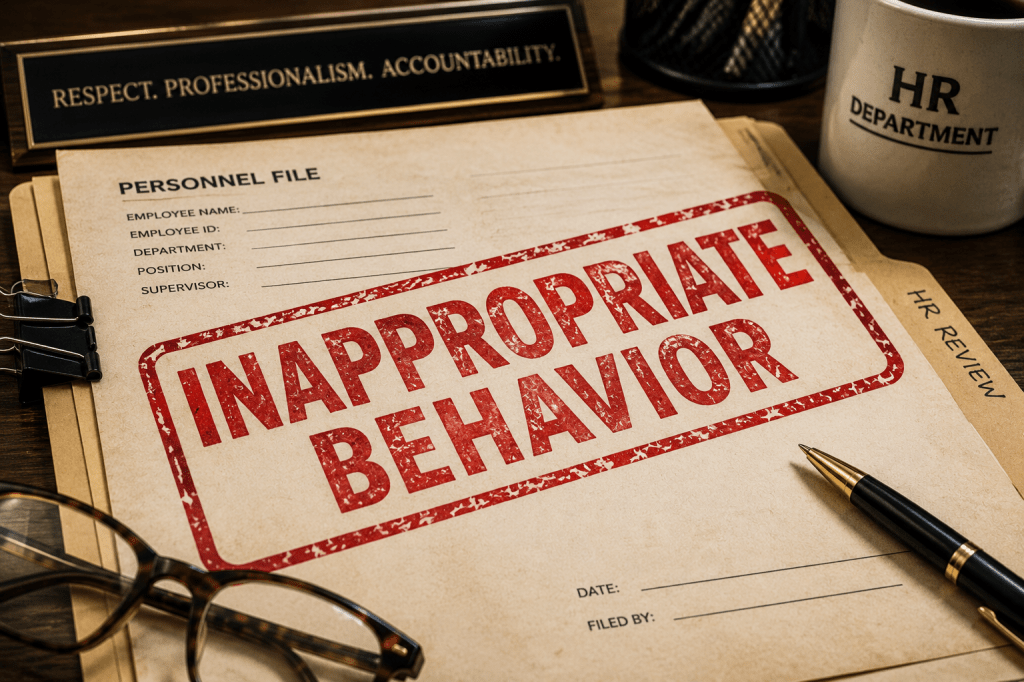
Actual Comeback: “That was totally inappropriate.” Field Notes: This behavior escalates. Request reassignment. Survival Rating: 🦎🦎🦎🦎🦎🦎🦎🦎🦎🦎 Some comments deserve their own HR file.
Rule #9: A Pickup Line Does Not Require a Participation Trophy
The Migratory Lounge Lizard
Recently, I was walking across a Walmart parking lot when a man noticed me from a distance. He followed me inside.
Line: “You have the sexiest walk I’ve ever seen. I had to follow you all the way in the door.” Interrogation: “Are you single?” “Available?” “Can I have your number?” Comeback: “No, that would be a hard pass.”
He persisted.
Line: “Can I hug you?” Comeback: “For what?! You’re about to shop alone.” Field Notes: Crossing the entire parking lot does not earn a participation trophy. Survival Rating: 🦎🦎🦎 Final Disposition: Return this specimen to the wild.
Rule #10: When Subtlety Fails, Remove All Ambiguity
And then there was Mike, the Neighboring Lounge Lizard. Unfortunately, this specimen lived in the same apartment building.
After a group happy hour where Mike supplied the wine and charcuterie—and then counted how many pieces each of us ate—the red flags began multiplying.
Eventually, he approached me in the parking lot.
Line: “I want to take you to lunch.” Comeback: “No, I’m not interested.”
“You’re not interested in lunch… or me?”
He requested clarification. So I gave it to him.
“Neither.”
Field Notes: Persistent specimen. Failed to respond to normal deterrents. Survival Rating: 🦎🦎🦎🦎🦎 Final Disposition: Long-term habitat management required. Do not feed the wildlife.
Final Field Notes
Most Lounge Lizards are harmless. They are funny, charming, and painfully corny. A rare few are clever enough to make you laugh despite yourself. And some should never be permitted to open their mouths after the first cocktail.
But here’s the most useful lesson:
You can be friendly without being available. You can laugh without encouraging. You can say no without apologizing. And you can enjoy a bar, restaurant, nightclub, or cruise ship lounge by yourself without owing anyone else a seat at your table.
Sometimes a polite smile is enough. Sometimes you move. Sometimes you recruit the bartender. And occasionally… You return fire.
I truly believed I’d wrapped up my Lounge Lizard study. Then the universe whispered, “Hold my cocktail.”
A new specimen opened his mouth, and out tumbled fresh, premium-grade nonsense.
At five o’clock, after the lifeguards climbed down from their stands and tourists dragged their coolers off the sand, the beach finally belonged to us.
That’s when we paddled out.
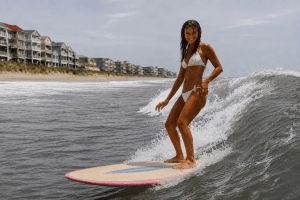
I was the girl with the pink surfboard.
Not because pink was fashionable—it wasn’t. The board had sat unsold at Kona Surf Shop for so long it practically looked abandoned. But the moment I saw it leaning against the rack, I knew it belonged to me.
Long before mountain trails, desert hikes, or red rock canyons, there was Wildwood Crest.
That’s where my love of moving through the world began.
Growing up at the Jersey Shore meant living between two worlds—the ocean on one side, the bay and Sunset Lake on the other. Close enough to smell saltwater no matter which way the wind blew.
Some of my best memories were born there.
Sunset Lake was its own universe: crabbing off the pier, water skiing across the bay, sunfish sailboats skimming over water that turned gold in the evening. Entire days shaped by tides, weather, and whatever adventure sounded fun at the moment.
Life wasn’t perfect. But it felt free.
Dodging the tram car on the boardwalk was its own kind of dance — a mix of timing, instinct, and luck. The boardwalk was alive: music spilling from arcades, chatter drifting from bars, tourists and locals moving in all directions.
Boardwalk or beach, it was hiking—the terrain never mattered, just the freedom of moving under your own power.
Surfing was different.
I learned to surf goofy foot—right foot forward—which made perfect sense for someone who’s been directionally challenged in nearly every aspect of life. Of course, I surfed backwards.
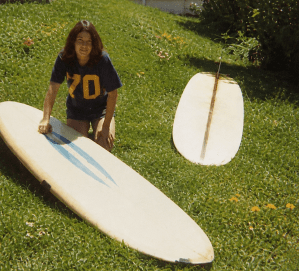
Eventually, I graduated from the pink board to a custom surfboard—orange with a navy pinstripe and white deck—the kind of board that made me feel like I truly belonged out there.
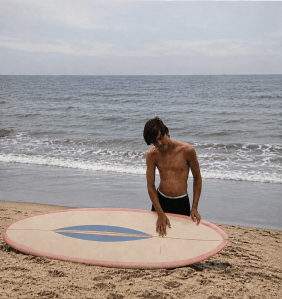
The pink board was passed down to my younger brother, Joe, and sister, Janice.
I teased Joe about surfing on a pink “girl board.” He just shrugged. “Whatever. It works.”
That was Joe. Quiet, easygoing, completely unbothered by things that didn’t matter.
Sandwiched between two sisters, he spent most of his time rescuing us without making a big deal about it.
Some friends pick up where they left off… others end with summer. Alice was an ending. She borrowed my pink board, spent hours in our basement shooting pool, laughing, lingering in the heat of long summer days. By fall, she was gone, and the season — along with her — had slipped away.
The cute little pink surfboard had seen it all — wax, salt, duct tape, and a dozen beginners finding their footing.
Our summer home was a gathering place. Sandy towels hung everywhere. Sun-faded boards leaned in corners. The smell of surf wax and salt air was permanently embedded in everything we owned.
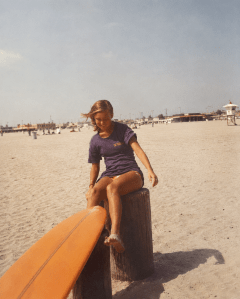
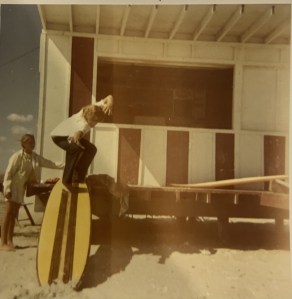
We often hung out at the Surf Shack with Zoo-Man, Zoo, for short. We practiced sliding down a longboard propped against the wooden shack while he coached.
Back then, the beach wasn’t a destination. It was simply part of life.
It had its own rhythm: morning quiet, afternoon dancing in the sand, and early‑evening surfing.
Long before hiking trails, there were morning walks on the beach from Preston Avenue to Diamond Beach and the jetty—barefoot through wet sand while cold foam chased my ankles.
The early morning beach belonged to surfers, fishermen, runners, locals—the ones who showed up before the world got loud.
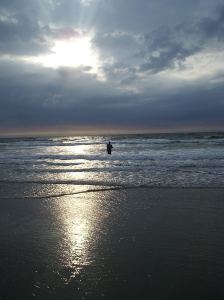
There was almost always a fisherman standing alone in the low surf, casting into waves that barely seemed awake.
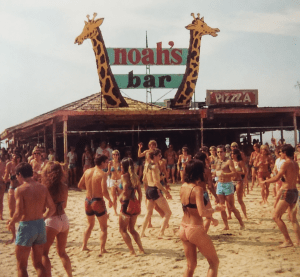
By noon, we’d wander down the beach to the Barefoot Bar. The Diamond Beach Barefoot Bar was its own little world — live music drifting across the sand, barefoot people dancing near the surf, plastic cups in hand, and the warm Jersey air carrying that intoxicating feeling that summer might somehow last forever.
At the time, I didn’t realize those walks were quietly teaching me a map I would follow for the rest of my life. Not in mountains. Not in deserts. But here—in the rhythm of moving forward.
After hiking mountains, national parks, and traveling far and wide, part of me still returns…
To the ocean. To Sunset Lake. To long beach walks. To the intoxicating freedom of being young at the Jersey Shore before adulthood scattered everyone in different directions.
And to the girl with the pink surfboard—long before I realized I was already learning how to wander.
So yes. I will take the wrong turn. Miss the exit. Confidently drive in the wrong direction with the conviction of someone who absolutely should not be in charge of navigation.
Because for me, driving isn’t just transportation. It’s an experience.
But it’s fine.
My inner goddess is navigating, and she’s clearly on her own journey.
Three coworkers by day, questionable decision-makers by night—we had a long-standing tradition built on clubs, dance floors, and the sacred lie of “this is the last stop,” a promise that never survived reality.
So, when Vivian announced she wanted to take a trip to Reno for a job search, there was… a pause.
Not because anyone doubted her.
But because everyone understood exactly what “job search” means in Vivian’s universe.
“To be clear,” I asked Viv, “Are we actually job searching… or are we just bringing résumés near casinos?”
Vivian just smiled—that raven-haired, chaos-coded smile that historically preceded free upgrades and mild property damage.
And that’s how the three of us ended up on a quick getaway that returned us with poorly vetted decisions and a story that should come with a warning label.
Not just a story—a series of regrettable brilliance. The kind that changes a person.
Somewhere between check‑in and getting the room keys, Vivian turned on the charm with the reservation clerk — that effortless flirtaholic energy she refused to turn off — and next thing you know?
Suite upgrade.
No one asked questions. No one intervened. The universe simply… allowed it.
Which is how we ended up with a much‑nicer‑than‑necessary hotel bathroom.
Clean tile. Soft lighting.
And sitting innocently beside the toilet… a bidet.
Paula stared at it like it had personally wronged her.
I backed away immediately, already sensing danger.
Vivian? She just tilted her head, assessing it like a puzzle she fully intended to solve.
Paula, with confidence but no relevant experience, gave it a once-over.
“I mean… how hard could it be?”
Vivian curiously leaned in.
I stayed near the door. Observing. Judging. Preparing to testify later.
Paula announced calmy: “There’s a button labeled Mountain Stream.”
Me: “That sounds aggressive.”
Vivian: “That sounds like a challenge.”
Paula: “I’m pressing it.”
She should not have pressed it.
What happened next defies physics, plumbing, and several personal boundaries.
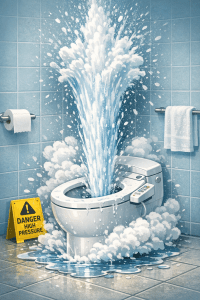
A jet of icy, high-pressure water blasted upward with the enthusiasm of a Yellowstone geyser. Paula shrieked—loud enough to concern nearby guests and possibly alert the front desk to a situation they were not trained for.
The force launched her forward.
I watched this unfold in real time and can confirm… she left the ground… like fully airborne. It was like witnessing a NASA rocket launch.
Paula hit the wall, slid down dramatically, drenched, stunned, and—by her own account—spiritually rearranged.
Dignity? Gone. Composure? Gone. Grip on reality? Slippery at best.
Naturally, Vivian stepped forward.
“You didn’t do it right.”
I tried to induce sanity: “No. No one needs to do it right.”
But Vivian had already committed.
She approached the bidet with the enthusiasm of someone who has never been defeated by plumbing—or common sense.
The bidet responded with the confidence of a machine that absolutely intended to win.
Within seconds, Vivian was hydroplaning across the tile like a confused penguin in a disaster film. Towels were sacrificed. Dignity was lost. The bidet remained… committed.
At one point, she caught her reflection.
Hair soaked. Eyes feral. Shirt clinging like she’d just fought the ocean and lost.
She didn’t look human anymore.
She looked like Soakazilla— a damp, furious creature born from dubious life choices and excessive water pressure.
“This is how I die,” she announced, slipping—again—while reaching for the knob.
Paula, still recovering on the floor, offered zero assistance.
I was pressed against the wall, now laughing in the specific tone of someone witnessing history.
Somewhere between the slipping, the shrieking, and the aggressive aquatic betrayal, Vivian managed to hit peak velocity—hydroplaning into the towel rack, careening sideways, and sliding down the wall like a damp tactical mural.
Silence fell.
Only the sound of dripping water remained.
And three women reconsidering choices that led them to that bathroom.
But here’s where it gets worse.
Because after witnessing Paula’s launch and Vivian’s transformation into a water-based cryptid, there should have been a lesson.
There was not.
There was… a second attempt.
Paula, fueled by wounded pride and extremely poor judgment, whispered, “Okay but I think I understand it now.”
“You don’t”, I pleaded “You absolutely don’t.”
Of course she tried again.
The bidet, unwavering in its mission, responded with the same unholy enthusiasm.
Another blast. Another shriek. Another loss for humanity.
At this point, the bathroom floor was no longer a surface—it was a hazard. I would soon require a flotation device.
Both Paula (Geyser) and Vivian (Soakazilla) had now been personally victimized by hotel plumbing.
I remained the sole survivor. Dry. Untouched. But emotionally changed.
No amount of personal development will undo what happened in that bathroom.
Some experiences stay with you. Some follow you. Some… require towels and silence.
And for everyone’s safety, Soakazilla and Geyser were permanently banned from unsupervised encounters with hotel plumbing.
Because apparently being launched across a bathroom wasn’t humiliation enough, the hotel bill politely informed us:
Just when I was about ready to give up on humanity, the feisty old broads showed up.
I was in the ladies’ locker room at the swim club, minding my own business, when I overheard three retired women—the kind who’ve stopped caring about social niceties and started telling the truth.
Lady #1 asked Lady #2,
“Hey… what day is this? Is it Friday?”
Lady #2 didn’t even look up.
“Who the hell cares what day it is? We’re retired. It’s not like we’re waiting for the weekend. Every day is Friday… or Sunday… or whatever day you want it to be.”
Lady #1 considered that.
“True. But if your doctor asks what day it is and you can’t answer correctly, they’ll diagnose you with Alzheimer’s.”
Lady #2 shrugged.
“Who the hell gives a shit.”
At that moment, Lady #3—still dripping from water aerobics—jumped in with the energy of someone who has absolutely nothing left to prove.
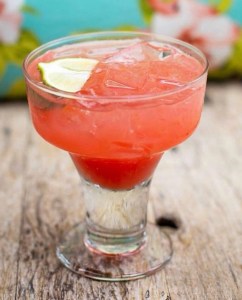
“I don’t care what day it is,” she announced. “It’s margarita time.”
She paused, stretched her back, and added:
“Ain’t retirement a bitch?”
I sat there trying not to laugh out loud.
Three women. Three philosophies. One universal truth:
Aging may take your schedule, your patience, and your cartilage—
There are people who pass through your life, and then there are the ones who leave a voice behind.
The ones who teach you, steady you, challenge you… and sometimes cause just enough chaos to make you pay attention.
John was one of those.
He didn’t lecture. He didn’t sit you down and explain how life worked. He just lived it — fully, unapologetically — and if you were paying attention, you learned.
We rode every morning at seven. No matter the weather, no matter the mood, John showed up. Horses saddled, stories ready. There was always a story. Usually inappropriate. Always unforgettable.
As we rode past the barn and headed down the street toward the trailhead, he’d call out, “Vaya con Dios!” like we were setting off on something far more important than a morning ride.
One morning, Sunshine went down hard in the desert — flat on her belly, sand flying, tack slipping sideways. My 23-year-old former endurance horse didn’t hesitate. She hit the ground, sprang back to her feet, and kept cantering toward the lead horse like nothing had happened.
I never came out of the saddle. Not a stirrup lost, not a beat missed — just instinct and motion carrying us forward together.
When we caught up, I asked John to stop so we could check her and tighten the girth, which had loosened and pulled the saddle off center.
He glanced over with that wry, understated smile of his and said, “You have good balance, kid.”
It was the closest he ever came to a compliment — and coming from John, it meant everything.
That was it.
No panic. No overreaction. Just quiet acknowledgment — and then we fixed the saddle and kept riding.
That was John.
He didn’t dwell. He didn’t dramatize. He moved forward.
At the barn, he held court like a man who had seen it all — because he had. He could spot trouble before it unfolded, and he had little patience for what he called “repeat offenders.” People who made the same bad decisions over and over, expecting a different outcome.
He didn’t try to fix them. He just observed, shook his head, and let life do the teaching.
There was a kind of freedom in that.
John understood something I didn’t at the time — that you can’t control other people, and you can’t live their lessons for them. You can only ride your own horse.
Years later, when I went to see him, the stories were quieter. The man who had filled every space with laughter now measured his words. Breathing was harder. Time was closer.
He motioned me in, the way he always did, and said something I’ve never forgotten:
“Every time the sun sets, it takes a part of your life with it. Live your life, sweet thing.”
There was no story after that. No punchline. Just truth.
I didn’t understand it fully then. Maybe I still don’t. But I hear it now in different ways — in the quiet moments, in the choices I make, and in the times I catch myself hesitating.
John didn’t teach through instruction. He taught through presence. Through observation. Through living.
John lived his life with no regrets.
And at some point, we all look back and realize one of two things:
we’re either like John — grateful we went for it with full gusto — or we’re left wondering about the things we never tried.