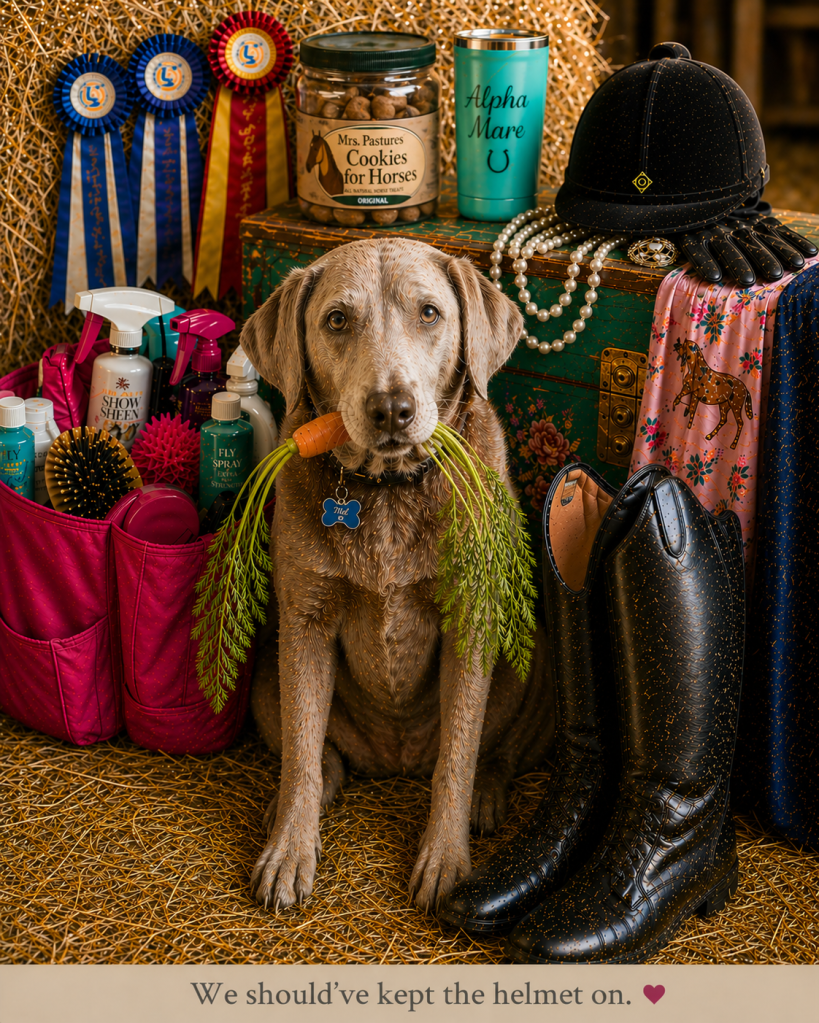
if the wine were stored in a tack trunk, covered in shavings, and smelled faintly of liniment and fly spray.
We’re built differently.
We can spot a lame horse from 300 yards away—but walk straight into the pothole in front of us.
We can recite a horse’s full medical history, lineage, favorite treat, enemies, and emotional triggers…
but lose our sunglasses while they’re sitting on top of our head.
We can back a trailer into a space the size of a shoebox in the dark, while being judged by three strangers and a horse—
but somehow the airport pickup line is the more dangerous sport.
We dress like we might need to ride at any moment.
Even if we’re going to Publix. Even if we haven’t touched a horse in a decade.
Boots? Always. Hair tie? Mandatory. That faint smell of fly spray?
Not a phase. A lifestyle choice.
We don’t need directions.
We navigate using instinct, landmarks that no longer exist, and directions based on a horse trail we rode once in 1998.
We can confidently go in the wrong direction— and still somehow arrive first.
Don’t question it.
We have two default settings.
Elegant equestrian goddess.
Or:
Looks like she lost a bar fight with a hay bale.
There is no third option.
We don’t scare easily.
We’ve handled 1,200-pound animals having full emotional breakdowns.
We’ve ridden through spooks, bolts, bucks, and the sudden realization that the thing in the corner is, in fact, a leaf.
So no, that hostile email is not intimidating.
And yes, we did read the tone.
Yes… we still buy the boots.
Even if we don’t ride anymore.
Even if the closest we get to a barn some days is scrolling through old photographs and remembering the horses who carried us through different chapters of our lives.
Because the boots remind us of the girl who trusted her instincts and got back on when she fell.
Life has a way of bucking sideways.
Horse girls learn early that balance isn’t about perfection—it’s about staying with the ride.
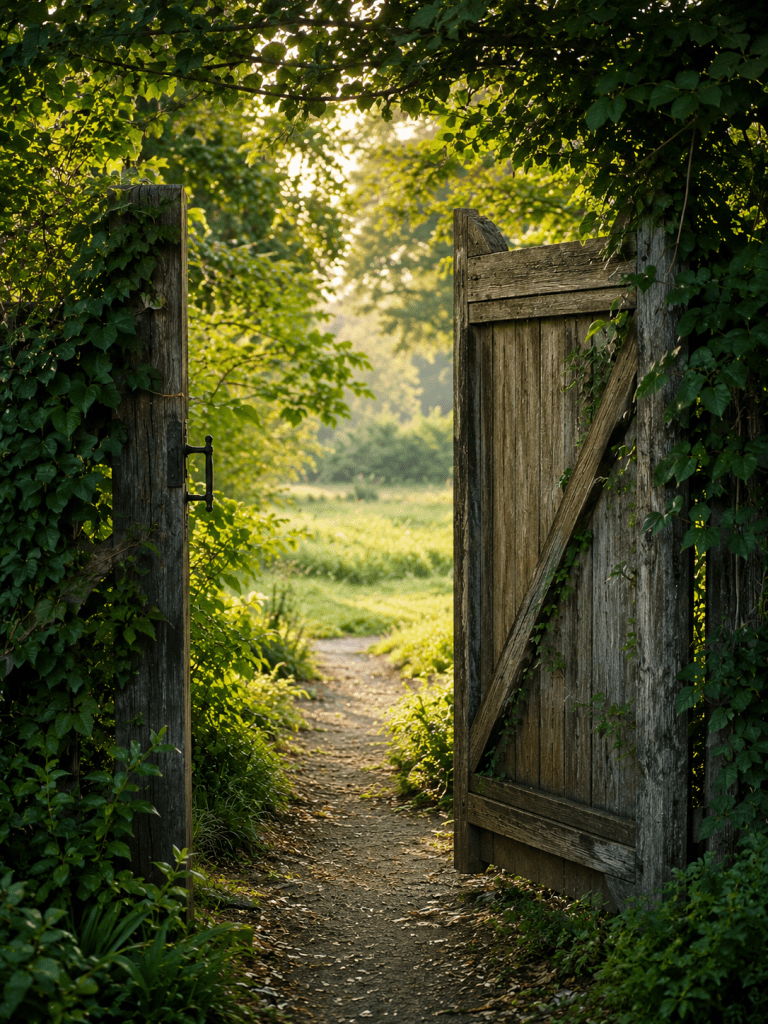
Horses don’t overthink the open gate—they simply move through it.
What began as a day trip turned into an overnight stay at the Riding Academy Hotel. Traveling solo offers the freedom to change plans and lean into the unexpected.
That confidence wasn’t built overnight.
It was earned one ride at a time.
For years, horses quietly taught me to trust my instincts, stay steady when things veered off course, and keep moving forward.
Those may be the greatest gifts we give children in riding lessons—not ribbons or trophies, but the quiet confidence to handle unexpected obstacles.
The best lessons from the herd are subtle. We rarely recognize their relevance until we find ourselves at a crossroads.
World Equestrian Center
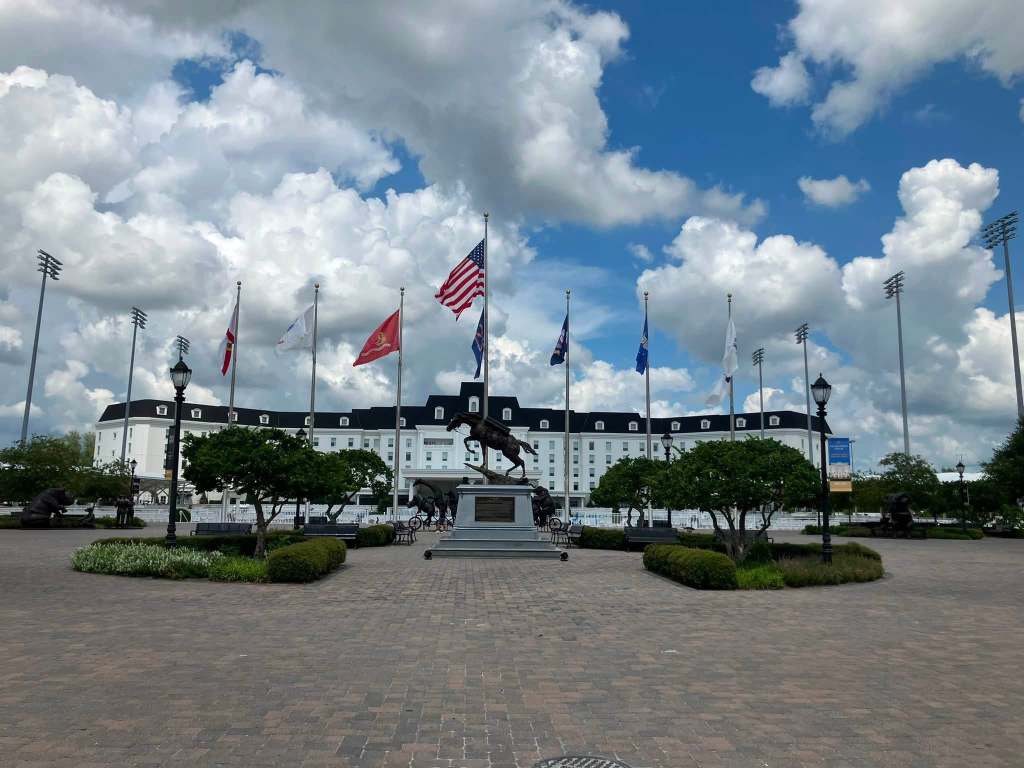
I had seen photos of Ocala’s World Equestrian Center, and heard the rave reviews, but nothing prepared me for seeing it in person.
The first surprise wasn’t the horses.
It was the scale.
For a property this expansive, it feels welcoming rather than overwhelming. Perfect landscaping, elegant architecture, beautiful courtyards, and world-class competition create an atmosphere that feels more luxury resort than horse show grounds.
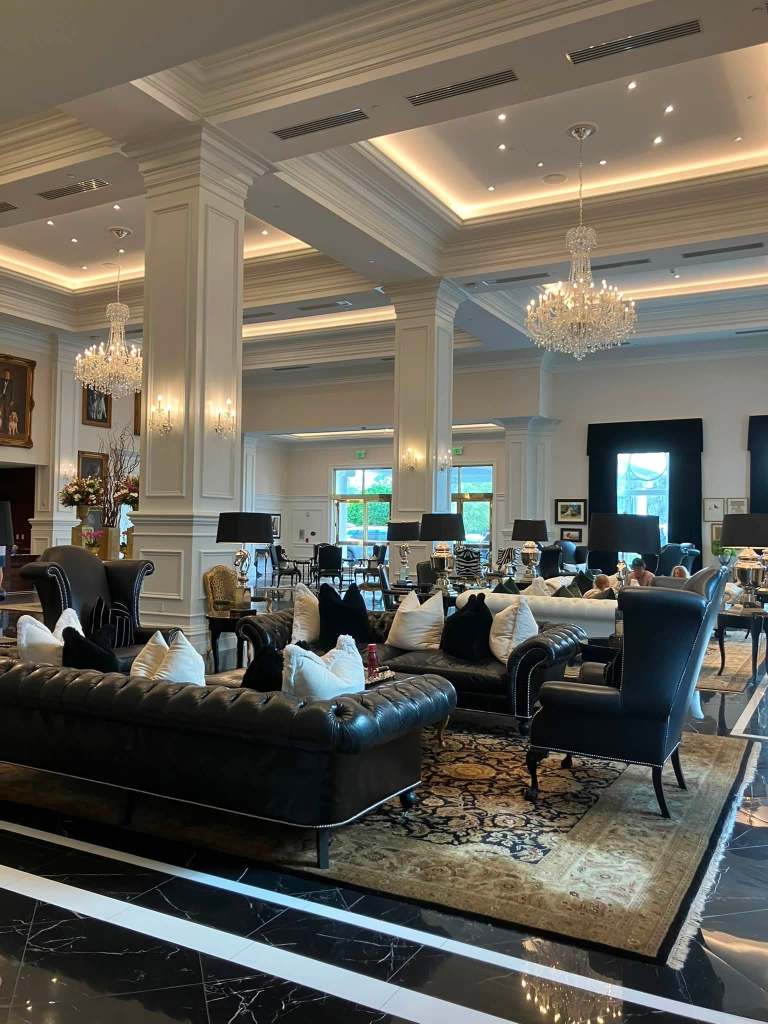
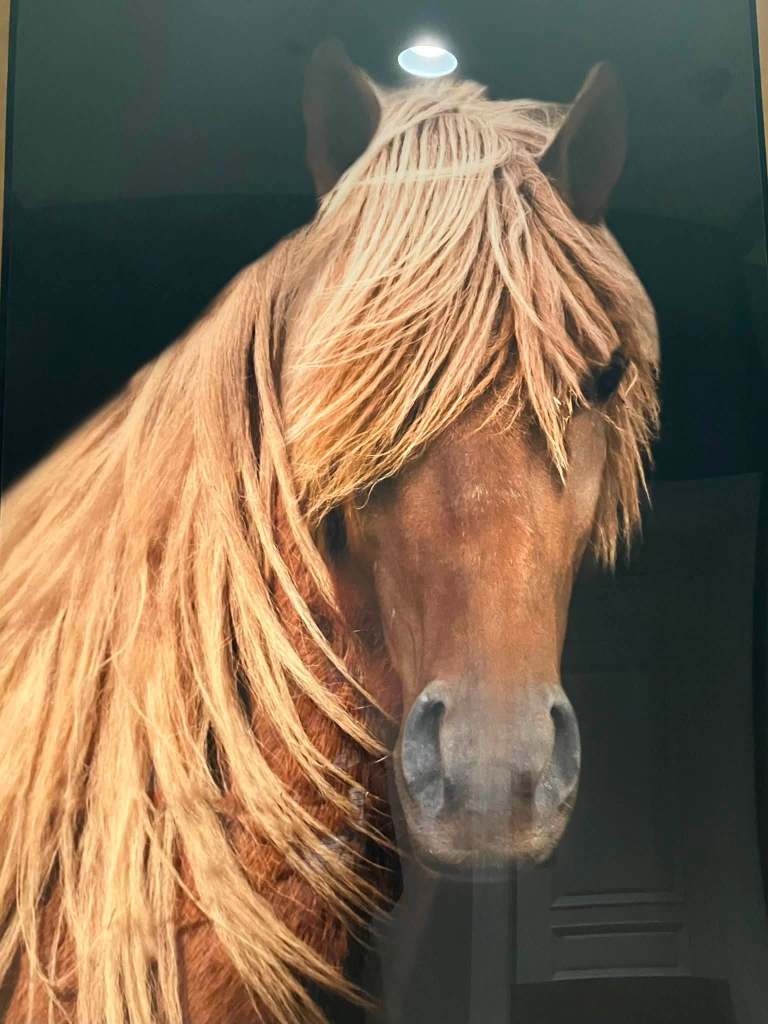
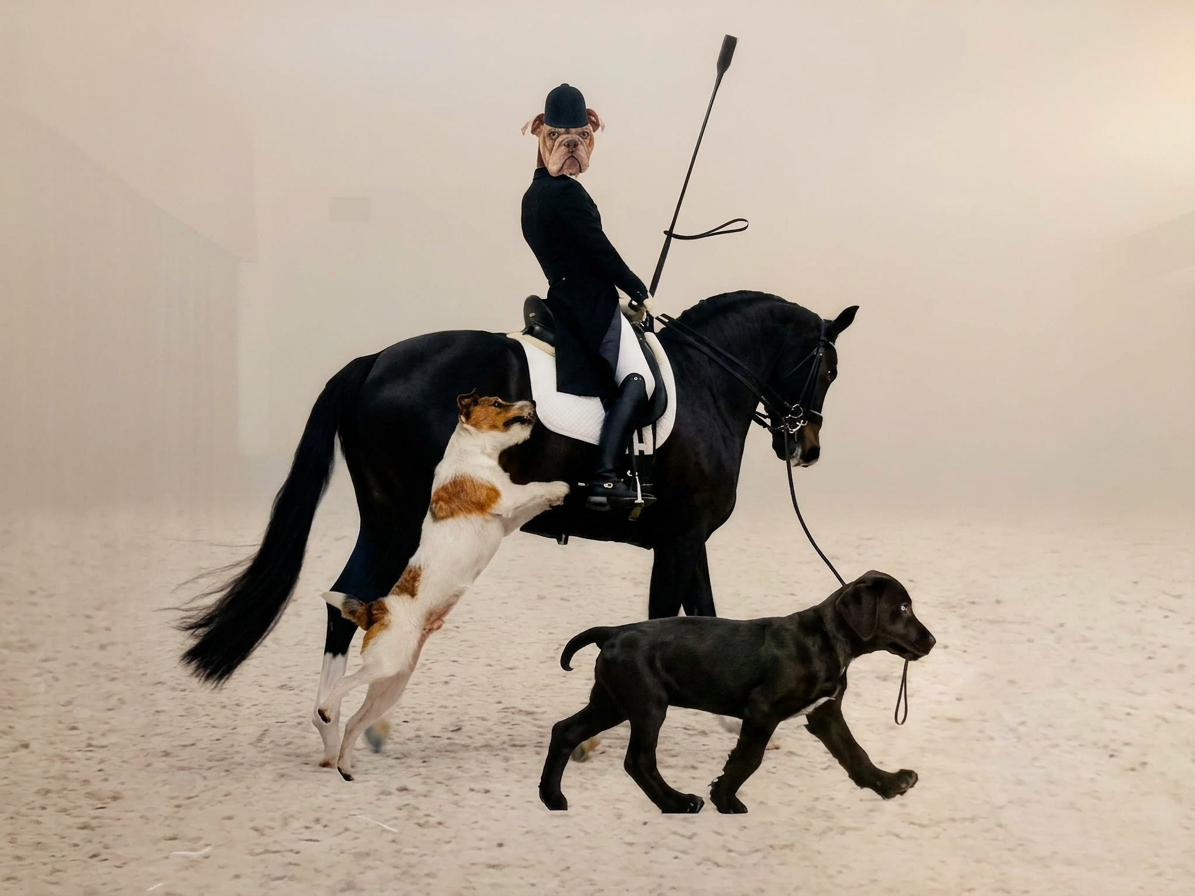
The Equestrian Hotel has crystal chandeliers, polished marble, and beautiful horse and dog artwork that makes you want to sink into a leather chair and enjoy the ambiance.
Despite the opulence, horses remain the heart of the facility. Whether you’re an equestrian or simply appreciate watching incredible athletes—both horse and rider—the competitions are mesmerizing.
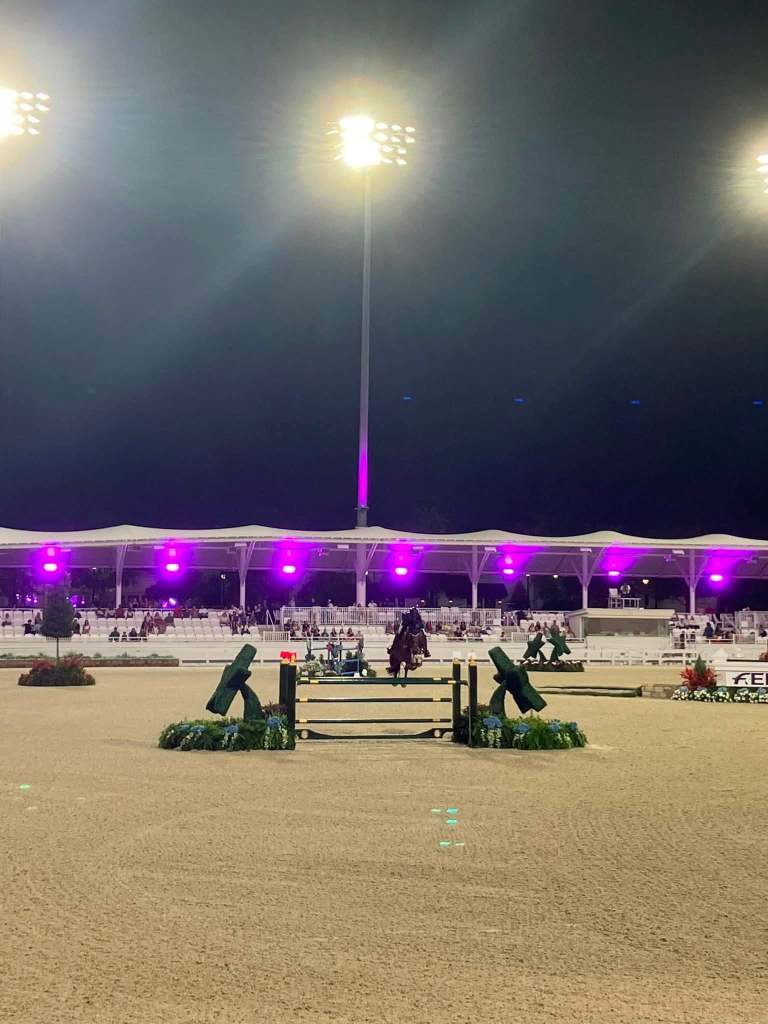
I took a seat in the Grand Arena at sunset. Under the glow of arena lights, horse and rider flowed across the course with a rhythm that made every jump appear effortless. Everyone in the stands knew those few flawless minutes represented years of training, trust, and unwavering commitment.
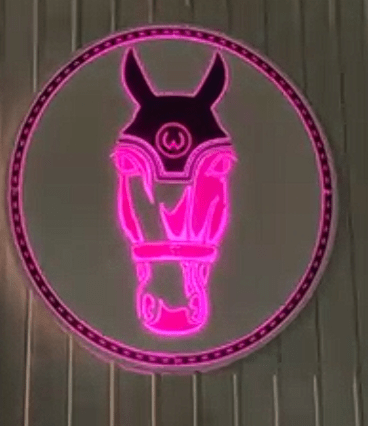
By day, the facility is luxurious; at night, it transforms into something magical. On the walk back to the hotel, the illuminated horse logo glowed brilliantly against the arena wall, a striking reminder that even the smallest details had been thoughtfully designed.
A Room with Equestrian Charm
I stayed at the Riding Academy Hotel, which offers the same elegant feel as the Equestrian Hotel but on a smaller scale.
My room was spacious, comfortable, and thoughtfully decorated. My favorite detail was the whimsical artwork of a dog riding horseback hanging on the wall.
The entire property is dog-friendly, and well-behaved four-legged guests seemed almost as common as horses.
Parking is free, including a covered garage across from the hotel.
A new section of shops and restaurants is currently under construction as WEC continues to expand and elevate the guest experience.
A Detour to Silver Springs
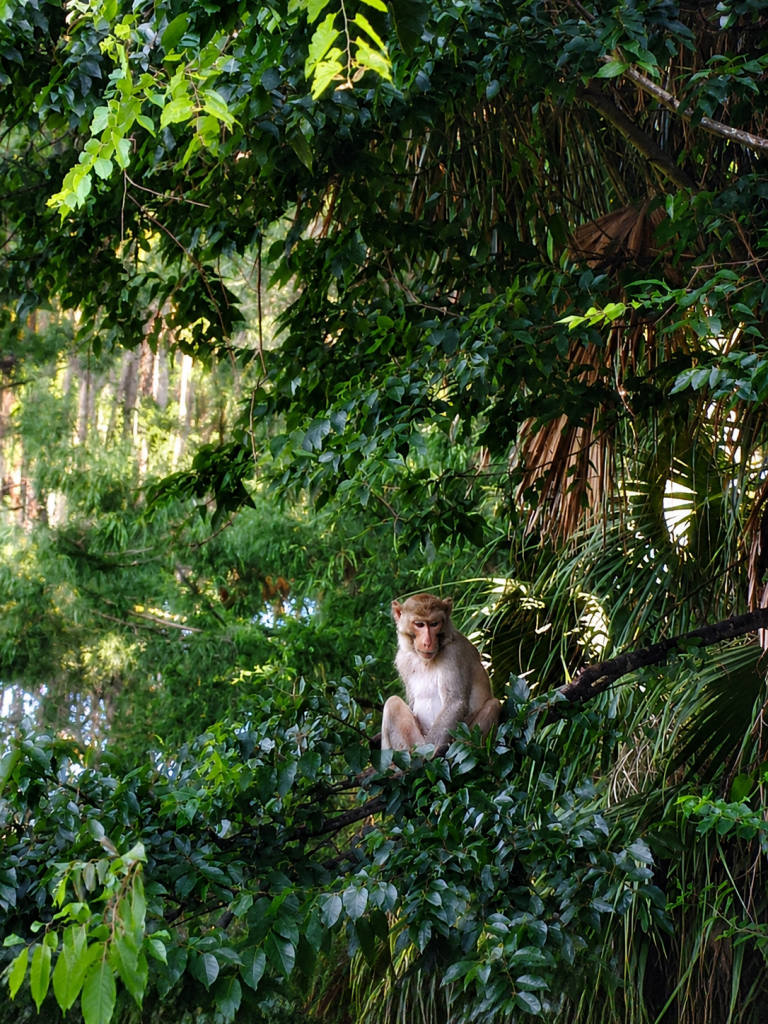
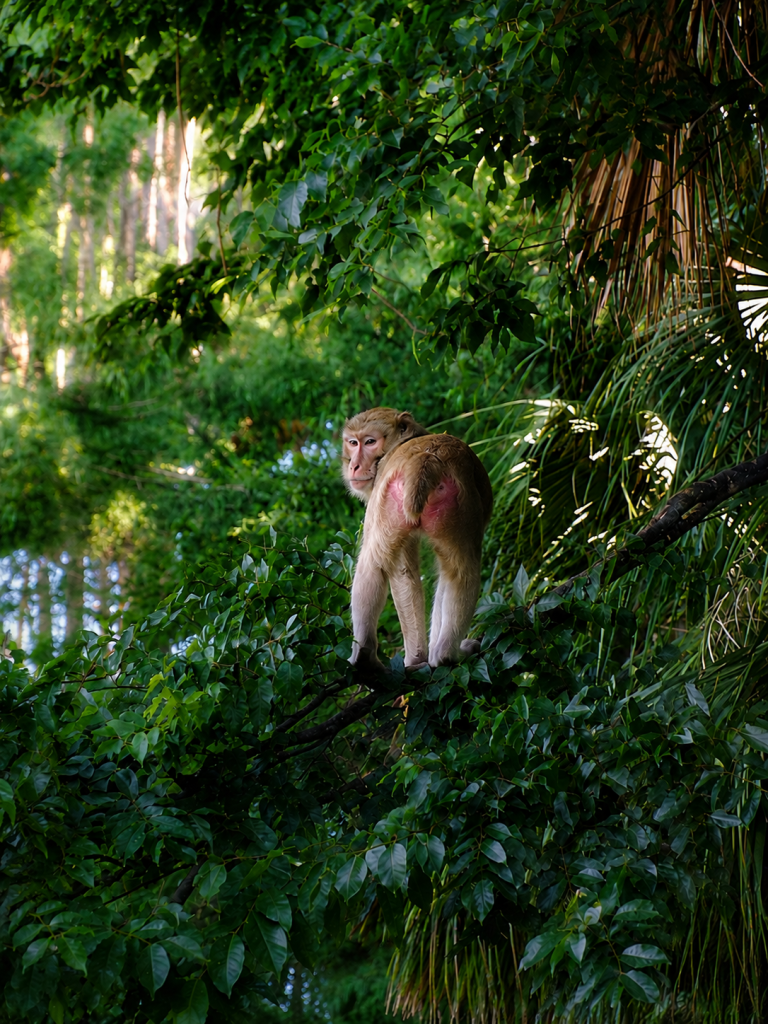
Before driving home, I stopped at Silver Springs State Park to hike the River Trail to see if I could spot the famous wild monkeys.
The shaded boardwalk trail winds through towering trees and across the crystal-clear river where kayakers quietly drift beneath the bridge.
At first, nothing.
Then, on the paved trail along the river, the monkey’s appeared.
The signs make one thing perfectly clear: Do not feed the wildlife.
A couple beside me were watching two monkeys perched just above the trail. When the gentleman stepped a little too close for a better photograph, one monkey abruptly stood, shook the branches, and loudly informed him that his photo session was over.
Message received.
Most of the monkeys seemed perfectly content to pose from the trees like tiny furry Buddhas, calmly munching leaves while people snapped pictures below.
My favorite was the monkey who deliberately turned around and presented its adorable little monkey backside directly toward my camera.
Apparently, not all monkeys want to be famous.
Final Thoughts
Sometimes the herd’s greatest gift isn’t teaching us how to ride.
It’s teaching us how to live.
Long after the saddles are put away, those lessons continue to appear in last-minute detours, unfamiliar trails, and quiet moments when we realize we’re capable of more than we once believed.
Courage is usually quiet — the kind you build one step at a time.
Freedom often waits just beyond the places we’re hesitant to explore.
And sometimes an open gate isn’t something to question.
Like a herd of painted ponies, friends are the color in life’s kaleidoscope.
They don’t arrive all at once, and they don’t stay in formation.
Some move through quietly. Others burst in, bright and unforgettable. A few linger long enough to feel like part of the landscape.
The people we meet along the way come in all personalities. Some are lasting. Some are transient. All of them leave a mark—one of remembrance or a lesson.
Some friendships are easy. They settle in naturally, without effort or expectation. You pick up where you left off, no matter how much time has passed.
Others arrive with intensity—fast, vibrant, consuming—only to fade just as quickly. At the time, they feel significant. Later, you realize they were never meant to stay.
And then there are the ones who challenge you.
The ones who reveal something you didn’t want to see. The ones who test your boundaries, your patience, your sense of self. They don’t always leave gently, but they leave something behind—clarity, strength, or the quiet understanding that not every connection is meant to last.
It’s easy to measure friendship by duration. The ones who stayed. The ones who didn’t.
But time isn’t always the measure.
Some of the most fleeting connections leave the deepest impressions. A conversation. A moment. A shared experience that shifts something in you, even if the person is gone just as quickly as they arrived.
Like a kaleidoscope, the pattern is always changing.
Pieces move. Colors shift. What once felt central fades to the edges, while something new comes into focus. You don’t always see the full design while you’re in it.
Only later do you recognize the pattern—the way each person added something, even if it was brief.
Some brought warmth. Some brought laughter. Some brought lessons you wouldn’t have chosen, but needed all the same.
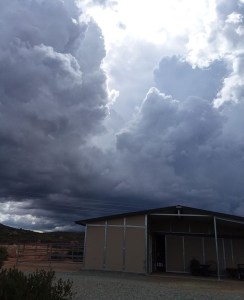
They feel it long before the sky changes—before the first drop, before the first sound of thunder.
The air shifts. The energy changes. The herd knows.
And they move.
We’re not built that way.
We get the warning… and stay anyway.
There’s always a moment.
It’s usually quiet. Subtle. Easy to dismiss if you’re not paying attention.
Something feels off.
Not wrong in a way you can explain. Not enough to walk away. Just enough to make you pause—if you let yourself.
Most of us don’t.
We explain it away. We soften it. We give it the benefit of the doubt. We tell ourselves we’re being too sensitive. Too cautious. Too quick to judge.
So we stay.
The first signal is rarely loud.
It doesn’t arrive with certainty or clarity. It shows up as discomfort. A hesitation. A shift in energy you can’t quite name.
Like the air changing before a storm.
And almost instinctively, we override it— because walking away early feels unreasonable, because we don’t have proof, because we want to believe the best.
But the truth is simple, even if we don’t like it:
We knew.
Not everything. Not how it would unfold. Not how far it would go.
But we knew enough.
There’s a cost to ignoring that moment.
It’s not always immediate. Sometimes it takes time to surface.
It shows up in small ways at first—unease, tension, the sense that you’re adjusting yourself to fit something that doesn’t quite align.
Then it grows.
You find yourself explaining behavior you wouldn’t normally tolerate. Making space for things that feel uncomfortable. Silencing your own reaction just to keep the peace.
And little by little, you lose your footing.
We don’t just ignore red flags.
We negotiate with them. We rewrite them. We minimize them. We convince ourselves they mean something else.
But the signal doesn’t change— only our willingness to listen.
Looking back, the clarity is always there.
The moment you hesitated. The thing that didn’t sit right. The feeling you pushed aside.
It was never unclear.
It was just inconvenient.
We sabotage our equilibrium every time we step into a situation that feels off from the start.
Learning to trust that first signal isn’t about becoming guarded or closed off.
It’s about staying aligned with yourself— about recognizing that discomfort isn’t something to override… it’s something to understand.
Because in the end, the lesson isn’t about what someone else did.
I was about to be slid into a narrow cylinder with no exit and asked to lie still for forty-five minutes.
The attendant explained the process in a calm, practiced tone, then offered music to help me relax.
I declined.
Ten minutes later, I regretted every life choice that brought me to that moment.
Somewhere in the next room, a burly man was yelling, “Get me out of this thing!” His panic did nothing to soothe mine. Inside the tube, the air felt thinner, the walls closer, and my heartbeat louder. Claustrophobia crept up my spine like a slow electrical current.
And then I heard my horse trainer’s voice in my head: Listen to the birds sing.
There were no birds there, but I reached for the image anyway. I pictured myself walking along a quiet beach, waves rolling in and out, the sun warm on my shoulders.
It must have worked, because the next thing I knew, the attendant was nudging me awake. Forty-five minutes had passed without me clawing my way out of the machine.
Horses have been teaching me things for years, often without my noticing.
They are honest in their interactions, intuitive in ways humans rarely allow themselves to be, and immediate in their responses. I’ve been told so many times to “think like a horse” that I now catch myself watching people for the same cues I look for in a pasture: dominance, insecurity, bluffing, avoidance.
If humans handled conflict the way horses do — directly, immediately, and without apology — we’d probably have fewer interpersonal disasters.
Take Sunrise, my Peruvian Paso.
Around people she is sweet, soft-eyed, and polite. But turn her out with other horses and she becomes the matriarchal mare who takes no prisoners.
The first time I saw her defend herself, I was stunned.
On Day 1, as the new horse in turnout, she was kicked and bitten.
On Day 2, she made her point.
She singled out the aggressor, chased her relentlessly, cornered her, and left no doubt about where she stood. That mare never looked at Sunrise sideways again.
Sunrise only had to say it once.
Rosie, my Arabian, is the opposite.
With humans, she’s expressive, fiery, and full of personality. You’d assume she’d dominate any herd.
She doesn’t.
In turnout, she’s the one who gets pushed off hay piles, chased from the fence line, and quietly yields space to horses half her size.
Something in her body language tells the herd she won’t fight back.
They read her correctly.
Watching them taught me something I should have learned years earlier:
What’s inside a horse — or a person — is rarely what you see on the surface.
Sunrise looks delicate but is steel. Rosie looks bold but is vulnerable.
And humans? We’re even worse at showing who we really are.
Horses don’t tolerate mistreatment.
They don’t make excuses. They don’t wait for things to “get better.” They don’t hold meetings about it.
They respond — immediately, clearly, and without hesitation.
Their boundaries are visible, consistent, and respected.
Humans, on the other hand, let things fester.
We stay silent. We rationalize. We reward the very behavior we claim to hate.
And then we wonder why people “always” treat us a certain way.
A wise woman once told me that every time I interact with my horse, I’m training it — whether I mean to or not.
The same is true with people.
With every interaction, we teach others how to treat us — through our words, our behavior, and our silence.
When someone crosses a line and we say nothing, we’ve just taught them they can do it again.
Healthy boundaries aren’t walls.
They’re self-respect in action.
They keep us centered. They protect our peace. And they’re the first step toward becoming our own best friend.
By the time I met the small Arabian mare named Rosie, eight owners in eight years had already given up on her. The current owner was preparing to send her to auction — a fate that rarely ends well for a horse.
Somehow the grieving human and the troubled horse found each other.
What followed became a bond of trust that neither of us expected, but both of us needed.
Every horse person remembers their first ride.
Mine came at the age of twelve. Later, after transferring to a new job in Delaware, a colleague named Vivian convinced me to join her for riding lessons. She had recently attended the Devon Horse Show and concluded that riding must be simple — after all, the horse does most of the work.
We signed up for lessons at Arundel Stables in the middle of winter. The outdoor arena was buried in snow and the temperature hovered near twenty degrees.
Vivian rode a horse named Whitey. Each week she proudly mounted and rode toward the arena, only to have Whitey spin around and gallop back to the barn with Vivian screaming the entire way.
One especially cold morning Whitey decided he had endured enough. He deposited Vivian into a deep snow drift, cleared the arena fence, and returned to the warmth of his stall.
Vivian climbed out of the snow unleashing a series of colorful words before storming away.
It was the last day she ever rode a horse.
For reasons I still cannot fully explain, it was the day I realized riding had entered my blood.
Years later, I found the horse who would become my first great partner.
Her name was Sunshine.
She was a ten-year-old Arabian-Quarter Horse cross with kind eyes and endless energy. For the next twenty-five years we explored trails together, first on the East Coast and later in Arizona, where I moved with her when she turned twenty.
Sunshine lived to the remarkable age of thirty-five before impaction colic finally claimed her life.
Losing her was devastating. Some days I laughed remembering our adventures. Other days I cried buckets.
Her photographs still hang near the entryway of my home. Every time I walk through the door, she greets me.
I told myself I would never love another horse the same way.
Then Rosie appeared.
I was looking for a companion horse for Sunshine when someone suggested I visit a backyard outside of Phoenix to see an eight-year-old mare.
Rosie possessed none of the qualities I thought I wanted. She was defensive, mistrustful, and widely considered untrainable. Eight previous owners had passed her along like an unwanted responsibility.
The current owner was ready to send her to auction.
I bought her simply to spare her that fate.
I knew she would be a project. What I didn’t know was how deeply our lives would intertwine.
Training Rosie required help from an extraordinary horsewoman named Koelle.
Koelle quickly recognized that Rosie’s behavior wasn’t stubbornness — it was fear. Every interaction with humans triggered defensive reactions, particularly when anyone tried to touch her face or feet.
Years of mishandling had taught Rosie that people could not be trusted.
The first breakthrough came with the farrier. After a disastrous initial visit, he refused to work on Rosie again unless she was sedated.
Eventually I convinced him to attend a training session with Koelle.
He arrived skeptical.
Within an hour, Rosie stood quietly for hoof care and lifted her feet on cue without even being touched.
The farrier left astonished and still tells the story of Rosie’s transformation that day.
That was the moment the light bulb went on.
Rosie was not untrainable.
She simply needed someone willing to listen.
Despite her mistrust of humans, Rosie displayed surprising gentleness toward Sunshine as the older horse aged.
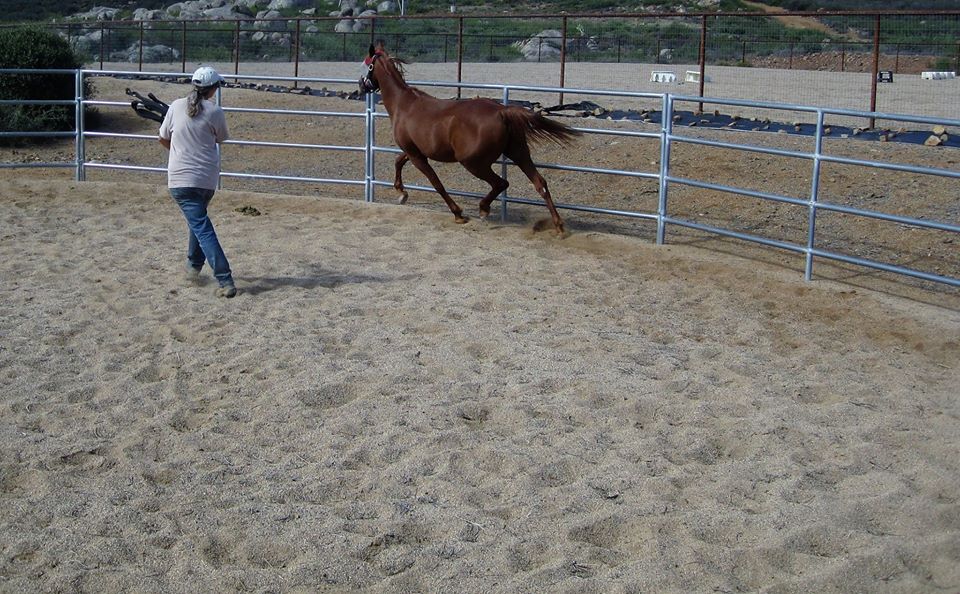
During turnout in the arena, Rosie adjusted her pace to match Sunshine’s ability on any given day. Some days they ran together. Other days Rosie simply circled protectively while Sunshine rested or struggled to stand after rolling in the sand.
Watching Rosie care for the older mare revealed a side of her few humans had ever seen.
Beneath her defenses was a remarkably intuitive horse.
One moment convinced me just how aware she truly was.
I turned Rosie loose in the arena to run. I removed my sunglasses so she could see my eyes more clearly while we worked together.
Afterward I walked toward the gate with Rosie following behind me.
Only when I reached the gate did I realize my prescription sunglasses were gone.
For twenty minutes I searched the entire arena, convinced they had been crushed beneath pounding hooves.
Rosie waited patiently at the gate, watching my every movement.
Finally, I gave up and walked back toward her.
At that exact moment Rosie left the gate, walked across the arena, and stopped in an unusual spot. She lowered her nose to the sand and held it there.
When I reached down to attach her lead rope, I saw them.
My sunglasses were lying directly beneath her nose.
Not only had she seen them fall — she had carefully avoided stepping on them while galloping around the arena.
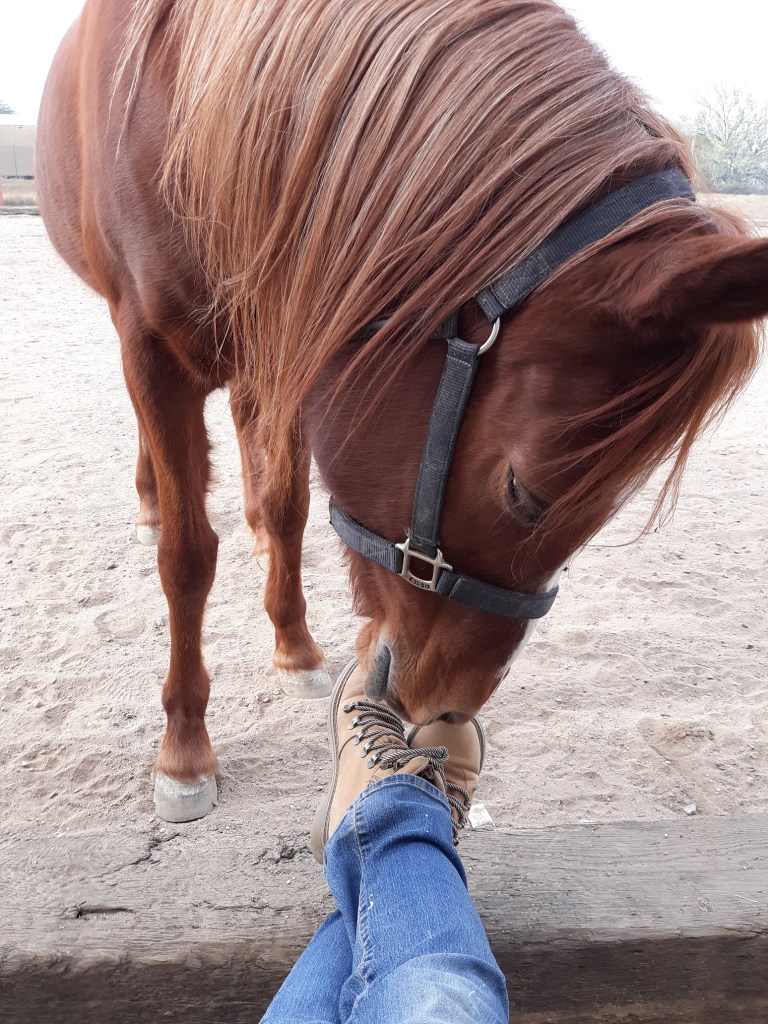
When I put the glasses back on, Rosie rested her head on my shoulder and gently nuzzled my neck.
It was the first true affection she had ever offered.
No words were necessary.
Over time, Rosie allowed me to touch her face and welcomed the affection she once rejected.
Every day I remain grateful for the lessons she has taught me about patience, trust, and the quiet power of understanding.
They called her difficult.
They called her untrainable.
But Rosie simply needed someone willing to listen.
She lived with me for twenty years after that first uncertain meeting, and in time she became the horse no one believed she could be — calm, trusting, and deeply intuitive.
I lost Rosie in September of 2024.
When I think of her today, I still see her soft eyes looking into mine on that final day.
If you ever met Rosie, you know she wasn’t a horse to be trifled with. Smart, intuitive, and selectively stubborn, she ran a tight ship in her barn — and she certainly didn’t outsource management.
I hired a professional equine sitter while my husband and I went on a short vacation. The sitter was experienced, kind, and confident. I assumed everything would go smoothly. Rosie, however, had other plans.
The first night, I received a cheerful email: both horses let the sitter kiss them on the nose. I smiled and told my husband, “Okay… that won’t last.”
True to form, silence followed for the next couple of nights. I assumed no news was good news — until a desperation email arrived. Rosie was no longer allowing the sitter anywhere near her. Grooming? Absolutely not. Removing the blanket? Not a chance. Her mane had turned into a tangled disaster, and the blanket stayed on for days.
When I returned home, I walked into the barn ready to negotiate a truce. Untangling the mane and removing the blanket felt like delicate diplomacy — and I knew full well Rosie held all the power.
Here’s the thing about Rosie: she was extremely intuitive. She assessed the new handler on day one and immediately determined who was in charge. Kind words and polite gestures didn’t sway her. She read energy, tone, posture — and acted accordingly. By the time I stepped back into the barn, it was clear: the sitter had been fired. Rosie had made her boundaries unmistakably clear.
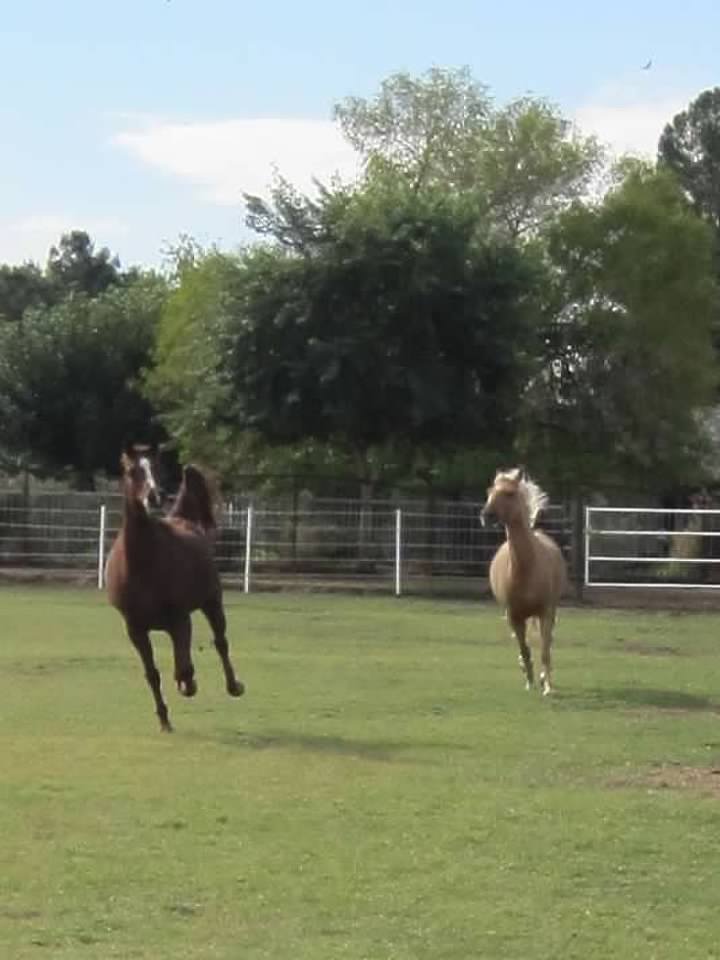
Watching her with Sunrise was its own lesson in equine politics. Sunrise, the calm and compliant trail horse, was Rosie’s opposite — and for years she bossed Rosie around, chasing her from hay piles and asserting herself at every turn. Then one day, Rosie decided she’d had enough. Teeth flashed, hooves flew, and years of pent‑up “I’m done with this” energy erupted. No injuries, just a firm rebalancing of power. From that day forward, Rosie never had to defend her food again.
Rosie’s presence in the barn was a daily reminder of the power of intuition, boundaries, and quiet leadership. She was a teacher without words — reading energy, setting limits, and communicating with a clarity most humans never master.
Lessons from Rosie: never underestimate an intelligent horse, always pay attention to body language, and remember that in her world, respect was earned — never assumed.
Until her final day, she still ran the show — in her barn, in her life, and in our hearts.
Sunshine, my first horse, was an absolute angel. I made all my early mistakes with her, and she tolerated every one of them with patience and grace. She lived to 35 and guided me through the early years of horse ownership with a temperament that could calm any storm.
She was loving with people, gentle with the herd, and willing in every task. Wherever we boarded, Sunshine became the sweetheart of the barn. She taught me the rhythm of partnership, the importance of consistency, and the quiet power of empathy.
When Sunshine suffered impaction colic and passed away, I was heartbroken. Rosie, her companion at the time, suddenly needed a new herd mate — and I needed a way forward. That loss opened the door to the next chapter: Sunrise.
Rosie: The Difficult Fireball
Rosie had been labeled untrainable. Eight owners in eight years had given up on her, and she was on the brink of being sent to auction. I bought her to spare her from that fate, fully aware she was a project — and fully unaware of how much she would change me.
Her early life had left its mark. She was reactive, protective, and deeply sensitive. Even simple tasks like touch or hoof care could trigger resistance. But behind all that fire was intelligence, intuition, and a fierce will to survive.
Her first breakthrough came with the farrier. After a disastrous initial visit, he refused to trim her without sedation. Two failed attempts later, I convinced him to work with Koelle, our equine trainer. Within an hour, Rosie lifted her hooves calmly and consecutively — a moment that felt like witnessing a miracle.
Rosie’s intuition was extraordinary. She read energy with precision.
The day I arrived at the barn after my accident — disheveled, injured, and emotionally raw — she recognized it instantly. She nickered loudly, nuzzled me gently, and made it clear she knew something was wrong. She didn’t need touch to understand vulnerability.
Through years of partnership, Rosie taught me patience, awareness, and the kind of trust that must be earned, not assumed. She forced me to slow down, to listen, and to show up consistently.
Sunrise: The Companion Who Chose Me
After Sunshine’s passing, Rosie needed a friend. That search led me to Sunrise, an eight-year-old Peruvian Paso mare who had been rescued and professionally trained.
Sunrise was everything Rosie wasn’t — calm, brave, steady, and deeply attuned to her rider. On her first day, we performed join-up in the round pen. She approached me directly, stopped in front of me, and the rescue owner said, “She just chose you.” And she had.
Her past had been difficult. She and her lifelong companion, Conquistador, had been rescued from neglect. But she had also been trained in California, competing successfully and earning ribbons at the Pomona Championship Horse Show.
Watching Sunrise and Rosie together was its own kind of education. They were different in every way, yet somehow balanced one another. Over time, their relationship shifted, and so did Rosie’s confidence.
Sunrise became my trusted trail horse — calm, protective, and reliable. She taught me the value of steadiness, intention, and quiet leadership.
Lessons from the Herd
Each horse taught me something different, something essential:
Sunshine taught consistency, grace, and the foundation of partnership.
Rosie taught resilience, intuition, and the courage to set boundaries.
Sunrise taught stability, bravery, and the quiet strength of reliability.
Together, they reshaped my understanding of connection, communication, and presence.
Horses speak through energy, not words. They respond to intention, not performance. They mirror our emotional truth whether we want them to or not.
The Enduring Gift of Horses
Even after their passing, their lessons remain. Rosie’s intuition, Sunshine’s patience, and Sunrise’s quiet strength continue to guide me — in relationships and in life.
Horses are not just animals. They are teachers, companions, and mirrors of our emotional selves.
Their gift endures — in memory, in wisdom, and in the way I move through the world.