Attack of the Bidet

Three coworkers by day, deeply questionable decision-makers by night—we had a long-standing tradition built on clubs, dance floors, and the sacred lie of “this is the last stop,” a promise that had never once survived contact with reality.

So, when Vivian announced she wanted to take a trip to Reno for a job search, there was… a pause.

Not because anyone doubted her.

But because everyone understood exactly what “job search” means in Vivian’s universe.

“To be clear,” I asked Viv, “Are we actually job searching… or are we just bringing résumés near casinos?”

Vivian just smiled—that raven-haired, chaos-coded smile that has historically been preceded both by free upgrades and mild property damage.

And that’s how the three of us ended up on a quick getaway that returned us with snacks, poorly vetted decisions, and a story that honestly should come with a warning label.

Not just a story—a series of regrettable brilliance.  The kind that changes a person.


Somewhere between check‑in and getting the room keys, Vivian turned on the charm with the reservation clerk — that effortless flirtaholic energy she refused to turn off — and next thing you know?

Suite upgrade.

No one asked questions. No one intervened. The universe simply… allowed it.

Which is how we ended up with a much‑nicer‑than‑necessary hotel bathroom.

Clean tile. Soft lighting. A dangerous level of confidence in the air.

And sitting innocently beside the toilet… a bidet.

Paula stared at it like it had personally wronged her.

I backed away immediately, already sensing danger.

Vivian? She just tilted her head, assessing it like a puzzle she fully intended to solve incorrectly.

Paula, a grown adult with confidence and absolutely no relevant experience, gave it a once-over.

“I mean… how hard could it be?”

Vivian, already interested in chaos, leaned in.

I stayed near the door. Observing. Judging. Preparing to testify later.

Paula held up a finger as she recounted this part afterward.
“There was a button labeled Mountain Stream.”

Me: “That sounds aggressive.”

Vivian: “That sounds like a challenge.”                                                                                                  

Paula:  “I’m pressing it.”

She should not have pressed it.

What happened next defies physics, plumbing, and several personal boundaries.

A jet of icy, high-pressure water blasted upward with the enthusiasm of a Yellowstone geyser. Paula shrieked—loud enough to concern nearby guests and possibly alert the front desk to a situation they were not trained for.

The force launched her forward.

I watched this unfold in real time and can confirm… she left the ground… like fully airborne.  It was like witnessing a NASA rocket launch. 

Paula hit the wall, slid down dramatically, drenched, stunned, and—by her own account—spiritually rearranged.

Dignity?  Gone.
Composure?  Gone.
Grip on reality?  Slippery at best.

Naturally, Vivian stepped forward.

“You didn’t do it right. Move.”

I tried to induce sanity: “No. No one needs to do it right.”

But Vivian had already committed.

She approached the bidet with the enthusiasm of someone who has never been defeated by plumbing—or common sense.

The bidet responded with the confidence of a machine that absolutely intended to win.

Within seconds, Vivian was hydroplaning across the tile like a confused penguin in a disaster film. Towels were sacrificed. Dignity was lost. The bidet remained… committed.

At one point, she caught her reflection.

Hair soaked. Eyes feral. Shirt clinging like she’d just fought the ocean and lost.

She didn’t look human anymore.

She looked like Soakazilla— a damp, furious creature born from dubious life choices and excessive water pressure.

“This is how I die,” she announced, slipping—again—while reaching for the knob.

Paula, still recovering on the floor, offered zero assistance.

I was pressed against the wall, now laughing in the specific tone of someone witnessing history.

Somewhere between the slipping, the shrieking, and the aggressive aquatic betrayal, Vivian managed to hit peak velocity—hydroplaning into the towel rack, careening sideways, and sliding down the wall like a damp tactical mural.

Eventually—after what felt like 8–12 business seconds but may have been an entire era—she shut the bidet off.

Silence fell.

Only the sound of dripping water remained.

And three women reconsidering every life choice that led them to that bathroom.


But here’s where it gets worse.

Because after witnessing Paula’s launch and Vivian’s transformation into a water-based cryptid, there should have been a lesson.

There was not.

There was… a second attempt.

Paula, fueled by wounded pride and extremely poor judgment, whispered, “Okay but I think I understand it now.”

“You don’t”, I pleaded “You absolutely don’t.”

Of course she tried again.

The bidet, unwavering in its mission, responded with the same unholy enthusiasm.

Another blast. Another shriek. Another loss for humanity. 

At this point, the bathroom floor was no longer a surface—it was a hazard.

Both Paula (Geyser) and Vivian (Soakazilla) had now been personally victimized by hotel plumbing.

I remained the sole survivor. Dry. Untouched. But emotionally changed.


No amount of personal development will undo what happened in that bathroom.

Some experiences stay with you.
Some follow you.
Some… require towels and silence.

And for everyone’s safety, Soakazilla and Geyser are now permanently banned from unsupervised encounters with hotel plumbing.

I, meanwhile, have been appointed both witness and historian.

If anyone ever suggests a quick trip again—I will be bringing a flotation device.

Because apparently being launched across a bathroom wasn’t humiliation enough, the hotel bill politely informed us: ‘No Charge for the Power Wash.’  Honestly, that hurt more than the water pressure.

RIP Vivian, thanks for the memories.

Where The World Still Feels Untouched

There are places in the world where animals watch you.
And then there’s the Galápagos—
where they don’t.

There’s no fear in their eyes. No instinct to run. No sense that you don’t belong.
You’re not observing wildlife.
You’re stepping into their world.


Quito felt like an introduction… but not the destination.

The Marriott was familiar, predictable — a place to land before stepping into something I couldn’t quite picture yet. The next day brought the expected stops — the equator line, the views, the market, a lunch that felt more staged than real. It was interesting, even enjoyable, but still within the rhythm of travel. Structured. Explained. Designed for you.

It all made sense.

Until it didn’t.


Somewhere between Quito and the islands, the world shifted.

Smaller plane. Fewer people. More distance between things.
Less noise. Less urgency.

By the time we boarded the Celebrity Xpedition, it was clear this wasn’t going to be a typical trip. The ship didn’t feel like a destination — it felt like access. A way in.


In the Galápagos, the rules are simple — and enforced.

You don’t wander.
You don’t touch.
You don’t interfere.

Every visitor is accompanied by a licensed naturalist. The ecosystem is protected with an almost reverent discipline, and because of that, the animals remain exactly as they were meant to be — wild, undisturbed, and completely indifferent to human presence.

And that indifference is what makes the experience so extraordinary.


We explored the islands twice a day for a week — one excursion in the morning, one in the afternoon.

Each outing felt like stepping into a different world.

One moment you’re walking along a rocky path beside marine iguanas, the next you’re standing quietly while a sea lion pup studies you with curious, unguarded eyes. Birds nest at your feet. Crabs scatter across volcanic rock. Life unfolds all around you, uninterrupted.

There is no performance.
No reaction.
No need for you at all.


I wasn’t prepared for how close everything would be.

Not just physically — although that alone was surreal — but something deeper.

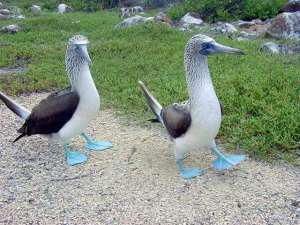
The blue-footed boobies walked past like we didn’t exist.
A sea lion blinked slowly, unimpressed by my camera hovering inches away.
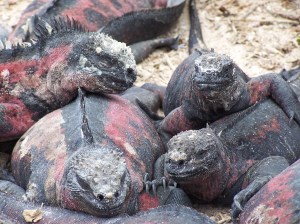
Marine iguanas gathered in clusters, ancient and unmoved.

It wasn’t that they trusted us.
It was that they had never learned not to.


There was one moment that stayed with me — simple, unexpected, and oddly meaningful.

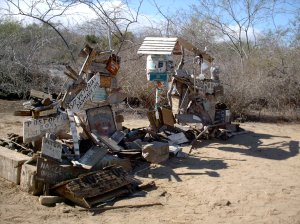
We stopped at what they call the “post office” on Floreana Island.

Not a building.
Not a mailbox.

Just a weathered barrel surrounded by driftwood signs from travelers who had passed through before us.

We were each given a postcard and asked to write a message to ourselves — name and home address included.

Then came the part that made it unforgettable.

We were told to sort through the stack of postcards left behind… find one addressed to someone who lived near us… and take it home to deliver.

No stamps.
No system.
Just trust.

My husband’s postcard arrived first — hand-delivered by someone we now refer to only as “Blood Bank Bob.”

Mine showed up later, quietly, like it had always belonged there.

And somehow, it meant more than anything sent the traditional way ever could.


At the time, I didn’t understand what I was seeing.

The marine iguanas looked almost prehistoric — dark and unmoving against the volcanic rock — until you noticed the color. Not subtle… but vivid. Reds and greens woven through their scales like something alive beneath the surface.

Later, I learned we had arrived just as the breeding season was beginning.

Even here, in a place that feels untouched by time, there are rhythms quietly unfolding — whether you recognize them or not.


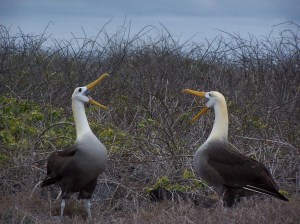
And then there were the albatross.

Before the cliffs… before the flight… there was something quieter.

Pairs stood facing each other, calling, moving in sync — a kind of ritual that felt both ancient and deliberate. There was no audience. No urgency. Just connection.

They bond for life.

We watched as they moved through these small, repeated gestures, as if reinforcing something already understood.

And then, later, at the edge of the cliffs, they gathered again — this time facing the wind.

One by one, they stepped forward.

A pause.
A shift.

And then — without hesitation — they launched into the air.


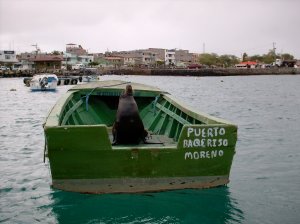
Even in the harbor, nothing really changed.

The sea lions claimed boats like they owned them, lounging without concern, completely indifferent to the activity around them.

There was no boundary between wild and human life — just a quiet understanding of who truly belonged.


Not everything in the Galápagos lives in the light.

Deep inside the lava tubes, where the air cools and the world goes quiet, we found an owl — perfectly still, perfectly aware.

It didn’t move.
It didn’t flinch.

It simply watched us… as if we were the ones out of place.


The Moment That Stayed

It was an instinctive click.
I didn’t plan it. I didn’t frame it. I didn’t ask.
I just reacted.

The moment that stayed with me wasn’t a landscape or a sea lion or a postcard view.

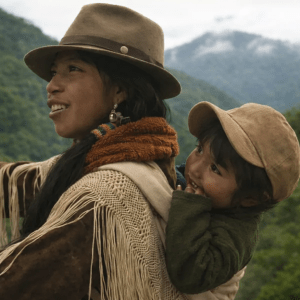
It was a woman at a hillside market, working with her child tied to her back.

She moved with a rhythm that belonged entirely to her life — unhurried, unposed, untouched by the presence of a stranger with a camera.

No one looked at me.
No one performed.

I was invisible.

And somehow, that’s what made it matter.

It wasn’t a moment created for me.
It was a glimpse of something real — offered without intention — and it stayed with me in a way I didn’t expect.

A Few Boundaries Between Friends

Boundaries Don’t Need Words

I was about to be slid into a narrow cylinder with no exit and asked to lie still for forty-five minutes.

The attendant explained the process in a calm, practiced tone, then offered music to help me relax.

I declined.

Ten minutes later, I regretted every life choice that brought me to that moment.

Somewhere in the next room, a burly man was yelling, “Get me out of this thing!” His panic did nothing to soothe mine. Inside the tube, the air felt thinner, the walls closer, and my heartbeat louder. Claustrophobia crept up my spine like a slow electrical current.

And then I heard my horse trainer’s voice in my head: Listen to the birds sing.

There were no birds there, but I reached for the image anyway. I pictured myself walking along a quiet beach, waves rolling in and out, the sun warm on my shoulders.

It must have worked, because the next thing I knew, the attendant was nudging me awake. Forty-five minutes had passed without me clawing my way out of the machine.


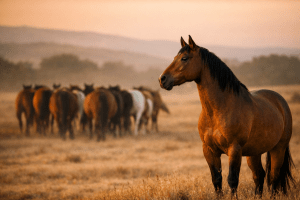
Horses have been teaching me things for years, often without my noticing.

They are honest in their interactions, intuitive in ways humans rarely allow themselves to be, and immediate in their responses. I’ve been told so many times to “think like a horse” that I now catch myself watching people for the same cues I look for in a pasture: dominance, insecurity, bluffing, avoidance.

If humans handled conflict the way horses do — directly, immediately, and without apology — we’d probably have fewer interpersonal disasters.


Take Sunrise, my Peruvian Paso.

Around people she is sweet, soft-eyed, and polite. But turn her out with other horses and she becomes the matriarchal mare who takes no prisoners.

The first time I saw her defend herself, I was stunned.

On Day 1, as the new horse in turnout, she was kicked and bitten.

On Day 2, she made her point.

She singled out the aggressor, chased her relentlessly, cornered her, and left no doubt about where she stood. That mare never looked at Sunrise sideways again.

Sunrise only had to say it once.


Rosie, my Arabian, is the opposite.

With humans, she’s expressive, fiery, and full of personality. You’d assume she’d dominate any herd.

She doesn’t.

In turnout, she’s the one who gets pushed off hay piles, chased from the fence line, and quietly yields space to horses half her size.

Something in her body language tells the herd she won’t fight back.

They read her correctly.


Watching them taught me something I should have learned years earlier:

What’s inside a horse — or a person — is rarely what you see on the surface.

Sunrise looks delicate but is steel.
Rosie looks bold but is vulnerable.

And humans? We’re even worse at showing who we really are.


Horses don’t tolerate mistreatment.

They don’t make excuses.
They don’t wait for things to “get better.”
They don’t hold meetings about it.

They respond — immediately, clearly, and without hesitation.

Their boundaries are visible, consistent, and respected.


Humans, on the other hand, let things fester.

We stay silent.
We rationalize.
We reward the very behavior we claim to hate.

And then we wonder why people “always” treat us a certain way.


A wise woman once told me that every time I interact with my horse, I’m training it — whether I mean to or not.

The same is true with people.

With every interaction, we teach others how to treat us — through our words, our behavior, and our silence.

When someone crosses a line and we say nothing, we’ve just taught them they can do it again.


Healthy boundaries aren’t walls.

They’re self-respect in action.

They keep us centered.
They protect our peace.
And they’re the first step toward becoming our own best friend.

Part of the “Lessons from the Herd” series

The Horse They Said Couldn’t Be Trained

They called her difficult.

They called her untrainable.

By the time I met the small Arabian mare named Rosie, eight owners in eight years had already given up on her. The current owner was preparing to send her to auction — a fate that rarely ends well for a horse.

Somehow the grieving human and the troubled horse found each other.

What followed became a bond of trust that neither of us expected, but both of us needed.


Every horse person remembers their first ride.

Mine came at the age of twelve.  Later, after transferring to a new job in Delaware, a colleague named Vivian convinced me to join her for riding lessons. She had recently attended the Devon Horse Show and concluded that riding must be simple — after all, the horse does most of the work.

We signed up for lessons at Arundel Stables in the middle of winter. The outdoor arena was buried in snow and the temperature hovered near twenty degrees.

Vivian rode a horse named Whitey. Each week she proudly mounted and rode toward the arena, only to have Whitey spin around and gallop back to the barn with Vivian screaming the entire way.

One especially cold morning Whitey decided he had endured enough. He deposited Vivian into a deep snow drift, cleared the arena fence, and returned to the warmth of his stall.

Vivian climbed out of the snow unleashing a series of colorful words before storming away.

It was the last day she ever rode a horse.

For reasons I still cannot fully explain, it was the day I realized riding had entered my blood.


Years later, I found the horse who would become my first great partner.

Her name was Sunshine.

She was a ten-year-old Arabian-Quarter Horse cross with kind eyes and endless energy. For the next twenty-five years we explored trails together, first on the East Coast and later in Arizona, where I moved with her when she turned twenty.

Sunshine lived to the remarkable age of thirty-five before impaction colic finally claimed her life.

Losing her was devastating. Some days I laughed remembering our adventures. Other days I cried buckets.

Her photographs still hang near the entryway of my home. Every time I walk through the door, she greets me.

I told myself I would never love another horse the same way.

Then Rosie appeared.


I was looking for a companion horse for Sunshine when someone suggested I visit a backyard outside of Phoenix to see an eight-year-old mare.

Rosie possessed none of the qualities I thought I wanted. She was defensive, mistrustful, and widely considered untrainable. Eight previous owners had passed her along like an unwanted responsibility.

The current owner was ready to send her to auction.

I bought her simply to spare her that fate.

I knew she would be a project. What I didn’t know was how deeply our lives would intertwine.


Training Rosie required help from an extraordinary horsewoman named Koelle.

Koelle quickly recognized that Rosie’s behavior wasn’t stubbornness — it was fear. Every interaction with humans triggered defensive reactions, particularly when anyone tried to touch her face or feet.

Years of mishandling had taught Rosie that people could not be trusted.

The first breakthrough came with the farrier. After a disastrous initial visit, he refused to work on Rosie again unless she was sedated.

Eventually I convinced him to attend a training session with Koelle.

He arrived skeptical.

Within an hour, Rosie stood quietly for hoof care and lifted her feet on cue without even being touched.

The farrier left astonished and still tells the story of Rosie’s transformation that day.

That was the moment the light bulb went on.

Rosie was not untrainable.

She simply needed someone willing to listen.


Despite her mistrust of humans, Rosie displayed surprising gentleness toward Sunshine as the older horse aged.

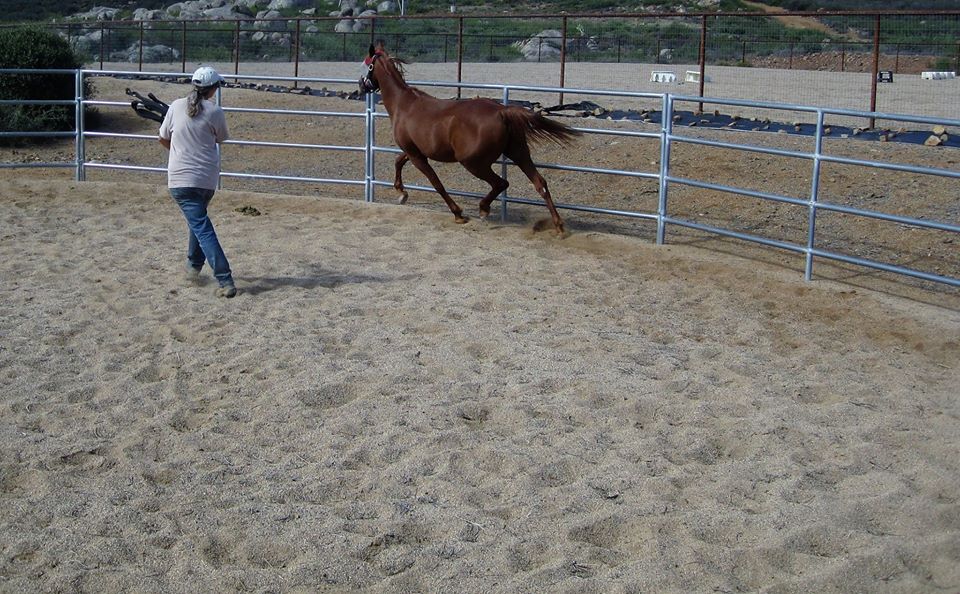
During turnout in the arena, Rosie adjusted her pace to match Sunshine’s ability on any given day. Some days they ran together. Other days Rosie simply circled protectively while Sunshine rested or struggled to stand after rolling in the sand.

Watching Rosie care for the older mare revealed a side of her few humans had ever seen.

Beneath her defenses was a remarkably intuitive horse.


One moment convinced me just how aware she truly was.

I turned Rosie loose in the arena to run. I removed my sunglasses so she could see my eyes more clearly while we worked together.

Afterward I walked toward the gate with Rosie following behind me.

Only when I reached the gate did I realize my prescription sunglasses were gone.

For twenty minutes I searched the entire arena, convinced they had been crushed beneath pounding hooves.

Rosie waited patiently at the gate, watching my every movement.

Finally, I gave up and walked back toward her.

At that exact moment Rosie left the gate, walked across the arena, and stopped in an unusual spot. She lowered her nose to the sand and held it there.

When I reached down to attach her lead rope, I saw them.

My sunglasses were lying directly beneath her nose.

Not only had she seen them fall — she had carefully avoided stepping on them while galloping around the arena.

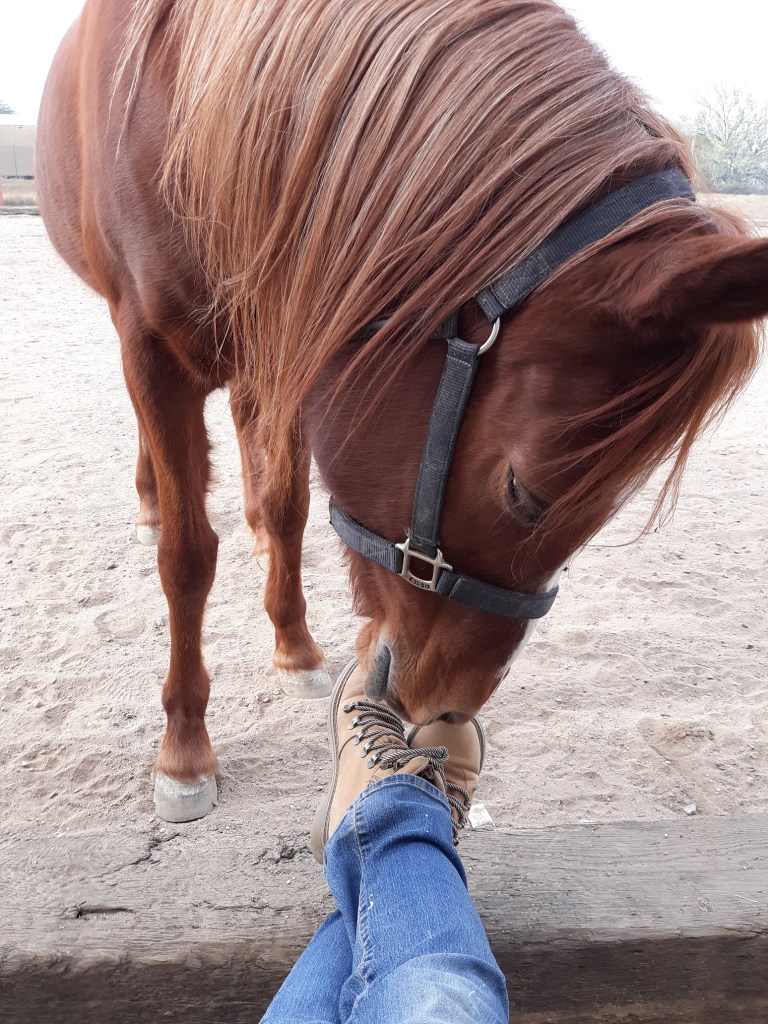
When I put the glasses back on, Rosie rested her head on my shoulder and gently nuzzled my neck.

It was the first true affection she had ever offered.

No words were necessary.


Over time, Rosie allowed me to touch her face and welcomed the affection she once rejected.

Every day I remain grateful for the lessons she has taught me about patience, trust, and the quiet power of understanding.

They called her difficult.

They called her untrainable.

But Rosie simply needed someone willing to listen.

She lived with me for twenty years after that first uncertain meeting, and in time she became the horse no one believed she could be — calm, trusting, and deeply intuitive.

I lost Rosie in September of 2024.

When I think of her today, I still see her soft eyes looking into mine on that final day.

Some horses teach us how to ride.

Rosie taught me how to listen.

Part of the “Lessons from the Herd” series

Healing with Horses: Sunshine, Rosie, Sunrise

Sunshine: My First Horse, My Teacher

Sunshine, my first horse, was an absolute angel. I made all my early mistakes with her, and she tolerated every one of them with patience and grace. She lived to 35 and guided me through the early years of horse ownership with a temperament that could calm any storm.

She was loving with people, gentle with the herd, and willing in every task. Wherever we boarded, Sunshine became the sweetheart of the barn. She taught me the rhythm of partnership, the importance of consistency, and the quiet power of empathy.

When Sunshine suffered impaction colic and passed away, I was heartbroken. Rosie, her companion at the time, suddenly needed a new herd mate — and I needed a way forward. That loss opened the door to the next chapter: Sunrise.


Rosie: The Difficult Fireball

Rosie had been labeled untrainable. Eight owners in eight years had given up on her, and she was on the brink of being sent to auction. I bought her to spare her from that fate, fully aware she was a project — and fully unaware of how much she would change me.

Her early life had left its mark. She was reactive, protective, and deeply sensitive. Even simple tasks like touch or hoof care could trigger resistance. But behind all that fire was intelligence, intuition, and a fierce will to survive.

Her first breakthrough came with the farrier. After a disastrous initial visit, he refused to trim her without sedation. Two failed attempts later, I convinced him to work with Koelle, our equine trainer. Within an hour, Rosie lifted her hooves calmly and consecutively — a moment that felt like witnessing a miracle.

Rosie’s intuition was extraordinary. She read energy with precision.

The day I arrived at the barn after my accident — disheveled, injured, and emotionally raw — she recognized it instantly. She nickered loudly, nuzzled me gently, and made it clear she knew something was wrong. She didn’t need touch to understand vulnerability.

Through years of partnership, Rosie taught me patience, awareness, and the kind of trust that must be earned, not assumed. She forced me to slow down, to listen, and to show up consistently.


Sunrise: The Companion Who Chose Me

After Sunshine’s passing, Rosie needed a friend. That search led me to Sunrise, an eight-year-old Peruvian Paso mare who had been rescued and professionally trained.

Sunrise was everything Rosie wasn’t — calm, brave, steady, and deeply attuned to her rider. On her first day, we performed join-up in the round pen. She approached me directly, stopped in front of me, and the rescue owner said, “She just chose you.” And she had.

Her past had been difficult. She and her lifelong companion, Conquistador, had been rescued from neglect. But she had also been trained in California, competing successfully and earning ribbons at the Pomona Championship Horse Show.

Watching Sunrise and Rosie together was its own kind of education. They were different in every way, yet somehow balanced one another. Over time, their relationship shifted, and so did Rosie’s confidence.

Sunrise became my trusted trail horse — calm, protective, and reliable. She taught me the value of steadiness, intention, and quiet leadership.


Lessons from the Herd

Each horse taught me something different, something essential:

  • Sunshine taught consistency, grace, and the foundation of partnership.
  • Rosie taught resilience, intuition, and the courage to set boundaries.
  • Sunrise taught stability, bravery, and the quiet strength of reliability.

Together, they reshaped my understanding of connection, communication, and presence.

Horses speak through energy, not words. They respond to intention, not performance. They mirror our emotional truth whether we want them to or not.


The Enduring Gift of Horses

Even after their passing, their lessons remain. Rosie’s intuition, Sunshine’s patience, and Sunrise’s quiet strength continue to guide me — in relationships and in life.

Horses are not just animals. They are teachers, companions, and mirrors of our emotional selves.

Their gift endures — in memory, in wisdom, and in the way I move through the world.

Part of the “Lessons from the Herd” series

Feathers in the Wind

Today marks the first anniversary of my husband, David’s, death. In the quiet moments, my heart still aches.  My inner goddess continuously persuades me to get out and enjoy life.  She who cannot be ignored wisely infers that no one leaves a lasting imprint by tiptoeing through life.

In the early weeks following David’s death, the stillness woke me.  In the dark of night, I understood why people feared silence.  His memory invaded my every thought.  It was like a wicked form of torture.   I went through the motions of daily life feeling like the walking wounded. I still hear his voice in my head scolding or encouraging.  We knew each other so intimately that he would have a thought at the same time I verbalized it.   I know exactly what he would say to me in every instance.  It is comforting to feel David’s presence.

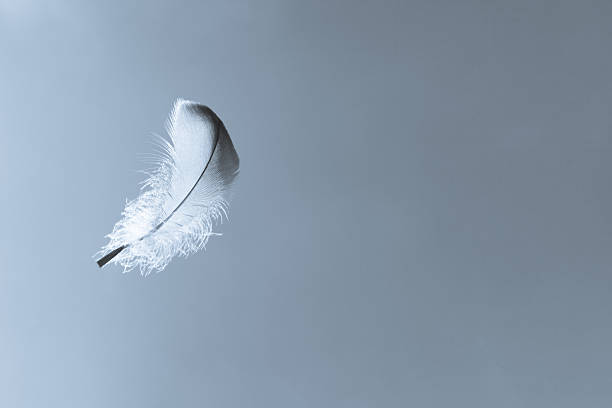
I planned to spend this weekend on a healing ride through Monument Valley with a Navajo guide named Joe. Unfortunately, the Tribal Park is closed due to the Covid-19 outbreak. Instead, I spent a quiet morning with my horses.  While snuggling my palomino, Sunrise, a small grey feather floated in space, landing near my feet.   The feather was noticed earlier in the week but disappeared. As if on cue, it reappeared today. Twirling in the breeze, it eventually landed on the toe of my fringed moccasin.  Native Americans believe the feather is a powerful symbol.   Feathers arrive unexpectedly, but always with purpose.  When a feather falls to earth, it carries a message to a living being.  The feather brings inner strength from a loved one. The symbolism is overwhelming and the hair stands up on my arms and neck.

Until you experience indelible loss, you cannot understand what it does to a person’s soul.  Life can be painful and heart-rending. The pain of loss is immeasurable. The most devastating endings usher in the next chapter in life. Over the last year, intense grief has become profound sadness.  There comes a moment when you realize everything has changed.  

I truly believe people come into our life with purpose.  The people we meet along the path teach us lessons, help us to grow emotionally, and force us to realize special moments. There are no mistakes or failures, just an evolution in time.  Each chapter in life teaches us what doesn’t work; thereby, forcing us to focus on what we need.  

A year has passed, yet here I sit with tears streaming down my face.  It is through grief that we learn to value the present.  Each of us is the architect of our life story.  Every chapter must be worth reading.  

Written April 26, 2020

Trail Mix: Horses, Nudists, and Chaos


Chrys, a work colleague, had invited me to her home for a visit. She went to the kitchen to open a bottle of wine just as the doorbell rang. Instinctively, I answered it and found Carol standing there with a flyer that read, “We’d like to see more of you.”

A quick glance told me everything I needed to know: the ride was through the nudist camp on the dirt road behind the house.

I happened to be wearing a horsey T‑shirt, which immediately sparked conversation. Carol mentioned a ride her husband, Kraus, was hosting the following weekend and invited me to join. I laughed — intrigued, if slightly alarmed — because it wasn’t clear whether the ride itself was going to be clothing‑optional.

I’ll admit, the idea of encountering a few naked people on a dusty trail was… attention‑grabbing. Double whoa. Could the Old West really coexist with a nudist camp? And more importantly, is it safe to ride a horse while barely clothed?

About fifteen of us “textiled riders” showed up on Saturday, just in time to hear Kraus and the wrangler debating the clothing‑optional rules. The wrangler, who had provided horses for the nudists, wasn’t thrilled about anyone exposing themselves while mounted. Kraus offered a compromise that helped no one: “We’ll see what happens, but I’m not wearing a dang thing.”

Minimalism, redefined

The riding outfits on this trail redefined minimalism — nothing was left to the imagination. One weekend cowboy made a bold fashion statement: denim where it mattered, and nowhere else. Another rocked a sheer lavender babydoll nightie, though I doubt anyone was focused on the color. One gentleman paired chaps with cowboy boots and… nothing in between. I can confirm there was a lot of chafing happening. Others sported various forms of ventilated jeans, including one do-it-yourself pair of shorts that defied both logic and structural integrity.

As for me, I stuck with jeans and a horsey tee, much to our host’s disappointment.

The visual hazards

I didn’t know where to aim my eyes, so I stared at my horse’s ears like they were the last safe objects on Earth. The rest of the scenery was… unnecessary. By the time we got out of that nudist camp, I’d seen enough bare acreage to qualify for a land surveyor’s license.

The cactus clown incident

One horse leaned down to sniff a cactus ball on the trail and came back up wearing what can only be described as a green clown nose. The rider was not amused by the extraction process.

Sunshine, agent of chaos

Sunshine, my trusty trail horse, liked to stay right behind the lead rider. Every time the leader stopped to wait for the group, Sunshine impatiently booted the lead horse, Lefty, on the backside.

We stopped for a picnic lunch, and I led Sunshine to the table to grab an Italian sub and a paper cup of apple cider. Sunshine sniffed the sub and decided it was hers. While I was busy extracting salami and onions from her mouth, she grabbed the cider cup, wobbled it back and forth, and spilled cider everywhere. My angel had officially transformed into the nudist devil horse.

The home stretch

Despite the chaos, the ride continued. We navigated trails with naked and clothed riders alike, dodging thorns, cacti, and exuberant horses. Sunshine and I survived unscathed, though I spent a good portion of the ride praying, “Please, Lord, don’t let any horse — or bare‑assed rider — back into a cactus.”

By the end, it was clear: the wrangler‑provided horses were far better behaved than some of the human participants. Out on the trail, the humans showed off their bare essentials, while the horses remained steady, reliable, and remarkably unbothered. I’ve ridden a lot of trails in my life, but this was the only one where the humans were more exposed than the cactus — and the horses more dependable than the riders.

I survived it, laughed about it, and filed it firmly under “great story, zero interest in a sequel.”