From an unwanted foal to a champion show horse—and the trail partner of a lifetime.
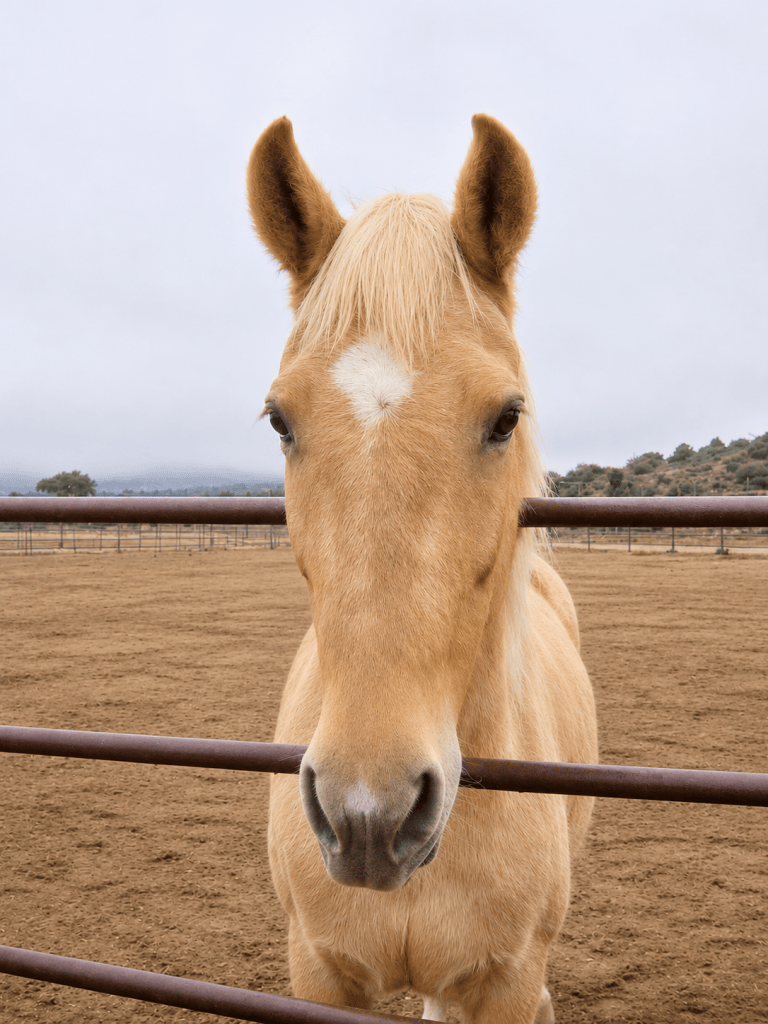
In May 2027, the World Equestrian Center in Ocala will host a Peruvian Paso horse show. I plan to attend as someone who once shared her life with an extraordinary horse of this breed.
Her name was Sunrise, a stunning palomino Peruvian Paso whose registered name was Hija de Sol y Luna—Daughter of the Sun and Moon.
She was a champion show horse with remarkable bloodlines, but credentials weren’t what made her special to me. It was her intelligence, courage, unwavering steadiness on the trail, and affectionate, trusting nature.
Perhaps her early struggles made her more assertive around other horses. That was survival. But with people, she was gentle, willing, and eager to please.
Our story began in a round pen in Phoenix, Arizona, with forty-mile-an-hour winds whipping across the desert.
A Horse Named Sunrise
After losing Sunshine, my longtime trail horse and companion of twenty-five years, I began casually browsing online horse ads.
Rosie, my young Arabian, had spent the previous year in training and needed a companion. I was curious about the gaited breeds gaining popularity among trail riders.
I had never heard of the Peruvian Paso, a relatively uncommon breed in the United States, until one particular ad caught my attention.
A gorgeous nine-year-old palomino mare, exactly the color I had envisioned for my next trail partner. Beautifully trained, with a successful show career behind her.
I made an appointment to meet her owner, Dr. Patricia “Pat” Haight, president of the Conquistador Equine Rescue and Advocacy Program in Arizona.
Pat had rescued Sunrise as a neglected four-month-old filly and raised her into an accomplished show horse.
Before my arrival, she informed me that twenty-four prospective buyers had already failed her ownership test. Clearly, parting with a horse she loved wasn’t going to be easy. This purchase would involve more than showing up with a checkbook.
Her warning didn’t discourage me. I understood that she wanted the right home for Sunrise, and I respected her for it.
If it was meant to be, it would happen.
Joining Up
During my year of training Rosie, I had studied natural horsemanship and the art of join-up, a method of establishing communication and trust through body language rather than force.
When I met Sunrise, the first thing I asked of her was to join up with me in the round pen.
Initially confused, she seemed uncertain about what I wanted. I worked quietly, watching her responses and adjusting my body language.
Then something changed.
I could almost see the light bulb go on in her head. She understood. Her head dropped in submission.
When I turned my shoulder and invited her to join me, she walked to the center of the round pen and gently placed her nose against my shoulder.
She had decided to trust me.
From the sidelines, Pat squealed with delight.
“I’ve never seen her do that with anyone before, even me! She just chose you!”
Those words were music to my ears.
In less than twenty minutes, I had fallen in love with this horse.
But there was still the matter of riding her.
The wind was howling, sending flags and tarps flapping violently around the property. Hardly ideal conditions for trying out an unfamiliar horse, but an excellent opportunity to evaluate Sunrise’s temperament.
I wanted a dependable trail companion with the confidence and good judgment to handle the unexpected. Desert washes and mountain trails could present all sorts of surprises.
I climbed aboard.
Pat explained the proper riding posture, hand placement, and the Peruvian Paso’s natural four-beat lateral gait, known as the paso llano.
Sunrise required no special cues or encouragement to perform the smooth, rhythmic gait. It was simply the way she moved.
The sensation was extraordinary, almost like sitting in a rocking chair.
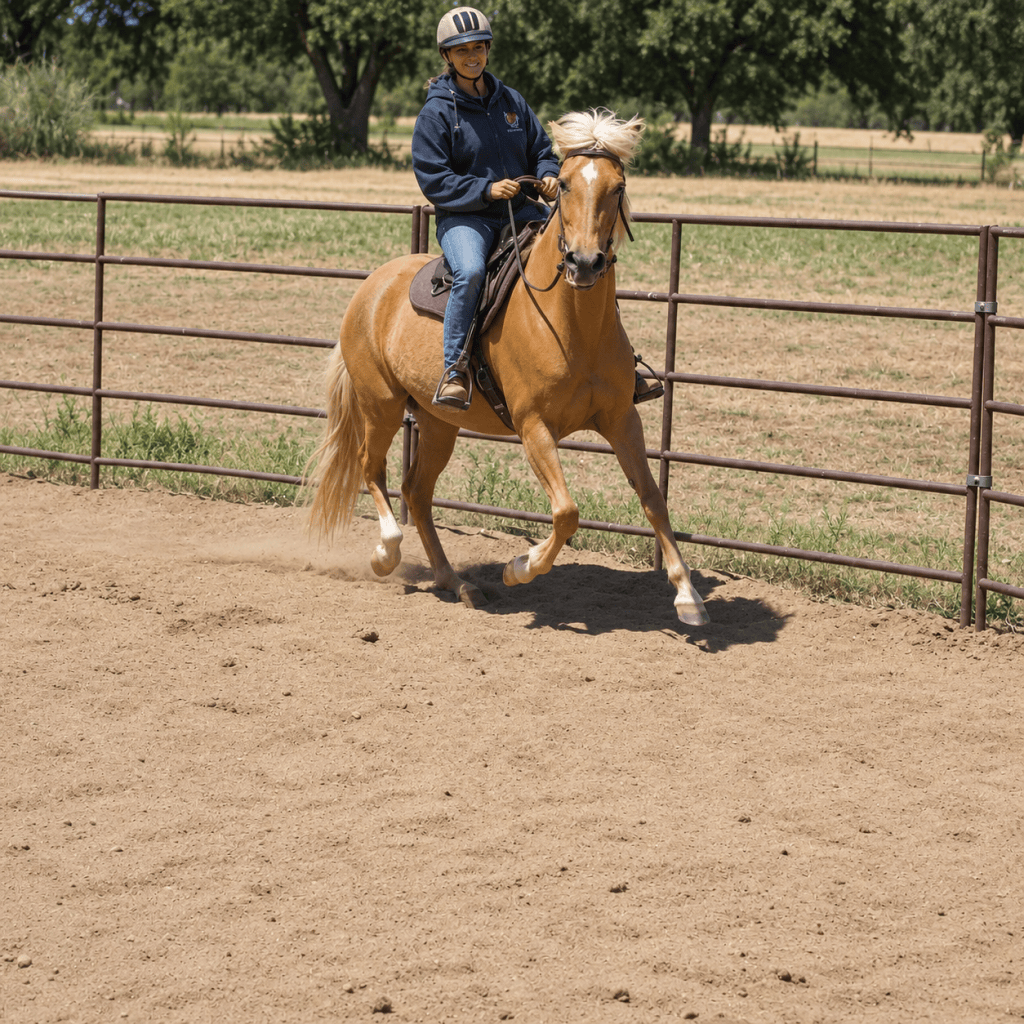
After riding Sunrise in both directions, I remained in the saddle while Pat and I talked. For the next twenty minutes, Sunrise stood perfectly still, patiently awaiting my next instruction, unfazed by the wind and commotion around us.
She was attentive, responsive, and utterly unflappable.
That told me more about her potential as a trail horse than a dozen rides around a quiet arena ever could.
I knew she was my girl.
The Next Chapter
Pat wasn’t simply selling a horse.
She was unwell and wanted to find Sunrise a permanent, loving home while she could still make that decision herself.
I had owned Sunshine for twenty-five years and rescued Rosie, investing considerable time, patience, and money in her rehabilitation and training. I wasn’t a horse trader looking to turn a profit. My horses had a home for life.
Within an hour of meeting me, Pat agreed to sell Sunrise.
She was entrusting me with a horse she had rescued, raised, trained, and loved for nearly a decade.
I had gone shopping for a gaited trail horse. I came home with a partner.
From a Discarded Foal to a Champion
Sunrise’s story had begun under circumstances no horse deserves.
At just four months old, she had been discarded by her breeder near St. Johns, Arizona. Considered an unwanted accident, she was among several Peruvian horses rescued after authorities intervened.
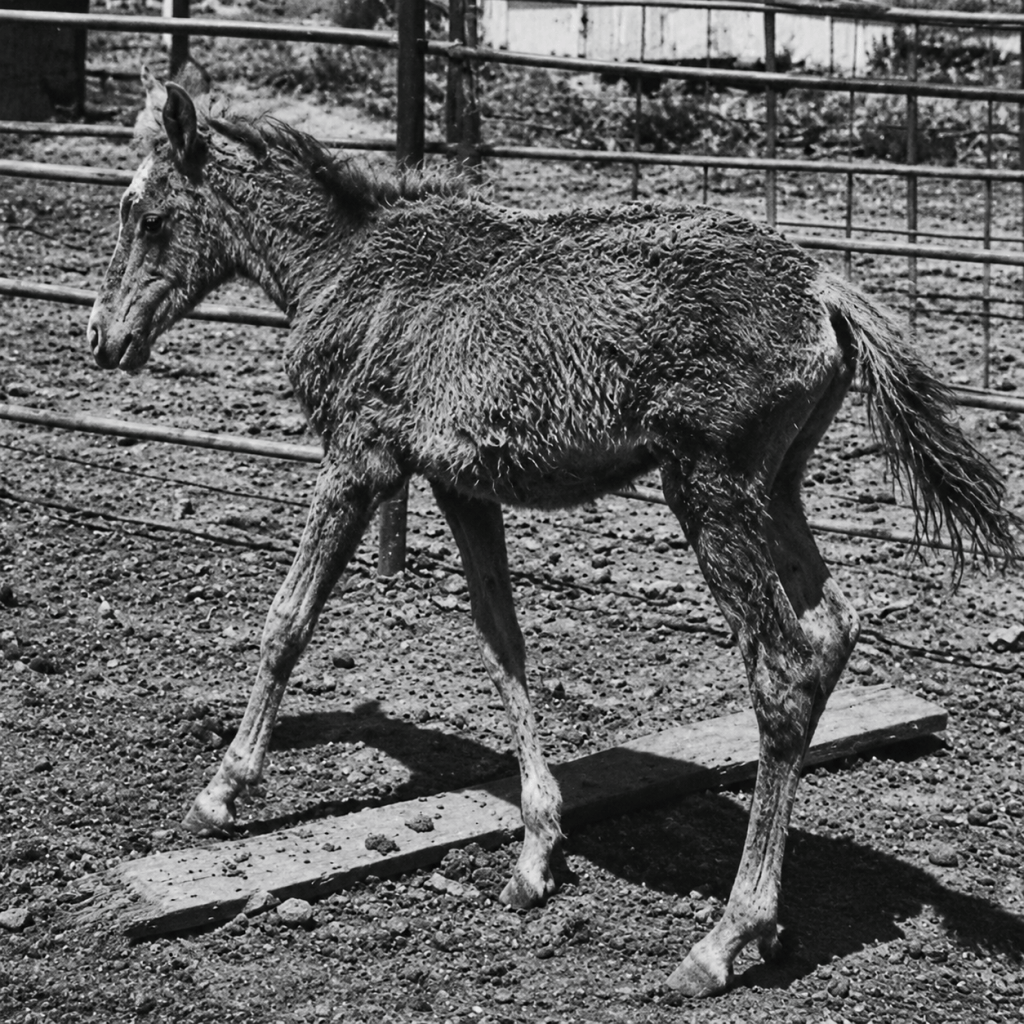
The black-and-white photograph, taken by the Arizona Department of Agriculture at the time of Sunrise’s rescue, documents her neglected condition. The dirty, bedraggled filly bears little resemblance to the magnificent mare she would become.
In time, the rescue located Sunrise’s parents, and the equine family was reunited.
Sunrise eventually traveled to California for professional training with Peruvian horseman Juan Garayar, her chalán, who gave her the registered name Hija de Sol y Luna.
The name was as beautiful as the horse.
On April 13, 2008, at the Southern California Peruvian Paso Horse Club Spring Championship Show at the LA Fairplex in Pomona, Sunrise earned First Place in Mares and Reserve Champion Halter Mare.
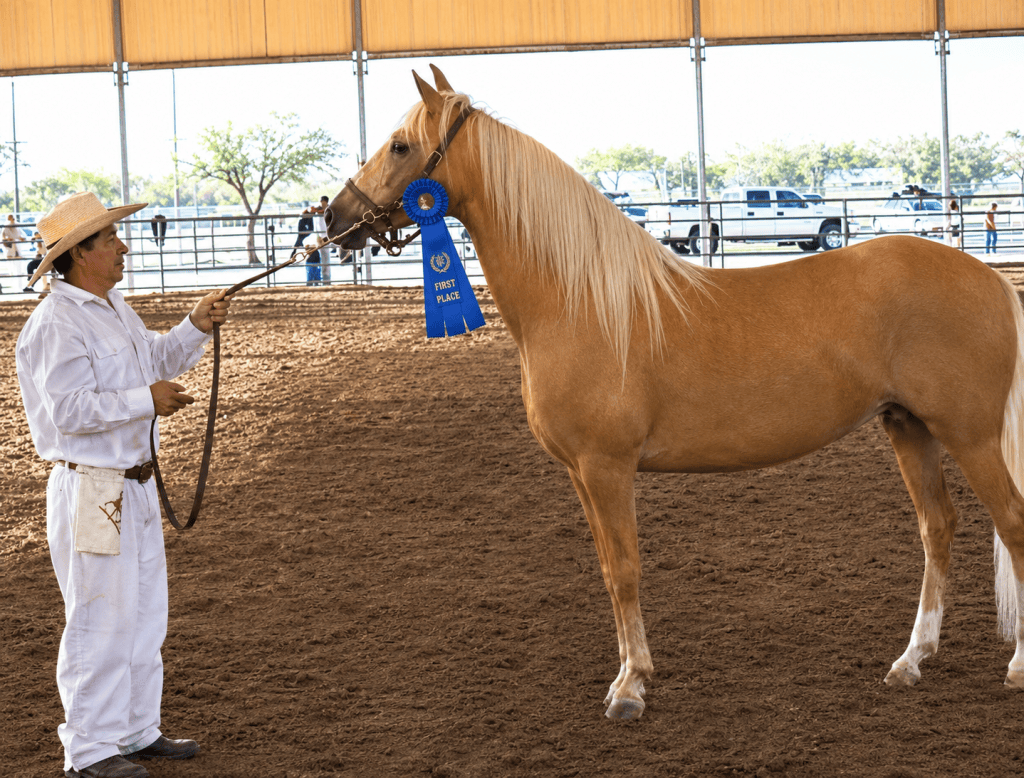
She began earning ribbons in regional Peruvian Horse competitions in Arizona and California.
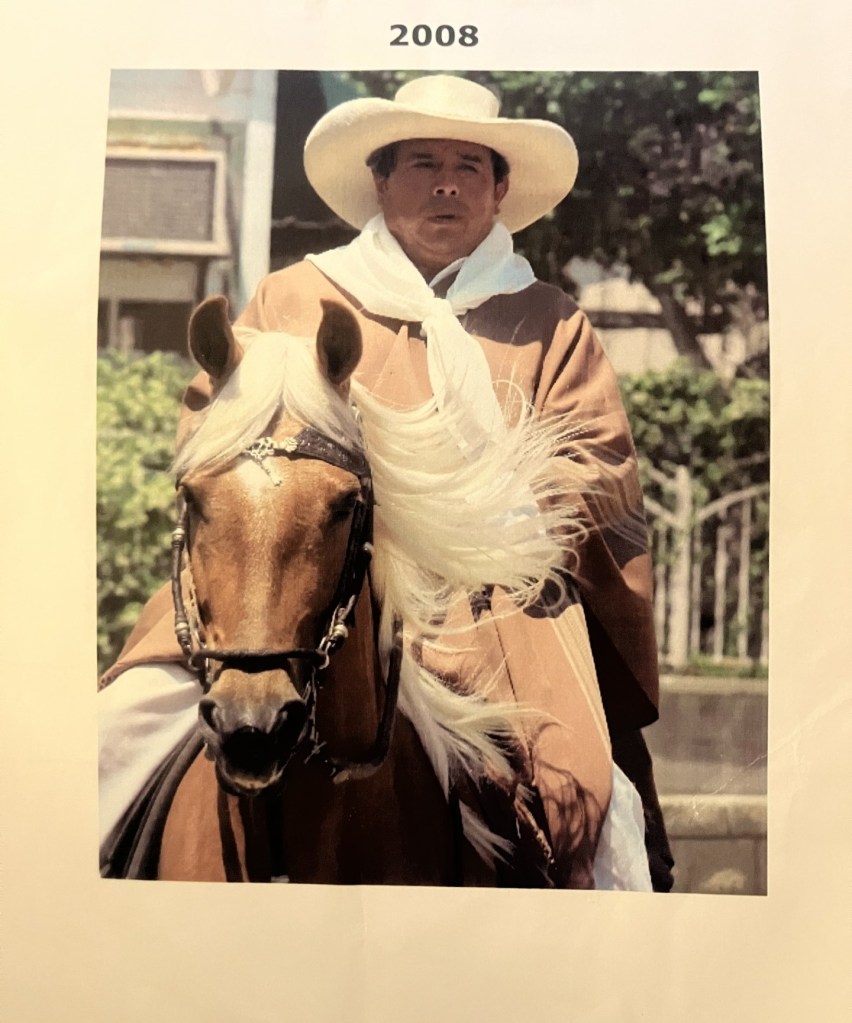
Looking at those photographs, the transformation was remarkable.
Sunrise had gone from a rescued filly to a ribbon-winning show horse.
A true rags-to-riches story.
A Notable Bloodline
Sunrise’s pedigree revealed another remarkable chapter of her story. Her sire was D.O.R. Velocipedo, a buckskin Peruvian stallion.
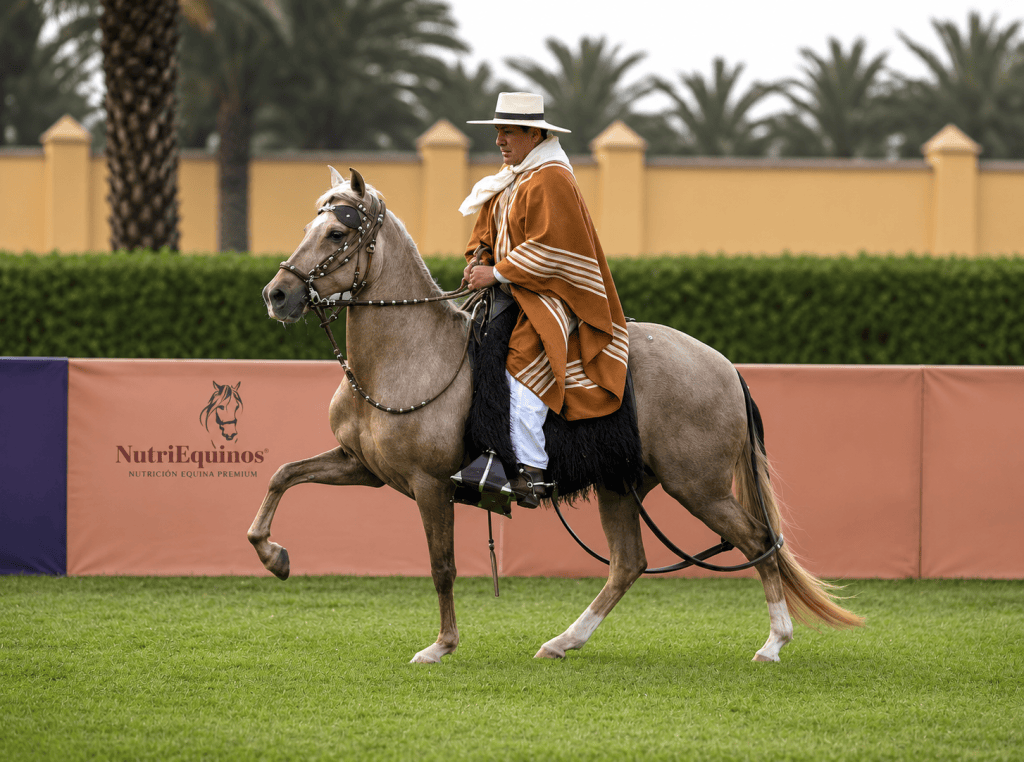
Her dam was Oro Lisa Sur, a palomino mare whose golden coloring Sunrise shared.
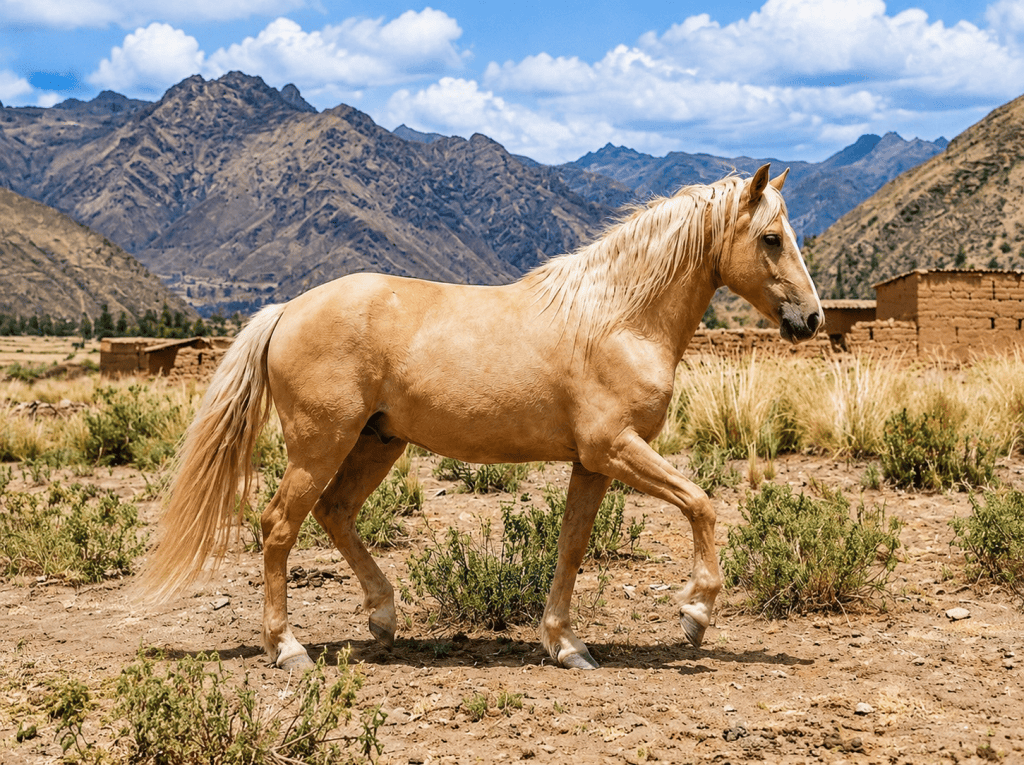
Both sides of Sunrise’s pedigree traced repeatedly to the legendary Peruvian stallion Sol de Oro (V), whose name appeared seven times within her five-generation pedigree.
His story was almost as extraordinary as hers.
According to accounts of his history, Sol de Oro was discovered on a farm in southern Peru by horseman Gustavo de la Borda. The stallion had suffered a badly fractured leg, but de la Borda recognized something exceptional in him and purchased him for approximately $200.
Rehabilitated and given a second chance, Sol de Oro became an influential sire whose bloodlines would appear in generations of championship Peruvian horses.
The parallel was remarkable. Sunrise, a palomino filly once discarded as unwanted, descended from a stallion whose own future had seemed equally uncertain.
Sunrise had proven herself in the show ring. But it was on the mountain trails of Arizona that I discovered what an extraordinary horse she truly was.
A Champion Finds Her Calling
Sunrise was nine years old when she joined my little equine family in 2010.
After changing boarding facilities three times and struggling to find suitable accommodations in the Phoenix Valley, we decided to build a custom horse property in Dewey, Central Arizona, where temperatures were cooler and riding opportunities plentiful.
There, Sunrise and Rosie enjoyed their own five-acre home, with daily turnout, regular grooming, plenty of room to roam, and miles of mountain trails to explore.
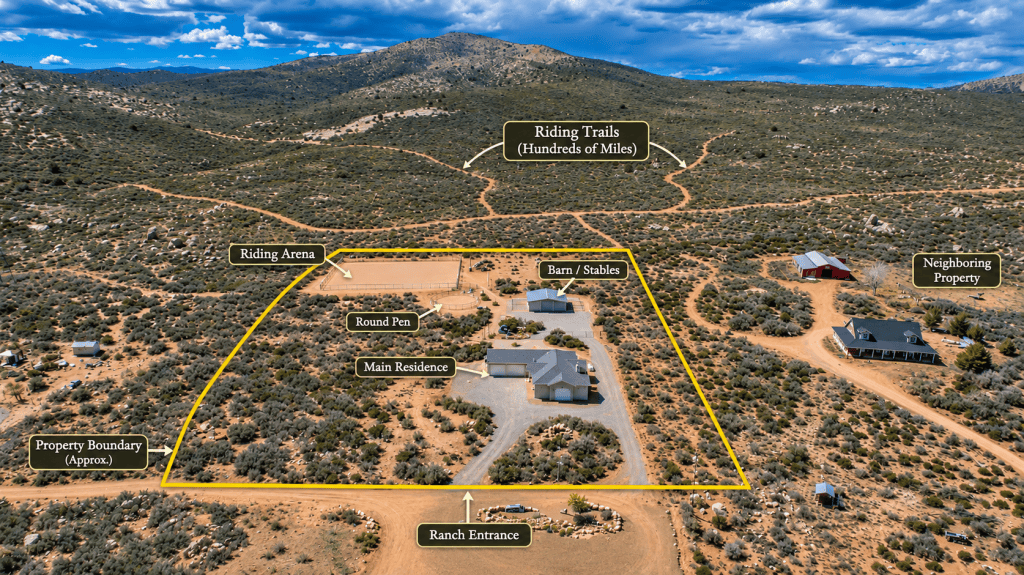
Sunrise loved the trail. Equally comfortable leading a group or following another horse, she approached unfamiliar situations with confidence.
In ten years of riding together, I cannot recall a single occasion when she spooked. Even when deer suddenly leaped from the brush on a mountain trail, she remained calm. I was comfortable enough to pull out my camera and photograph two deer from the saddle as they moved through.
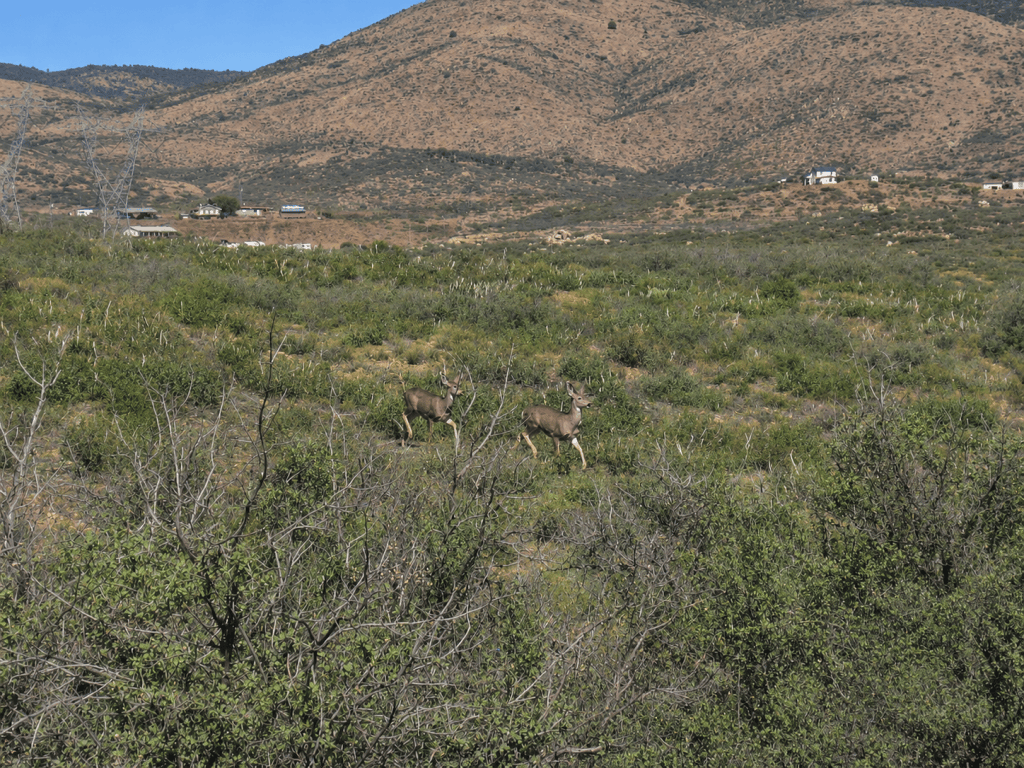
She might stop, raise her head, snort, and investigate something unfamiliar, but there was no panic. She would simply assess the situation and wait for guidance.
And sometimes, she decided that I was the one who needed guidance.
Sunrise was an excellent navigator, which was fortunate because my sense of direction has never been particularly reliable.
Occasionally, when I attempted a wrong turn, she simply refused to proceed. She would back up, redirect herself, and make it quite clear that I had chosen the wrong trail.
More than once, I trusted her judgment over mine.
She always knew the way home.
We explored desert washes, winding trails, and mountain passes in the Prescott National Forest.
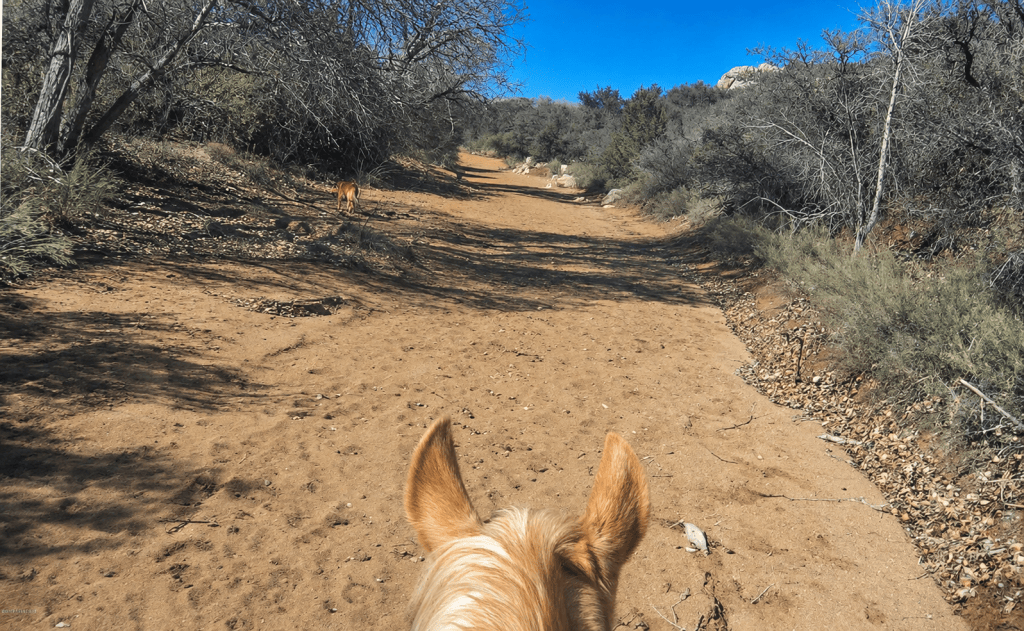
Sunrise was perfectly content to enjoy the scenery while my riding buddy and I solved all the problems in the world.
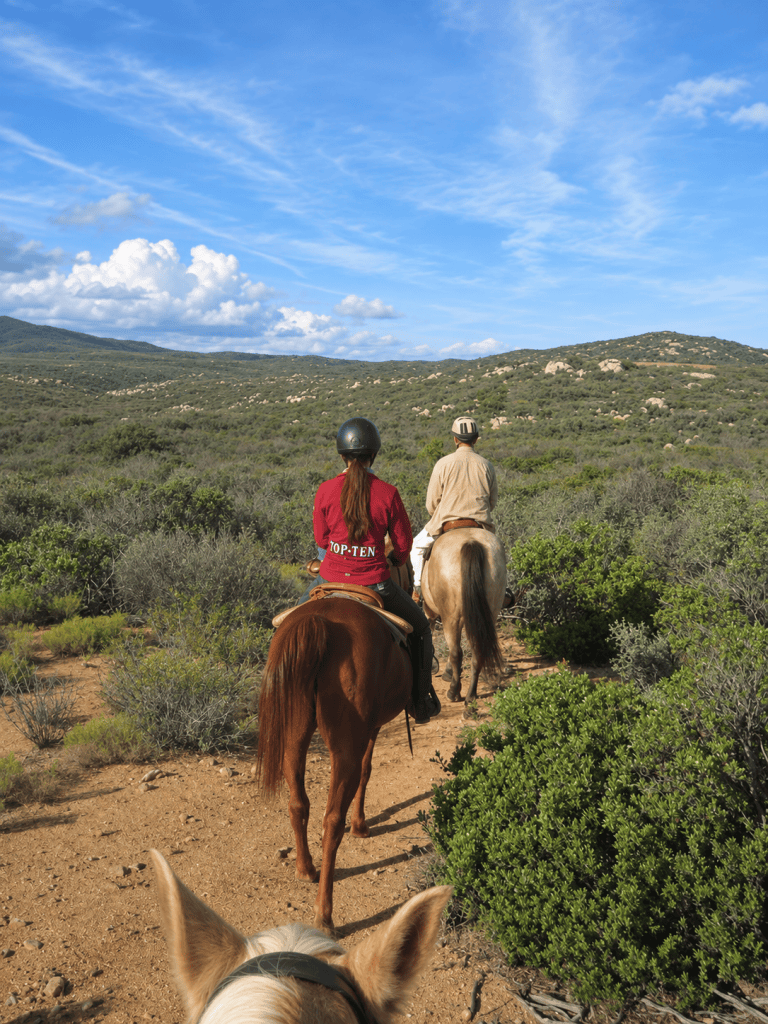
There was a wonderful sense of freedom in those rides. We never knew what we might encounter—a horse nickering from a fence line, a cow standing in the middle of the road, or an unexpected obstacle along the trail.
Sometimes we blazed our own trails through the brush, exploring new territory just to see where it might lead.
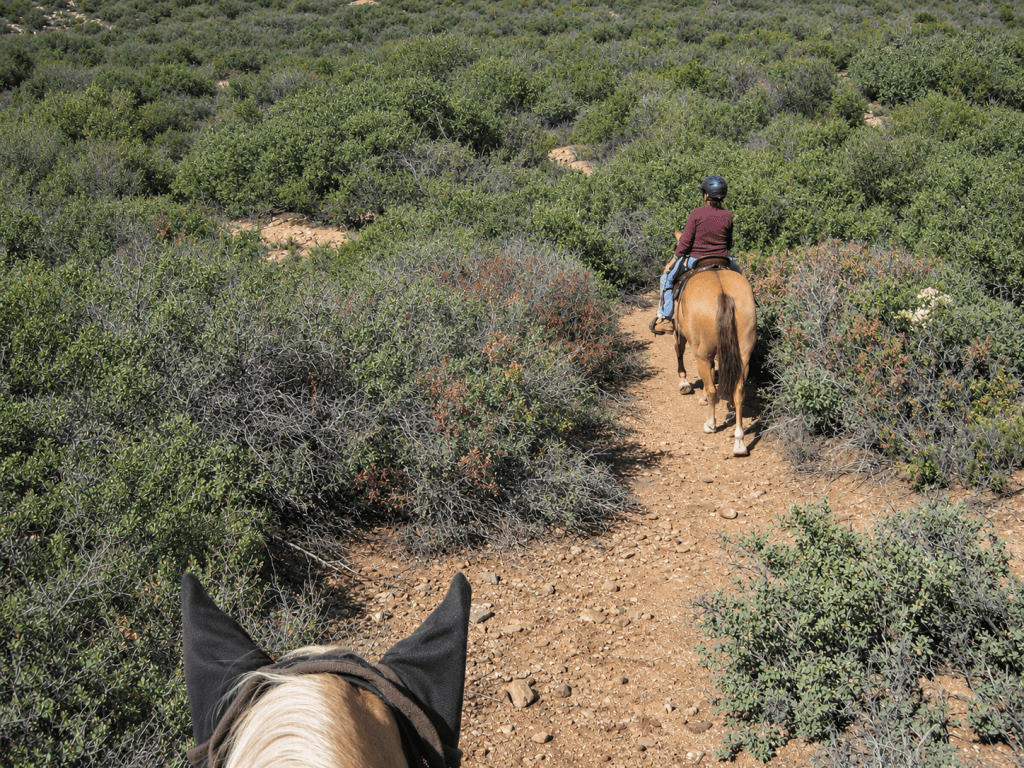
And then there were those breathtaking mountaintop views, when the landscape opened before us and we could see for miles in every direction. Those moments made every step of the climb worthwhile.
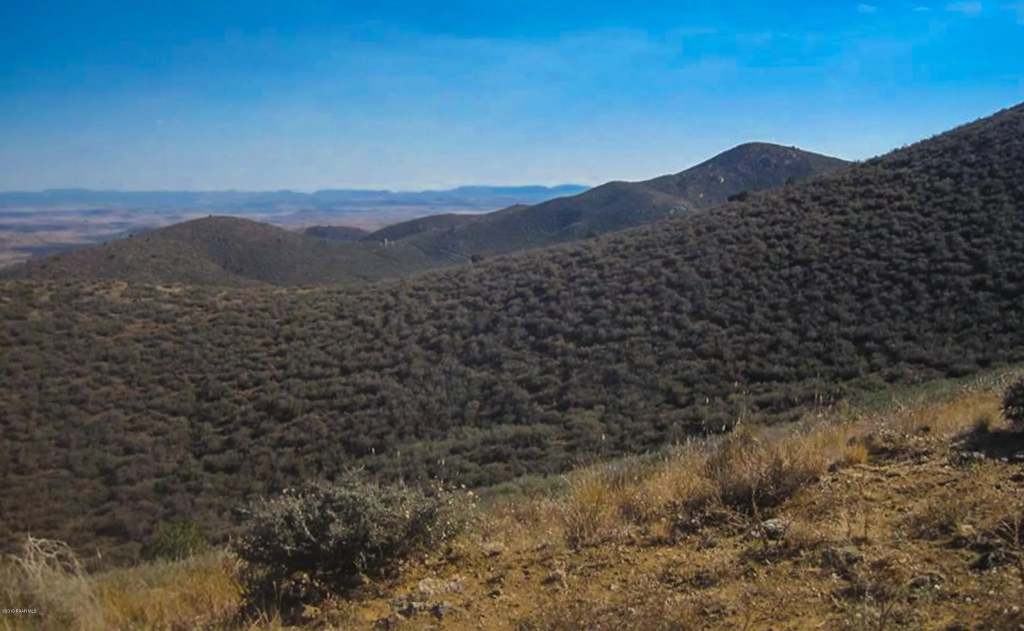
There’s a special partnership that develops between horse and rider after countless hours together in the wilderness. You learn to anticipate each other’s movements, recognize subtle changes in behavior, and communicate without words.
Sunrise wasn’t simply carrying me along the trails.
She was taking care of me.
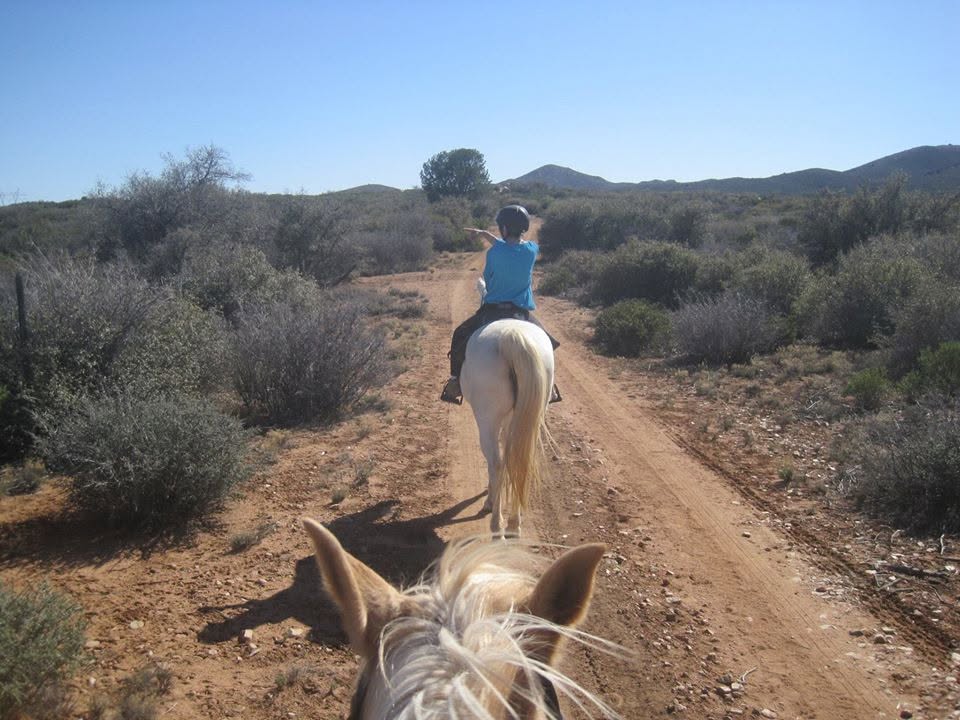
When horse friends first met Sunrise, they would often remark, “Oh, she belongs in the show ring!”
And perhaps she did. She certainly had the beauty, breeding, and championship credentials.
But I let the horse tell me the life she wanted.
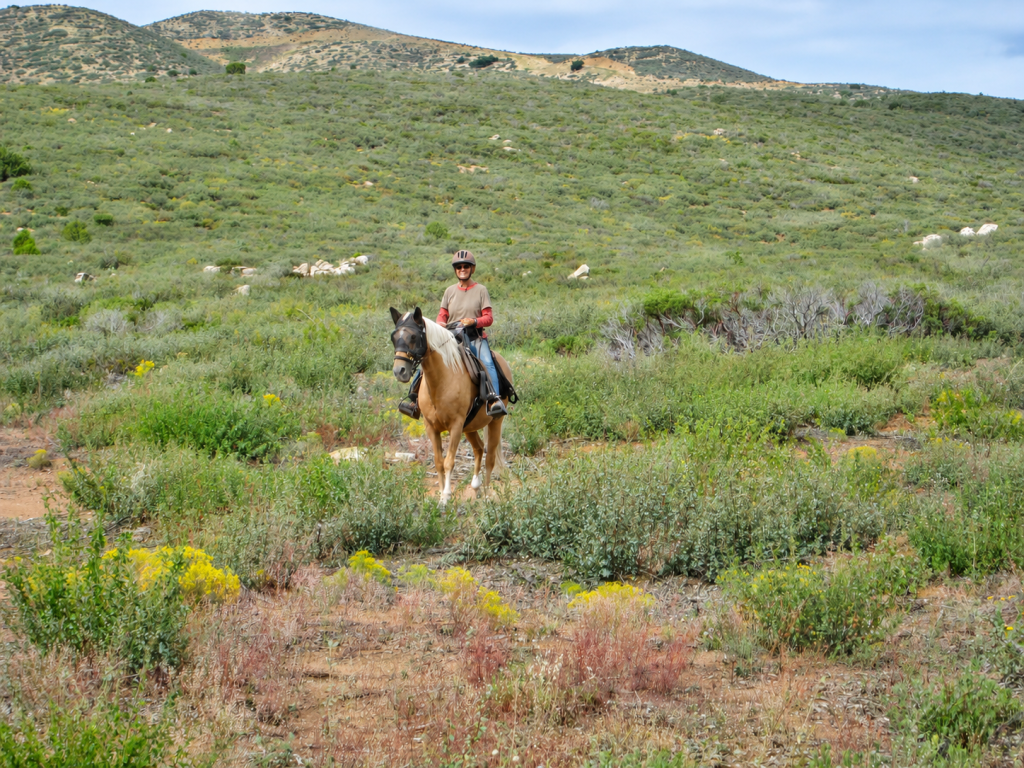
Both Sunrise and Rosie had been rescued from difficult beginnings, and each responded differently. Their experiences had shaped their personalities, fears, and the way they interacted with the world.
My philosophy was simple. These horses had already endured more than their share of pain and uncertainty. They deserved kindness, security, companionship, and the freedom to enjoy being horses.
Sunrise traded the show ring for mountain trails, wide-open desert landscapes, and a peaceful home with Rosie.
She had nothing left to prove.
Let them be horses. They had earned the right.
The Cow Committee
Living in rural Arizona meant sharing the landscape with wildlife and free-range cattle.
A nearby watering hole attracted cattle, and one day, a couple of cows decided the shade tree was the perfect place to rest.
The horses were fascinated.
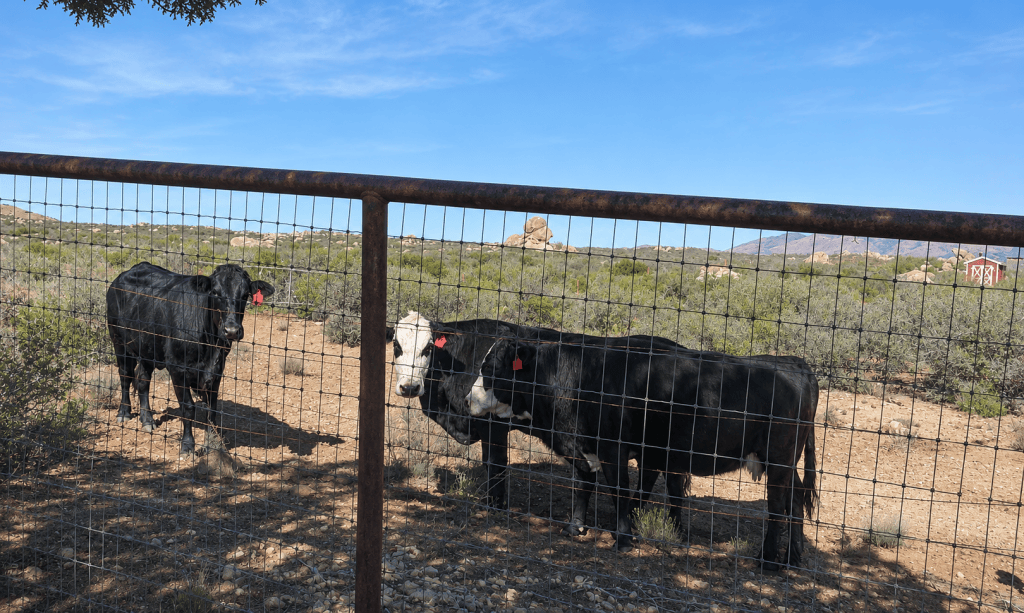
I walked outside to find Sunrise and Rosie standing nose to nose with their bovine visitors, exchanging curious sniffs through the fence.
At one point, a cow began licking Rosie’s face.
Rosie was decidedly unimpressed.
Sunrise leaned over the fence, sniffing the newcomers and investigating with curiosity.
Apparently, the introduction went well. The cows returned another day with a calf in tow and decided to spend the night.
That early introduction to cattle would prove valuable on our trail rides.
One afternoon, my friend Rosemary and I rounded a bend on a mountain trail and encountered a large herd of cattle lining both sides of the dirt road.
There wasn’t much room to maneuver, and the cattle seemed in no hurry to make way.
Rosemary’s gelding was leading, with Sunrise following behind. We paused briefly to let the horses assess the situation, then quietly cued them forward.
Sunrise walked straight through the herd, offering a few curious snorts and nickers along the way.
No drama. No theatrics. No sudden change of direction.
Just another day on the trail.
Best Friends and Neighborhood Security
Sunrise and Rosie developed an inseparable bond. They enjoyed their daily turnout, watched over one another, and established their own routines.
It was an easy companionship.
Sunrise liked to stretch out in the sand arena or beneath the shade tree in late morning, while Rosie stood guard.
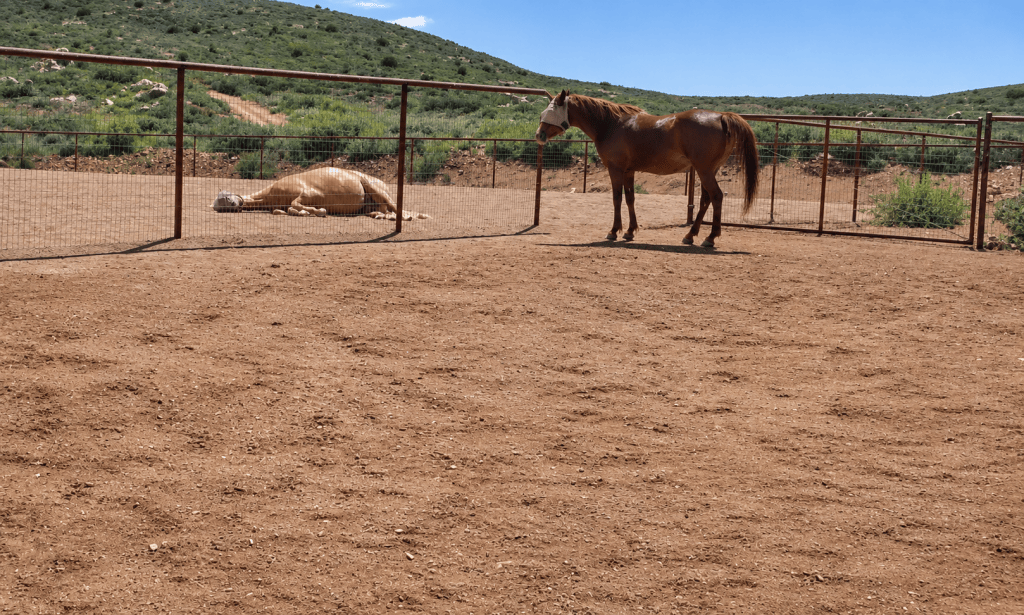
Both horses took their security responsibilities seriously.
Our property bordered a trail access, and any unusual movement was immediately investigated.
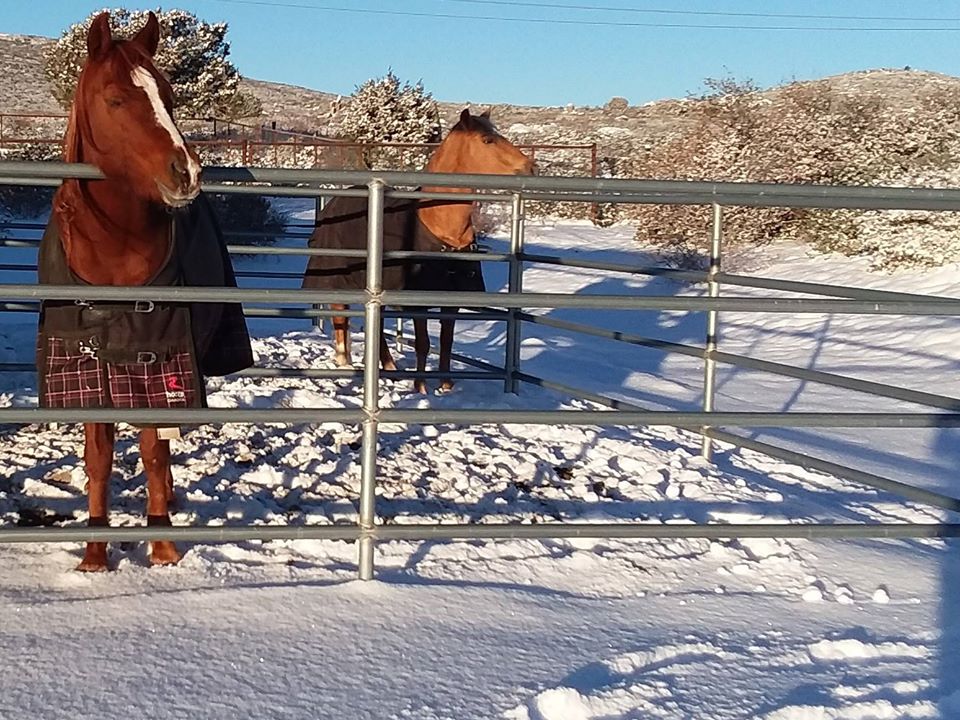
Rosie had speed in her blood, with Kentucky Derby winners appearing in her pedigree. She was faster than dirt and loved demonstrating that advantage during their pasture runs.
Sunrise would gallop after her, snorting in frustration as Rosie raced across the field. By the time Sunrise worked up a respectable head of steam, Rosie was already running circles around her.
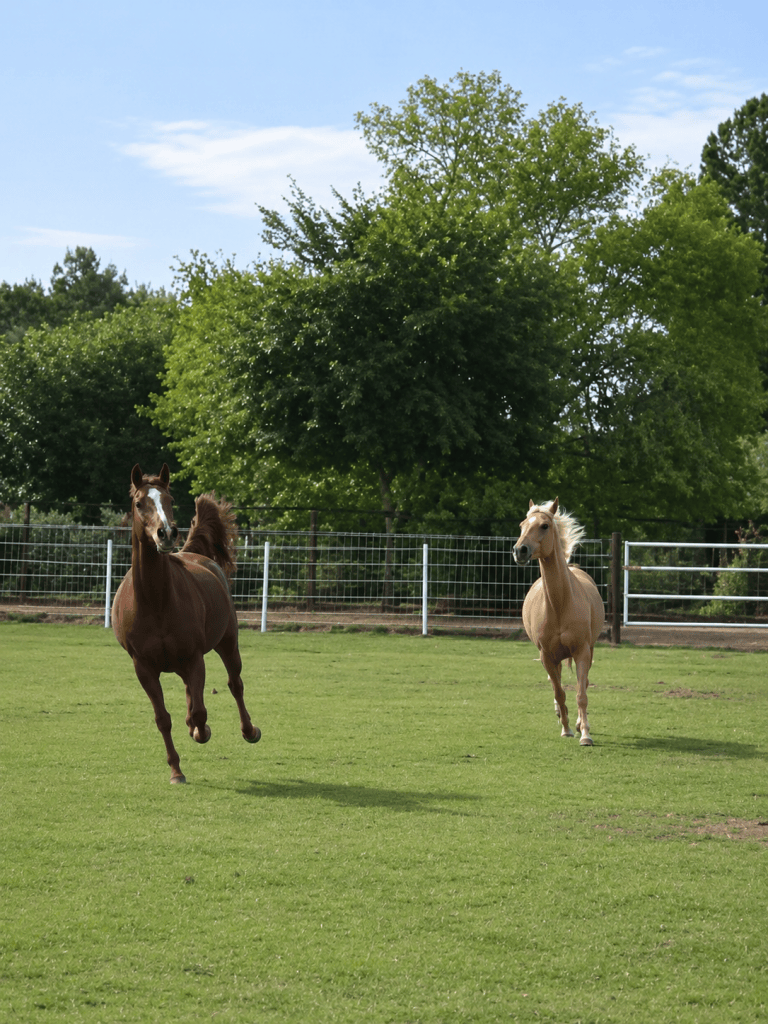
It was a competition Sunrise was never going to win, although that didn’t stop her from trying.
And when the racing was over, the two were still buddies.
The Horse Behind the Tree
One of my favorite photographs of Sunrise captures her personality perfectly.
A storm was approaching, and I went outside to bring the horses into the barn.
I called them from the gate.
Sunrise was relaxing beneath a shade tree and apparently had no interest in interrupting her afternoon.
Instead of coming when called, she peeked between two tree trunks, as though hoping I might overlook a large golden horse hiding behind a tree.
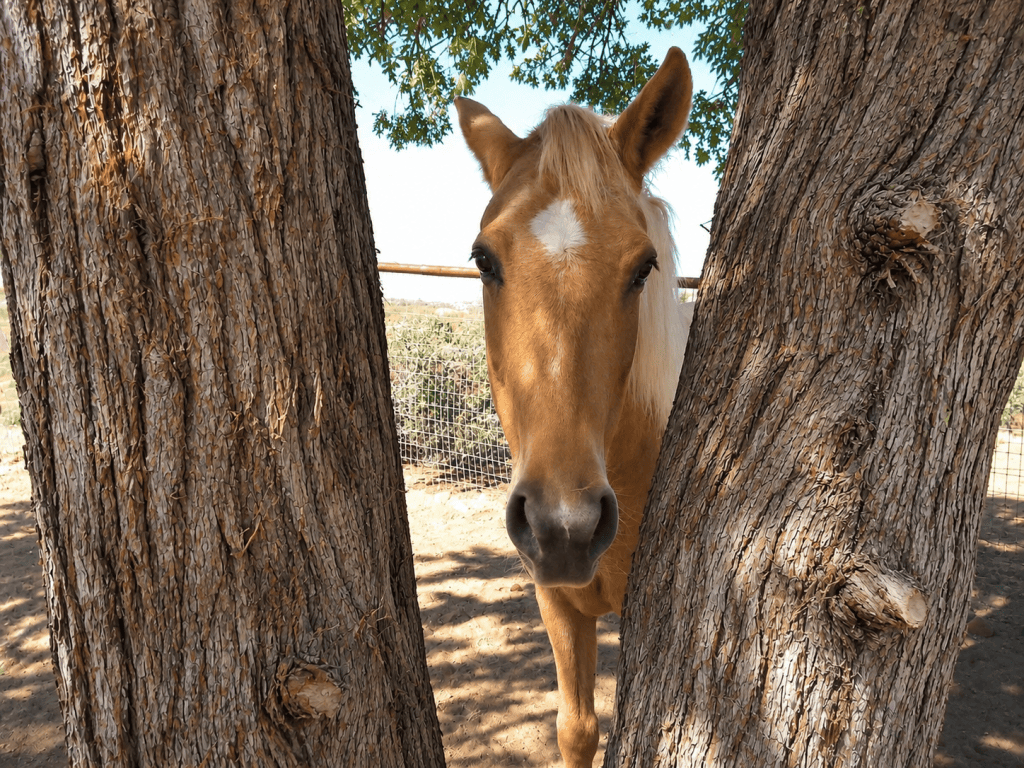
I could almost hear her thinking:
I see you. But I’m happy where I am.
It was vintage Sunrise.
Dependable, affectionate, and entirely lovable.
More Than a Horse
Rosie, with her outrageous personality and endless antics, often stole the spotlight in my horse stories. There was seldom a dull moment when she was involved.
Sunrise was different. She was the quiet storm in the barn. She never needed to demand attention. Her strength was in her composure, her courage, and the understanding we developed over countless miles together.
Rosie gave me stories that made me laugh. Sunrise gave me the confidence to explore trails I might otherwise have hesitated to ride.
Her golden coat, flowing mane, and elegant Peruvian gait attracted attention wherever we went.
But beauty was the least important of her gifts.
In August 2021, while I was on vacation, Sunrise suffered a devastating injury and was euthanized. Losing her broke my heart. Saying goodbye was one of the most difficult moments of my life.
The miles we traveled together, the places we explored, and the trust we shared are memories I will always treasure.
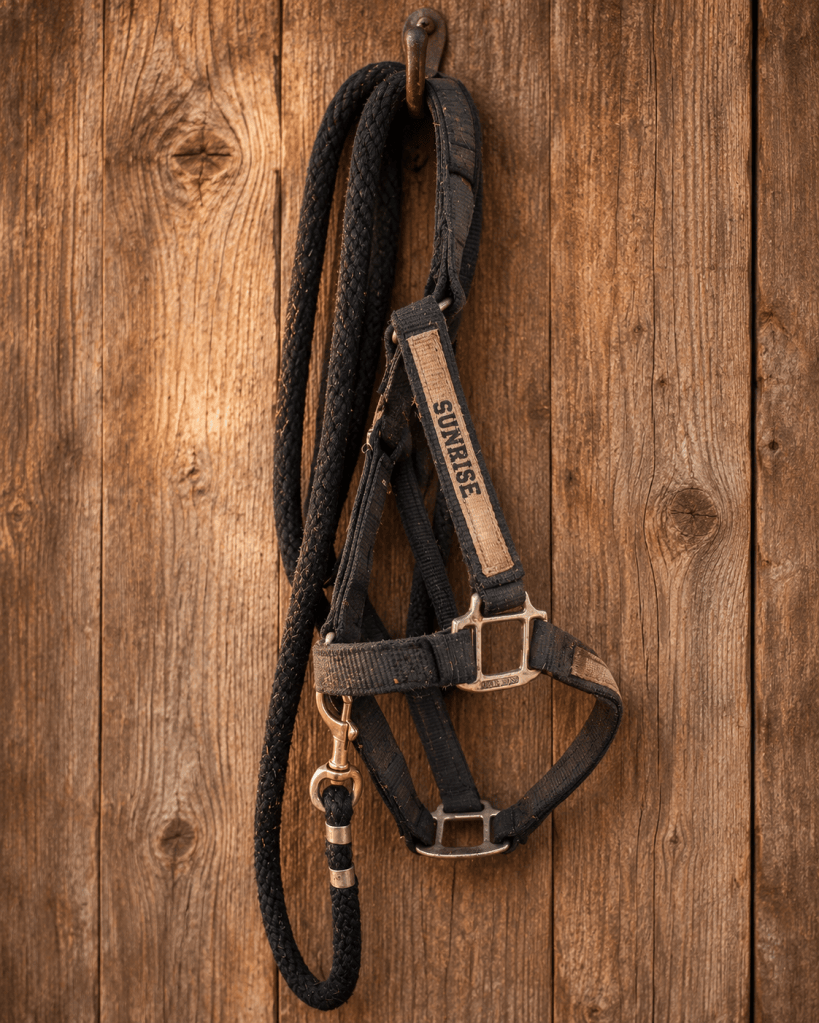
The Empty Halter — Sunrise’s halter, removed the day we said goodbye. August 2021.
When I attend the Peruvian Paso show in Ocala next May, I’ll recognize that unmistakable gait, the proud carriage, and the elegance that first caught my attention so many years ago.
And somewhere among those beautiful horses, I may see a descendant carrying the same distinguished bloodlines as Sunrise.
But I will never find another horse quite like her.
Because the most important thing about Sunrise was never her pedigree, her ribbons, or even her remarkable rescue story.
It was what happened on that windy day in Phoenix, when a palomino mare walked across a round pen, lowered her head, and rested her nose against my shoulder.
She chose me.
And I never stopped being grateful that she did.
Part of the Reflections Series
Photograph Credits: Historical show photographs of Sunrise were provided to me by the Conquistador Equine Rescue and Advocacy Program at the time of her purchase. The original photographer(s) are unknown. All other photographs are from my personal collection unless otherwise noted.

