Boundaries Don’t Need Words
A few weeks ago, my doctor sent me for an MRI. I walked in calm, even as the attendant explained that I was about to be slid into a narrow cylinder with no exit and asked to lie still for forty‑five minutes. He offered music to help me relax. I declined. Ten minutes later, I regretted every life choice that brought me to that moment.
Somewhere in the next room, a burly man was yelling, “Get me out of this thing!” His panic did nothing to soothe mine. Inside the tube, the air felt thinner, the walls closer, and my heartbeat louder. Claustrophobia crept up my spine like a slow electrical current.
And then I heard my horse trainer’s voice in my head: Listen to the birds sing.
There were no birds in the MRI tube, but I reached for the image anyway. I pictured myself walking along a quiet beach, waves rolling in and out, the sun warm on my shoulders. It must have worked, because the next thing I knew, the attendant was nudging me awake. Forty‑five minutes had passed without me clawing my way out of the machine.
Horses have been teaching me things for years, often without my noticing.
They are honest in their interactions, intuitive in ways humans rarely allow themselves to be, and immediate in their responses. I’ve been told so many times to “think like a horse” that I now catch myself watching people for the same cues I look for in a pasture: dominance, insecurity, bluffing, avoidance.
If humans handled conflict the way horses do—directly, immediately, and without apology—we’d probably have fewer interpersonal disasters.
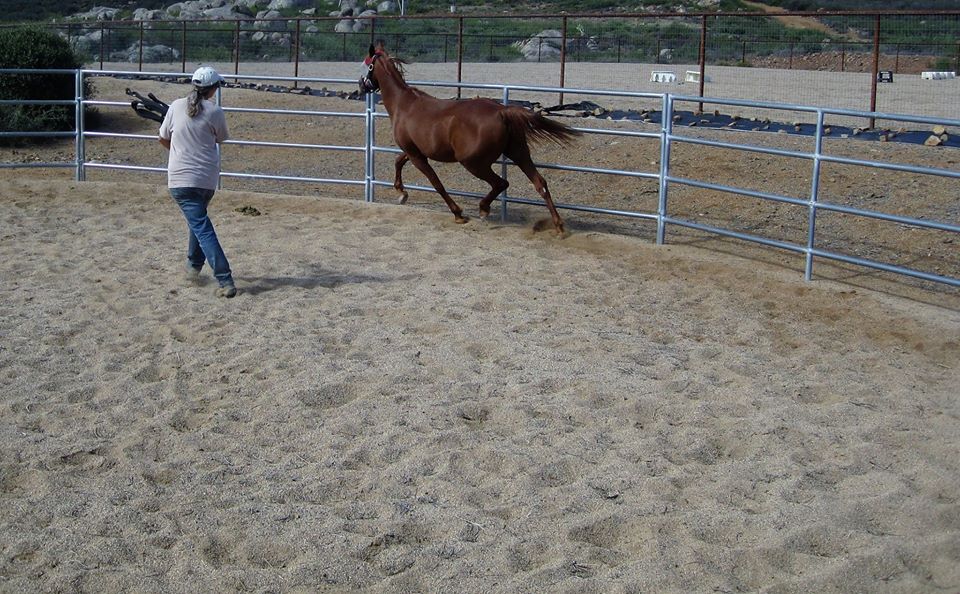
Take Sunrise, my Peruvian Paso. Around people she was sweet, soft‑eyed, and polite. But turn her out with other horses and she became the matriarchal mare who takes no prisoners. The first time I saw her defend herself, I was stunned. A horse so gentle with humans had no hesitation setting boundaries with her own kind.
Once, as the new horse in turnout, she was kicked and bitten on Day 1. On Day 2, she made her point. She singled out the aggressor, chased her for twenty minutes, cornered her, and kicked the bejesus out of her. That mare never looked at Sunrise sideways again. Sunrise only had to say it once.
Rosie, my Arabian, is the opposite. I assumed she’d be the lead mare—she’s fiery with humans, opinionated, and expressive. But in turnout she’s the one who gets pushed off hay piles, chased from the fence line, and bullied by horses half her size. Something in her body language tells the herd she won’t fight back. They read her correctly.
Watching them taught me something I should have learned years earlier: what’s inside a horse—or a person—is rarely what you see on the surface. Sunrise looks delicate but is steel. Rosie looks bold but is vulnerable. And humans? We’re even worse at showing who we really are.
Horses don’t tolerate mistreatment. They don’t make excuses for bad behavior. They don’t wait for things to “get better.” They respond in the moment, clearly and without hesitation. Their boundaries are visible, consistent, and respected.
Humans, on the other hand, let things fester. We stay silent. We rationalize. We reward the very behavior we claim to hate. And then we wonder why people “always” treat us a certain way.
A wise woman once told me that every time I interact with my horse, I’m training it—whether I mean to or not. The same is true with people. With every interaction, we teach others how to treat us: through our words, our behavior, and our silence.
When someone crosses a line and we say nothing, we’ve just taught them they can do it again.
Healthy boundaries aren’t walls. They’re self‑respect in action. They keep us centered. They protect our peace. And they’re the first step toward becoming our own best friend.
Part of the “Lessons from the Herd” series
© 2023-2026 Romancing the Herd — All Rights Reserved
 Romancing the Herd